
Tree Care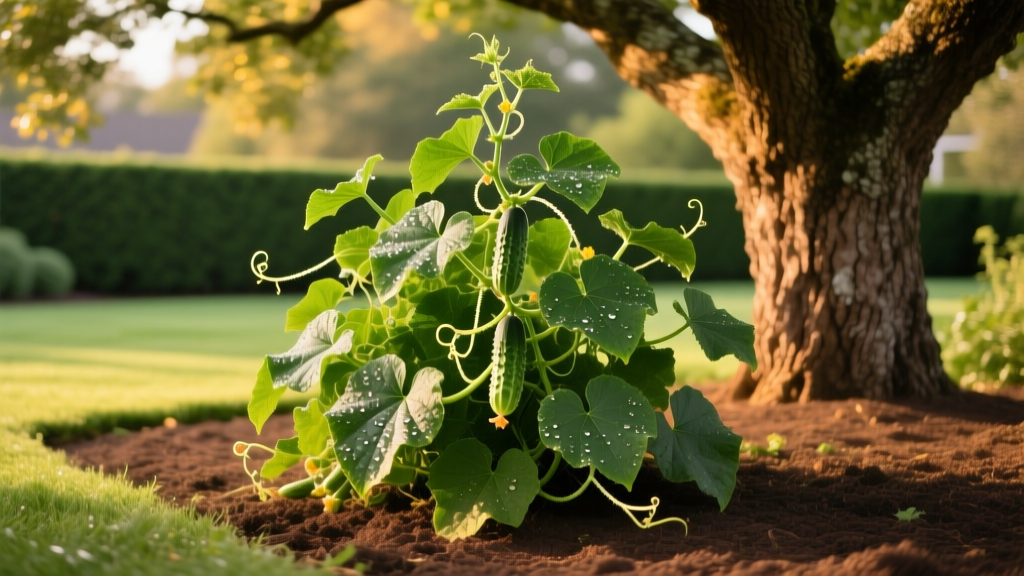
Planting a Bush Crop Cucumber Plant in Tree-Shaded Edges
The Arboricultural Edge: Integrating Edibles into Tree Zones
Maximizing yard space in 2026 requires looking beyond traditional rectangular garden plots. The transitional zone between a tree’s outer canopy drip-line and your primary lawn or shrub border—often called the arboricultural edge—offers untapped potential for edible landscaping. Establishing a bush crop cucumber plant in these dappled-light margins is a highly effective strategy for homeowners who want to grow food without sacrificing valuable turf or interfering with a tree's critical root zone (CRZ).
Unlike vining cucumbers that require extensive trellising and full-day sun exposure, bush varieties are determinate, compact growers. They typically spread only 2 to 3 feet, making them ideal for understory edges where sunlight is filtered through high tree canopies. However, planting near established trees introduces complex root competition and microclimate challenges that demand precise horticultural techniques.
Selecting Determinate Varieties for Dappled Light
Not every cucumber will thrive in the partial shade cast by a nearby tree canopy. When selecting a bush crop cucumber plant for edge planting, you must prioritize varieties with shorter days to maturity and high disease resistance, as shaded areas often retain morning dew longer, increasing fungal pressure.
| Variety | Days to Maturity | Vine Spread | Best Use | Shade Tolerance |
|---|---|---|---|---|
| Picklebush | 50-55 days | 24 inches | Pickling | Moderate |
| Salad Bush | 57-60 days | 24-30 inches | Slicing | High |
| Spacemaster | 60-65 days | 30-36 inches | Slicing | Moderate |
For edges receiving 5 to 6 hours of direct sunlight (typically under high-branched oaks or hickories), Salad Bush is the superior choice due to its vigorous growth and resistance to powdery mildew. Seed packets for these specialized bush varieties typically cost between $3.50 and $5.00 from reputable suppliers like Johnny's Selected Seeds or Burpee.
Critical Root Zone (CRZ) Protection & Soil Prep
The most common failure mode when planting near trees is severing structural roots or suffocating them with excessive topsoil. According to the University of Wisconsin-Madison Extension, cucumbers require loose, well-draining soil with a pH between 6.0 and 6.8. Achieving this near a tree requires a delicate touch.
⚠️ Arborist Warning: Tree Species Compatibility
Never plant a bush crop cucumber plant within 4 feet of the trunk of shallow-rooted trees such as Norway Maples, Silver Maples, or Willows. These species have dense, surface-level feeder roots that will aggressively outcompete cucumbers for water, stunting both the vegetable and the tree's fine root network. Stick to deep-rooted species like White Oaks, Ginkgos, or mature Pines for edge planting.
To prepare the soil without damaging tree roots, abandon mechanical rototillers. Instead, use a broadfork or a hand trowel to gently loosen the top 6 inches of soil. Incorporate 2 inches of aged leaf mold or well-rotted compost to improve moisture retention without raising the soil grade, which could suffocate the tree's root flare.
Step-by-Step Establishment Protocol
Follow this precise sequence to establish your bush crop cucumber plant in a tree-edge environment:
- Map the Sun Path: Observe the edge zone at 10 AM, 1 PM, and 4 PM. Ensure the selected site receives a minimum of 5.5 hours of direct, unfiltered sunlight.
- Form the Hills: Mound the prepared soil into low hills approximately 18 inches apart. Each hill should be 12 inches in diameter and 4 inches high to promote drainage away from the tree's root mat.
- Apply Starter Fertilizer: Mix 1/2 cup of a balanced 5-10-10 granular fertilizer into the top 3 inches of each hill. Avoid high-nitrogen formulas, which will encourage excessive foliage at the expense of fruit set.
- Sow the Seeds: Plant 3 seeds per hill at a depth of exactly 1 inch. Water gently immediately after sowing to settle the soil around the seed coat.
- Thin to Final Spacing: Once seedlings develop their first true leaves (usually 10-14 days post-germination), snip the weakest seedling at the soil line with sterilized shears, leaving 2 robust plants per hill.
Microclimate Irrigation & Nutrient Management
Tree canopies act as umbrellas, intercepting up to 30% of light rainfall before it reaches the soil. Relying on natural precipitation in an edge zone will result in severe moisture stress for your cucumbers, leading to bitter fruit and blossom end rot.
"Consistent soil moisture is the single most critical factor in preventing cucurbit bitterness. In edge plantings, automated drip systems are not a luxury; they are a biological necessity." — Midwest Urban Forestry & Garden Report, 2025
Data Highlight: Drip Irrigation Specifications
- Equipment: 1/2-inch mainline tubing with 1/4-inch drip tape (0.5 GPH emitters spaced every 8 inches).
- Placement: Lay the tape in a circular pattern around the base of the cucumber hills, keeping it 2 inches away from the main stem to prevent crown rot.
- Schedule: Run the system for 25 minutes every morning. This delivers approximately 0.8 gallons per hill, satisfying the 1.5 inches of weekly water required by cucumbers without waterlogging the adjacent tree roots.
Once the first female flowers appear (identifiable by the miniature fruit swelling at the base of the bloom), switch to a liquid kelp and fish emulsion fertilizer (2-4-1 NPK) applied every 14 days to support heavy fruiting in a competitive soil environment.
Managing Shade-Induced Foliar Pathogens
The microclimate near a tree edge often features reduced air circulation and higher ambient humidity, creating a breeding ground for Podosphaera xanthii (powdery mildew) and Pseudoperonospora cubensis (downy mildew). The University of Minnesota Extension emphasizes proactive canopy management for cucurbits in humid zones.
To protect your bush crop cucumber plant, implement a preventative organic spray schedule:
- Potassium Bicarbonate (e.g., GreenCure): Mix 1 tablespoon per gallon of water with a half-teaspoon of horticultural oil as a surfactant. Spray every 10 days to alter the leaf surface pH, making it inhospitable to mildew spores.
- Copper Fungicide (e.g., Bonide Liquid Copper): Use only if angular leaf spot or bacterial wilt is detected in nearby shrub borders. Apply at a rate of 2 tablespoons per gallon during dry evening hours to prevent leaf burn.
Additionally, prune the lowest 3 inches of foliage from the bush cucumber as it matures. This physical barrier removal prevents soil-borne spores from splashing onto the lower leaves during heavy summer thunderstorms, bridging the gap between tree-care soil management and intensive vegetable production.

