
Tree Care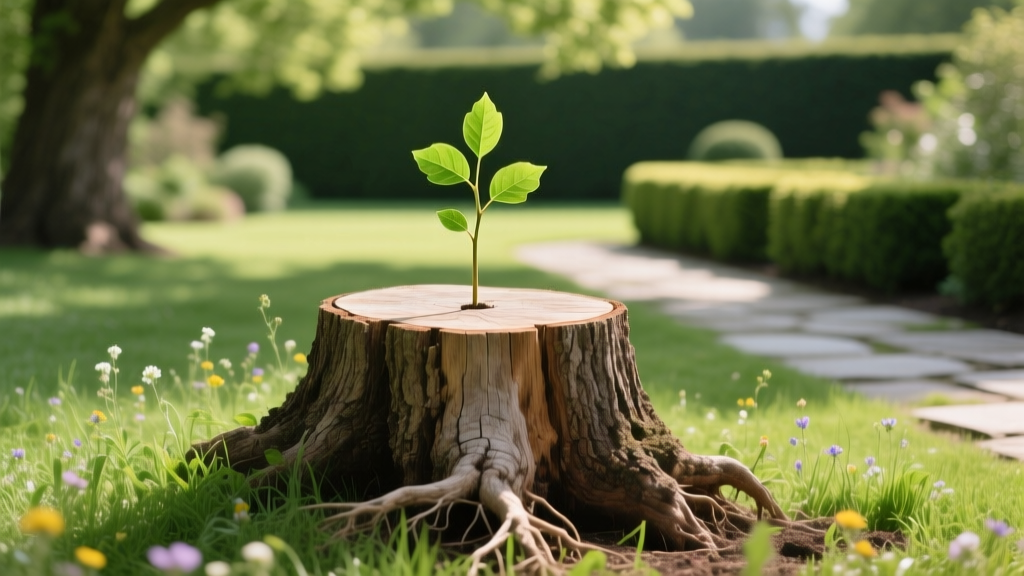
Can a Tree Stump Grow Back? How to Stop Regrowth
When a tree is felled, the visible trunk is gone, but the root system remains very much alive. Homeowners frequently ask: can a tree stump grow back? The short answer is yes. Through a survival mechanism involving stored carbohydrates and dormant buds, many tree species will aggressively push out new shoots, known as root suckers or epicormic sprouts, from the remaining stump and lateral roots. If left untreated, these sprouts can develop into dense, multi-stemmed thickets that disrupt landscaping, damage underground utilities, and compete with surrounding plants for nutrients.
Stopping this regrowth requires understanding the biology of the stump and applying targeted eradication techniques. This guide breaks down the exact science of stump sprouting, species-specific risk factors, and professional-grade methods to permanently kill the root system.
The Biology of Stump Regrowth: Why Trees Refuse to Die
Trees store massive reserves of carbohydrates (starches and sugars) in their root systems to survive winter dormancy and environmental stress. When the main trunk is severed, the sudden loss of the canopy triggers a hormonal shift. The roots, still packed with energy, attempt to rebuild the photosynthetic factory by activating dormant buds located in the cambium layer (the vascular tissue just inside the bark) and along lateral roots.
Data Highlight: Carbohydrate Depletion Timelines
A mature hardwood stump can contain enough stored energy to produce vigorous sprouts for 2 to 5 years. Without intervention, the roots will slowly starve only after repeated cycles of sprouting and manual cutting exhaust the reserves. According to the University of Minnesota Extension, manually snapping off suckers every few weeks can eventually kill the roots, but it requires years of relentless maintenance.
A mature hardwood stump can contain enough stored energy to produce vigorous sprouts for 2 to 5 years. Without intervention, the roots will slowly starve only after repeated cycles of sprouting and manual cutting exhaust the reserves. According to the University of Minnesota Extension, manually snapping off suckers every few weeks can eventually kill the roots, but it requires years of relentless maintenance.
High-Risk vs. Low-Risk Species Matrix
Not all trees possess the same regenerative capabilities. Deciduous hardwoods are notorious for stump sprouting, while most conifers lack the dormant buds required to regenerate from a cut stump. Use the matrix below to assess your yard's specific risk level.
| Tree Species | Regrowth Risk | Primary Sprout Location | Recommended Action |
|---|---|---|---|
| Willow, Poplar, Cottonwood | Extreme | Stump edge & lateral roots | Immediate chemical treatment |
| Elm, Maple, Sycamore, Ash | High | Stump edge (epicormic) | Chemical or Epsom salt treatment |
| Oak, Hickory, Black Locust | Moderate | Root suckers (far from stump) | Monitor and treat root suckers |
| Pine, Spruce, Cedar, Fir | None | N/A | Allow natural decay or grind |
Proven Methods to Kill a Tree Stump Permanently
To permanently stop a stump from growing back, you must destroy the cambium layer and deplete or poison the root system. Below are the three most effective methodologies, ranked by speed and efficacy.
1. Chemical Herbicides (The 15-Minute Rule)
For high-risk species like willows and elms, systemic herbicides are the most reliable solution. The active ingredients Triclopyr (found in Ortho Poison Ivy & Brush Killer and Tordon RTU) or Glyphosate (41% concentration) are industry standards.
- The 15-Minute Window: Trees rapidly seal fresh cuts with sap and resin to prevent infection and moisture loss. You must apply the herbicide to the freshly cut surface within 15 minutes of cutting the tree. If the stump is old, use a chainsaw or hand saw to shave off the top 2 inches to expose fresh, live cambium.
- Application Technique: Do not drench the entire stump. The center heartwood is dead and will not transport chemicals. Use a foam brush to paint the herbicide strictly on the outer 2-inch ring (the cambium and phloem layers).
- Cost & Safety: A 32 oz bottle of Triclopyr concentrate costs between $25 and $40 and can treat dozens of stumps. Wear nitrile gloves and eye protection, and avoid application if rain is forecast within 24 hours.
2. Epsom Salt Desiccation (The 8-Week Method)
If you prefer to avoid synthetic herbicides, Epsom salt (100% magnesium sulfate) draws moisture out of the wood, effectively mummifying the roots. This method is slower and requires precise execution to prevent rain from washing the salt away.
- Drilling: Using a 1/2-inch or 5/8-inch spade bit, drill 8 to 10 holes into the stump. Space the holes 3 inches apart, and drill at least 8 inches deep, angling slightly outward to reach the root flares.
- Filling: Pour pure Epsom salt into the holes, leaving 1/2 inch at the top. Add a few drops of water to each hole to dissolve the salt and help it penetrate the wood fibers.
- Sealing: Plug the holes with candle wax or wood putty, then cover the entire stump with a heavy-duty black tarp, securing the edges with landscape stakes to block sunlight and rain.
- Timeline: Expect the stump to become brittle and dead in 8 to 12 weeks. Reapply salt if the stump is exceptionally large (over 24 inches in diameter).
3. Mechanical Stump Grinding (The Immediate Fix)
For instant results and immediate replanting, mechanical grinding is the only option. A stump grinder uses a rotating carbide-tipped wheel to chip the wood into mulch.
Expert Pricing & Depth Standards:
Professional arborists typically charge $3 to $5 per inch of stump diameter. A 20-inch stump will cost between $60 and $100. However, standard grinding only goes 4 to 6 inches below grade. To guarantee no regrowth and provide enough depth for new topsoil and sod, explicitly request a deep grind to 12-18 inches below grade. This severs the main taproot and lateral root flares, physically eliminating the buds responsible for sprouting.
Professional arborists typically charge $3 to $5 per inch of stump diameter. A 20-inch stump will cost between $60 and $100. However, standard grinding only goes 4 to 6 inches below grade. To guarantee no regrowth and provide enough depth for new topsoil and sod, explicitly request a deep grind to 12-18 inches below grade. This severs the main taproot and lateral root flares, physically eliminating the buds responsible for sprouting.
Troubleshooting: What to Do If Suckers Already Appeared
If you missed the treatment window and your yard is now dotted with green suckers, do not just mow over them. Mowing stimulates the roots to push out more shoots in a panic response. Instead, follow this remediation protocol:
- Cut and Paint: Use pruning shears to cut the suckers as close to the ground (or the main stump) as possible. Immediately paint the fresh cut on the sucker with undiluted Triclopyr. The chemical will translocate down the shoot and into the parent root system.
- Foliar Spray (For Dense Thickets): If the suckers have grown into a dense patch over 3 feet tall, use a 2% Glyphosate foliar spray. Apply on a calm, dry day when the leaves are fully expanded. The leaves will absorb the chemical and pull it down to the roots.
- Root Barrier Installation: If suckers are emerging 20+ feet away from the original stump (common with Black Locust and Sumac), you may need to dig a narrow trench between the stump and the lawn, severing the lateral root, and install a 24-inch high-density polyethylene (HDPE) root barrier.
Environmental Warning: Never use diesel fuel, motor oil, or unregulated rock salt to kill a stump. These methods will permanently sterilize the surrounding soil, leach into groundwater, and violate local environmental regulations. The USDA Forest Service strictly advises against soil-contaminating practices, as they prevent future planting and harm local mycorrhizal fungi networks.
Frequently Asked Questions
Will painting a stump with white latex paint stop it from growing?
No. White latex paint is sometimes used to seal pruning cuts on living trees to prevent insect entry, but it does not contain herbicidal properties. It will not kill the cambium layer or prevent root suckers from pushing through the bark.
How long does it take for a treated stump to completely rot?
Once the cambium is killed via chemical or Epsom salt treatments, the dead wood becomes a food source for saprophytic fungi. In a moist, temperate climate, a dead 15-inch stump will soften enough to break apart with a shovel in 2 to 4 years. Applying a high-nitrogen fertilizer over the dead stump can accelerate fungal decay by 30%.
Can I plant a new tree in the exact same spot after grinding a stump?
Yes, but you must remove the wood shavings left by the grinder. As wood chips decompose, they tie up soil nitrogen, starving new plants. Remove the chips, fill the cavity with a mix of 70% native topsoil and 30% compost, and offset the new planting hole by at least 2 feet to avoid the remaining decaying root mass.

