
Tree Care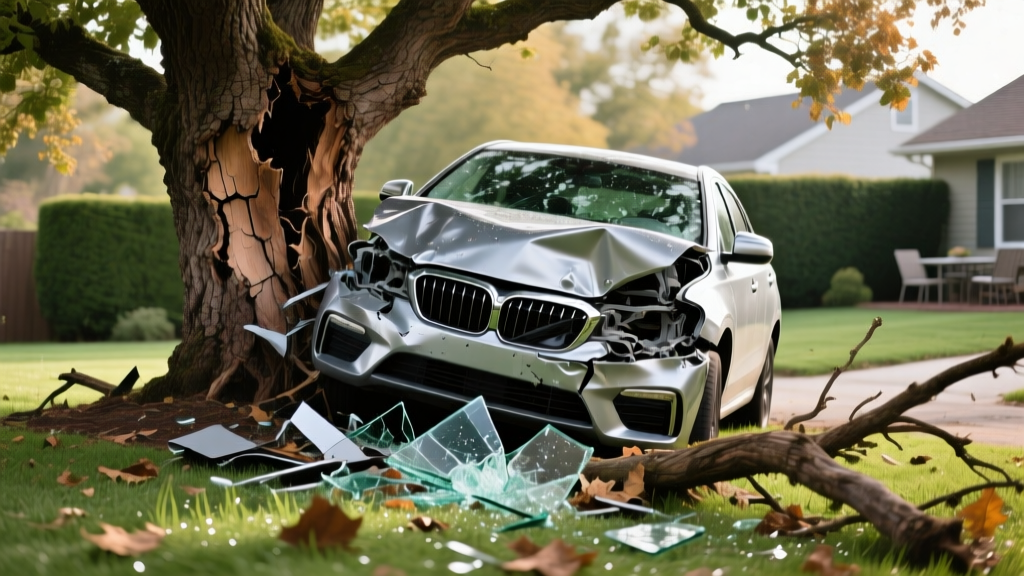
What to Do When a Car Wraps Around Tree: Damage Assessment & Recovery
Immediate Triage: Safety and Hazard Containment
When a high-speed collision occurs and a car wraps around tree, the immediate aftermath is chaotic. While emergency services prioritize human life, the secondary crisis is the severe trauma inflicted on the tree and the surrounding soil ecosystem. A vehicle impact generates thousands of pounds of kinetic force, resulting in catastrophic bark shearing, xylem splintering, and potential root plate heaving.
Before any arboricultural assessment can begin, the site must be secured against chemical hazards. Modern vehicles contain up to 20 gallons of toxic fluids. Gasoline, motor oil, brake fluid, and ethylene glycol (antifreeze) frequently rupture during severe impacts, pooling into the root zone. These chemicals are highly toxic to mycorrhizal fungi and fine feeder roots, causing rapid soil asphyxiation and root necrosis.
🚨 First 48 Hours Protocol: Do not attempt to pull embedded metal from the trunk yourself. Unstable vehicles can shift, and removing tensioned metal can cause the compromised trunk to split further. Deploy absorbent booms around the base of the tree immediately to prevent vehicle fluids from migrating into the subsoil and groundwater.
Diagnosing Trunk and Root Plate Damage
Once the vehicle is extracted by a professional towing service, a TRAQ-certified (Tree Risk Assessment Qualification) arborist must evaluate the structural integrity of the tree. Visual inspection is insufficient for high-impact collisions; internal decay and micro-fractures must be mapped.
Advanced Diagnostic Technologies
In 2026, relying solely on visual bark inspection is considered negligent for high-value shade trees. Arborists utilize non-destructive testing to assess the true extent of the damage:
- Sonic Tomography (e.g., PiCUS 3): Sensors are attached around the trunk to measure sound wave velocity. Sound travels slower through fractured or decayed wood, generating a 2D color map of the internal cross-section. This reveals if the impact caused internal heartwood splintering that isn't visible from the outside.
- Resistograph Drilling: A micro-drill measures the mechanical resistance of the wood. A sudden drop in resistance indicates internal cavities or severe compression fractures caused by the vehicle's bumper.
According to guidelines from the University of Wisconsin-Madison Extension, trees do not "heal" wounds in the human sense; they compartmentalize them. A massive impact wound from a car chassis severely limits the tree's ability to wall off the damaged tissue, making it highly susceptible to opportunistic pathogens like Armillaria root rot or Ganoderma applanatum.
⚠️ The 30% Cambium Rule: If more than 30% of the trunk's circumference is stripped of bark (girdled) down to the sapwood, the tree's vascular system is fatally compromised. The phloem and cambium layers cannot transport nutrients past the wound. Remediation is rarely successful past this threshold, and proactive removal should be scheduled before the tree becomes a hazard.
Chemical Contamination: Fluid Spills and Soil Remediation
The University of Minnesota Extension emphasizes that soil contamination is often the silent killer in post-accident tree decline. Even if the trunk survives the physical impact, toxic fluid saturation will kill the fine root hairs within weeks. Below is a diagnostic matrix for common vehicle fluids and the required remediation strategies.
| Fluid Type | Toxicity Profile & Root Impact | Required Soil Remediation Strategy |
|---|---|---|
| Gasoline | High VOCs; displaces soil oxygen, asphyxiates roots, kills beneficial soil microbes. | Excavate contaminated soil to 18 inches. Implement bio-venting or replace with engineered structural soil. |
| Antifreeze (Ethylene Glycol) | Alters soil osmotic pressure, causing severe root dehydration and cellular toxicity. | Heavy water flushing to dilute concentration, followed by activated carbon application to bind residual toxins. |
| Motor Oil | Hydrophobic coating on roots prevents water and nutrient uptake; heavy metal accumulation. | Mechanical excavation of top 12 inches of soil. Apply mycorrhizal inoculants to rebuild the root biome. |
| Brake Fluid | Highly alkaline; rapidly spikes soil pH, locking out essential micronutrients like iron and manganese. | Soil testing for pH. Apply elemental sulfur to neutralize alkalinity and flush the root zone thoroughly. |
Professional soil excavation and replacement typically costs between $300 and $800 per cubic yard in 2026, depending on access and disposal fees for hazardous waste.
Embedded Debris: Metal, Glass, and Bumper Extraction
When a car wraps around a tree, fragments of aluminum bumpers, steel chassis components, and tempered glass become deeply embedded in the trunk. The instinct is to rip these out, but improper extraction causes secondary tearing of the cambium layer.
An ISA-certified arborist will use sterilized, specialized excavation tools to carefully remove shards located in the active cambium and sapwood. However, if a piece of metal is deeply lodged into the inactive heartwood and removing it would require carving away healthy structural wood, the arborist may choose to leave it in place. The wound edges are then carefully trimmed with a sterilized pruning saw to create smooth, elliptical margins, which accelerates the formation of woundwood (callus tissue) to seal the breach. Wound dressings and tar are strictly avoided, as research confirms they trap moisture and accelerate internal decay.
Remediation vs. Removal: The Arborist's Decision Matrix
Deciding whether to invest in saving the tree or scheduling a removal requires a strict cost-benefit and risk analysis. Use the following framework to guide your decision alongside your consulting arborist.
When to Save the Tree (Remediation)
- Canopy Dieback is Minimal: Less than 15% of the crown shows stress or dieback 6 months post-accident.
- Cambium Intact: Less than 30% of the trunk circumference is girdled.
- Root Plate Stable: No visible soil heaving or root snapping on the side opposite the impact (tension side).
- Species Resilience: The tree is a vigorous, compartmentalizing species like a Sycamore, Oak, or Elm, rather than a weak-wooded species like Silver Maple or Bradford Pear.
When Removal is the Only Safe Option
- Severe Root Heaving: The impact force lifted the root plate on the back side, severing major structural anchoring roots.
- Heartwood Compromise: Sonic tomography reveals internal fracturing extending more than 4 feet up the trunk from the impact zone.
- Target Zone Hazard: The tree is located near a home, driveway, or sidewalk, and the compromised structural integrity poses an unacceptable risk of failure in high winds.
Frequently Asked Questions: Insurance and Liability
Does auto insurance or homeowner's insurance pay for the tree?
In almost all cases where a driver loses control and a car wraps around tree, the at-fault driver's auto property damage liability insurance covers the cost of tree removal, soil remediation, and replacement planting. Homeowner's insurance typically only covers tree damage if it is caused by an "act of nature" (like a lightning strike or windstorm) or vandalism. You will need a formal, written appraisal from a TRAQ-certified arborist or a consulting forester to establish the pre-accident monetary value of the mature tree for the insurance claim.
How long does it take for a tree to show signs of decline after an impact?
While physical bark damage is immediate, the physiological decline from root asphyxiation (due to fluid spills) or vascular disruption can take 12 to 24 months to fully manifest in the canopy. Do not assume the tree has survived just because it leafs out the following spring; it may be living off stored carbohydrate reserves while the root system slowly fails. Schedule a follow-up tomography scan 18 months post-accident to verify internal compartmentalization.

