
Tree Care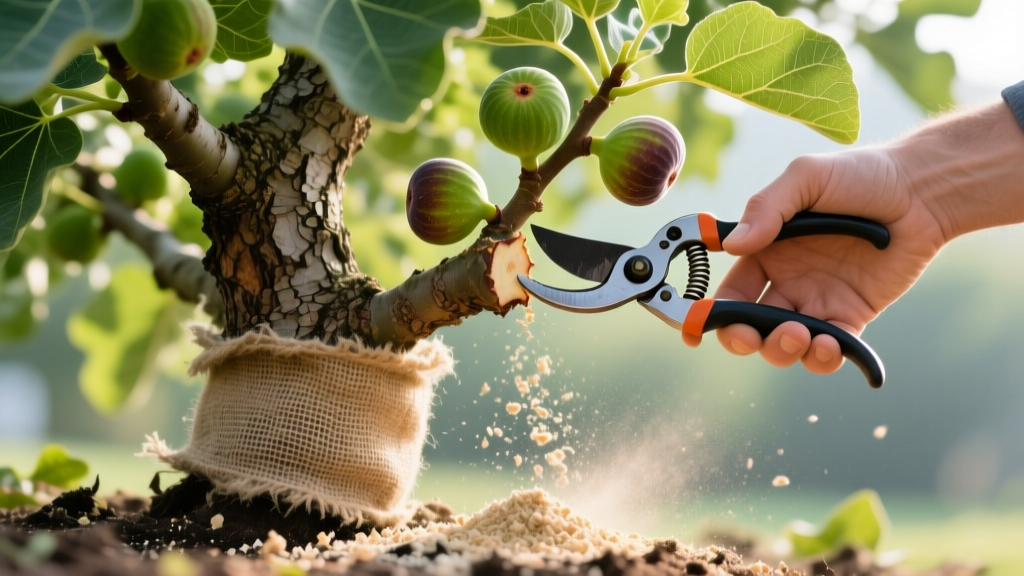
How to Care for Fig Trees: Pruning, Feeding, and Winter Protection
The First 90 Days: Planting and Root Establishment
Fig trees (Ficus carica) are remarkably resilient once established, but their aggressive, shallow root systems require strategic placement and soil preparation. Plant your fig tree at least 15 feet away from building foundations, septic systems, and underground utility lines. Figs thrive in full sun (minimum 8 hours of direct sunlight) and require well-draining soil with a pH between 6.0 and 6.5.
Pro Tip: Clay Soil Amendment
If your soil is heavy clay, do not simply dig a hole and fill it with potting soil; this creates a "bathtub effect" that drowns the taproot. Instead, excavate a 4-foot wide area, mix 30% coarse pine bark fines and 20% expanded shale into the native clay, and plant the tree slightly elevated (2 inches above grade) to ensure the root crown never sits in standing water.
If your soil is heavy clay, do not simply dig a hole and fill it with potting soil; this creates a "bathtub effect" that drowns the taproot. Instead, excavate a 4-foot wide area, mix 30% coarse pine bark fines and 20% expanded shale into the native clay, and plant the tree slightly elevated (2 inches above grade) to ensure the root crown never sits in standing water.
Seasonal Watering Framework (Avoiding Fruit Drop)
Inconsistent moisture is the primary cause of premature fruit drop and split figs. While mature trees are drought-tolerant, producing high-quality, jammy fruit requires a strict irrigation schedule. Drip irrigation is vastly superior to overhead sprinklers, as wet foliage promotes Fig Rust (a fungal disease caused by Cerotelium fici). Install 2 GPH (gallons per hour) drip emitters in a ring 18 inches from the trunk, expanding the ring as the canopy grows.
| Tree Age | Spring (Gallons/Week) | Summer Peak (Gallons/Week) | Fall (Gallons/Week) |
|---|---|---|---|
| 1-2 Years | 10 - 15 | 20 - 30 | 10 |
| 3-5 Years | 20 - 30 | 40 - 50 | 15 |
| Mature (6+ Years) | 30 - 40 | 60 - 80 | 20 |
Note: Reduce summer watering by 50% during the last two weeks before harvest to concentrate sugars and prevent fruit splitting.
Precision Pruning: Managing the Breba and Main Crops
Most generic gardening guides fail to distinguish between the two distinct fig crops, leading to disastrous pruning mistakes that wipe out a homeowner's early harvest. Understanding this biology is critical when you care for fig trees.
1. The Breba Crop (Early Summer)
This crop develops on last year's wood (the tips of branches that grew the previous summer). If you prune your tree heavily in late winter, you will completely remove the breba crop. Varieties like 'Desert King' and 'Petite Negri' rely almost entirely on the breba crop in cooler climates.
2. The Main Crop (Late Summer to Fall)
This crop develops on new growth produced in the current spring and summer. Heavy winter pruning stimulates vigorous new growth, which maximizes the main crop.
Warning: Tool Sterilization
Fig trees bleed a milky white latex sap when cut, which can harbor and transmit Fig Mosaic Virus (FMV). Always sterilize your bypass pruners (like the Felco F-2, currently retailing around $65) with 70% isopropyl alcohol between every single cut when working on trees showing mottled or yellow-speckled leaves.
Fig trees bleed a milky white latex sap when cut, which can harbor and transmit Fig Mosaic Virus (FMV). Always sterilize your bypass pruners (like the Felco F-2, currently retailing around $65) with 70% isopropyl alcohol between every single cut when working on trees showing mottled or yellow-speckled leaves.
Step-by-Step Open-Center Pruning Method
- Timing: Prune in late winter (February) while the tree is fully dormant, just before bud break.
- Scaffold Selection: Select 4 to 5 main structural branches radiating outward from the trunk like a vase. Remove all competing central leaders.
- Thinning: Remove any branches growing inward toward the center of the canopy to maximize UV penetration, which is required for fruit ripening.
- Heading Back: Cut the selected scaffolds back by 25% to an outward-facing bud to encourage lateral fruiting spurs.
Fertilization Protocol: What, When, and How Much
Over-fertilizing fig trees, particularly with high-nitrogen synthetic blends, is a common error that results in massive vegetative growth at the expense of fruit production. According to the Clemson University Home & Garden Information Center, figs generally require less fertilizer than other fruit trees.
- Young Trees (1-2 years): Apply 1/4 to 1/2 lb of a balanced 8-8-8 or 10-10-10 fertilizer three times a year (late winter, late spring, mid-summer).
- Mature Trees (3+ years): Apply 1 to 1.5 lbs of 8-8-8 fertilizer per year of tree age, up to a maximum of 10-12 lbs annually. Split this into two applications: one in early spring and one in early summer.
- Organic Alternative: Use Espoma Organic Tree-tone (6-3-2) or Jobe's Organics Fruit & Citrus spikes. Because organic nitrogen releases slower, increase the application volume by 30% compared to synthetic equivalents.
Always broadcast fertilizer evenly under the drip line (the outer edge of the canopy), keeping it at least 6 inches away from the trunk to prevent root burn. Water deeply immediately after application.
Winterizing Fig Trees in Zones 6 and 7
While varieties like 'Chicago Hardy' and 'Celeste' can survive brief dips to 5°F, sustained freezes will kill the above-ground wood of most Ficus carica cultivars in USDA Zones 6 and 7. Protecting the tree ensures it doesn't waste energy regenerating from the roots every spring.
The "Cage and Leaves" Insulation Method
This technique costs roughly $35 in materials and provides reliable protection down to -5°F.
- Erect a cylindrical cage around the tree using 4-foot tall galvanized wire fencing, leaving a 12-inch gap between the branches and the wire.
- Wrap the outside of the wire cage with a layer of heavy-duty landscape burlap.
- Fill the interior gap with dry oak or pine needles. Avoid using maple or sycamore leaves, as they mat down when wet and trap rot-causing moisture against the bark.
- Cap the top of the cylinder with a plastic trash bag or a piece of corrugated plastic to prevent rain and snow from soaking the insulation. Secure it tightly with twine.
- Remove the entire structure in early April once the threat of hard freezes has passed.
Troubleshooting Common Fig Tree Ailments
Even with optimal care, environmental stressors and pests can impact your harvest. The University of Florida IFAS Extension notes that while figs are relatively pest-free, soil-borne issues require proactive management.
- Root-Knot Nematodes: Microscopic worms that cause stunted growth and galled roots. Fix: There is no chemical cure for home orchards. Plant nematode-resistant rootstocks, or grow susceptible varieties in 20-gallon fabric grow bags filled with sterile potting mix.
- Fig Rust: Orange-brown pustules on the underside of leaves, leading to premature defoliation in late summer. Fix: Apply a copper-based fungicide (like Bonide Liquid Copper) at the first sign of spots. Rake and destroy all fallen leaves in autumn.
- Souring / Endosepsis: Fruit ferments on the tree, smelling of yeast and oozing from the ostiole (the "eye" at the bottom of the fig). Fix: This is caused by vinegar flies entering through large-eyed varieties. Plant closed-eye varieties like 'Celeste' or 'LSU Purple' in humid climates.
Frequently Asked Questions
Why is my fig tree dropping green, unripe fruit?
Green fruit drop is almost always a stress response. The three most common culprits are sudden drought stress, excessive nitrogen fertilization, or a root-knot nematode infestation. Check your soil moisture 4 inches below the surface; if it is bone dry, implement the drip irrigation schedule outlined above.
Can I grow a fig tree in a container?
Yes, figs adapt exceptionally well to container culture, which naturally restricts root growth and forces the tree into earlier fruiting. Use a minimum 15-gallon pot (fabric air-pruning pots are ideal) filled with a mix of 60% high-quality potting soil, 20% perlite, and 20% compost. Container figs require daily watering in peak summer and must be moved to an unheated garage or shed in winter to protect the roots from freezing solid.
Do I need two fig trees to get fruit?
No. The vast majority of fig varieties sold for home gardens (including 'Brown Turkey', 'Celeste', and 'Chicago Hardy') are parthenocarpic, meaning they produce fruit without pollination. You only need one tree to achieve a full yield.

