
Tree Care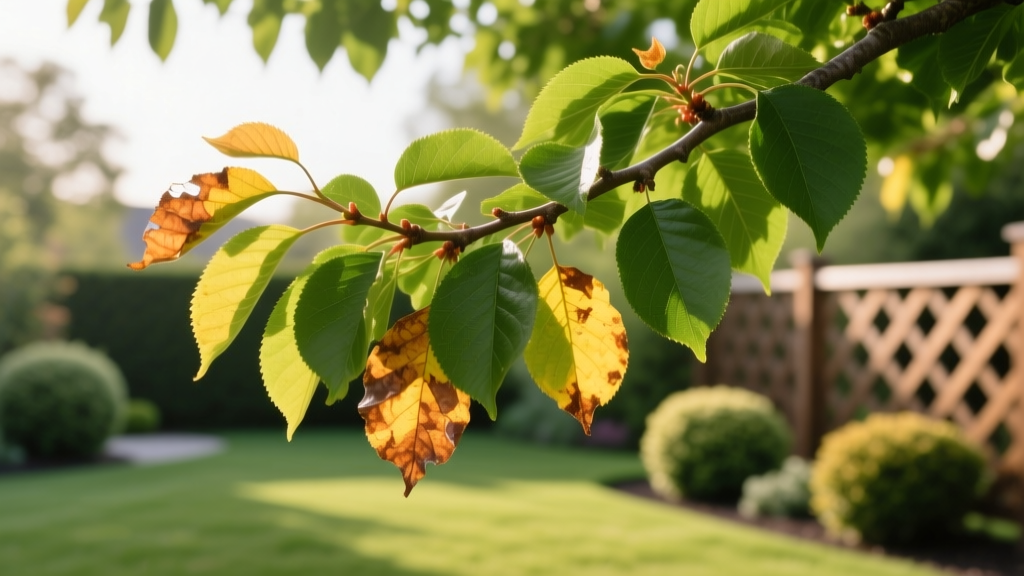
Cherry Tree Leaves Turning Yellow or Brown: Beginner Diagnosis
The Quick Diagnostic Matrix for Cherry Tree Leaves
Cherry trees (Prunus avium and Prunus cerasus) are notoriously sensitive to environmental shifts, fungal pathogens, and soil imbalances. When your cherry tree leaves begin to discolor, drop prematurely, or curl, the tree is signaling distress. Before buying random treatments from the garden center, use this diagnostic matrix to identify the exact failure mode.
| Leaf Symptom | Probable Cause | Immediate Action Required |
|---|---|---|
| Yellowing between green veins (interveinal chlorosis) | Iron deficiency due to high soil pH (>7.0) | Apply Fe-EDDHA chelated iron; test soil pH |
| Small purple/brown spots with yellow halos | Cherry Leaf Spot (Blumeriella jaapii) | Rake fallen leaves; apply myclobutanil fungicide |
| Leaves skeletonized (only veins remain) | Pear sawfly (cherry slug) larvae | Spray with Spinosad or insecticidal soap |
| Uniform yellowing and wilting of new growth | Overwatering / poor drainage (root hypoxia) | Halt watering; aerate soil base; check drainage |
| Black, powdery coating on leaf surface | Sooty mold (growing on aphid honeydew) | Treat underlying aphid infestation with neem oil |
Cherry Leaf Spot: The Most Common Fungal Culprit
If you notice your cherry tree leaves developing tiny, circular purple or brown spots that eventually turn yellow and drop by mid-summer, you are dealing with Cherry Leaf Spot. This disease, caused by the fungus Blumeriella jaapii, is the number one reason for premature defoliation in both sweet and tart cherries. According to Penn State Extension, severe infections can cause a tree to lose up to 80% of its foliage by early August, severely weakening the tree and reducing its winter hardiness.
The Fungicide Protocol
Home gardeners often make the mistake of spraying too late. Fungicides are protectants, not curatives. You must apply them before the fungus penetrates the leaf tissue.
- Active Ingredients: Look for products containing Myclobutanil (e.g., Spectracide Immunox Multi-Purpose Fungicide) or Chlorothalonil (e.g., Bonide Fung-onil). Organic growers can use sulfur-based sprays, though they require more frequent application.
- Timing: The first application must happen at petal fall (when 90% of the blossoms have dropped). Do not spray while the tree is in full bloom, as this can harm pollinators and is ineffective against this specific pathogen.
- Frequency: Reapply every 10 to 14 days until mid-June, or as long as wet, humid weather persists.
⚠️ Warning: Copper Fungicide Phytotoxicity
While copper fungicides (like Bordeaux mixture) are popular for dormant winter sprays, applying copper to cherry tree leaves during the active growing season can cause severe phytotoxicity (leaf burn and defoliation). Stick to myclobutanil or chlorothalonil for in-season foliar sprays.
Nutrient Lockout and Watering Mistakes
Not all leaf discoloration is caused by disease. Abiotic factors—specifically soil chemistry and moisture levels—frequently mimic fungal symptoms. Cherry trees require a soil pH between 6.0 and 6.8. When soil pH climbs above 7.0 (alkaline), iron becomes chemically locked in the soil and unavailable to the roots, resulting in iron chlorosis.
The Soil Probe Test
Beginners often water their trees based on a calendar schedule rather than soil moisture. Overwatering suffocates the fine feeder roots, preventing them from absorbing nutrients, which also causes yellowing leaves.
- Purchase a 12-inch stainless steel soil probe or a long screwdriver.
- Push it into the soil at the tree's drip line (the outer edge of the canopy).
- If it slides in easily and comes out with moist, dark soil clinging to it, do not water.
- If it meets heavy resistance and comes out dry and dusty, it is time to apply 1 to 1.5 inches of water. For a mature cherry tree, this equates to roughly 10 to 15 gallons applied slowly via a soaker hose.
For verified watering techniques and volume calculations, refer to the University of Minnesota Extension guidelines on tree watering.
Fixing Iron Chlorosis
If your soil test confirms a high pH and your cherry tree leaves show interveinal chlorosis, standard iron supplements (Fe-EDTA) will fail because they break down in alkaline soil. You must purchase Fe-EDDHA chelated iron (such as Sequestrene 138 or Miller's FerriPlus). This specific chelate remains stable in soils with a pH up to 9.0. Apply it as a soil drench in early spring just as buds begin to swell.
Insect Pests Skeletonizing Your Foliage
If your cherry tree leaves look like lace, you are likely hosting the pear sawfly (Caliroa cerasi), commonly known as the cherry slug. The larvae secrete a black, slimy coating over their bodies to deter predators, making them look exactly like tiny slugs rather than insects.
Because they are sawflies (order Hymenoptera) and not true caterpillars (order Lepidoptera), Bacillus thuringiensis (Bt) sprays will not work on them. Instead, use Spinosad (e.g., Monterey Garden Insect Spray). Spinosad is a naturally derived bacterial fermentation product that is highly lethal to sawfly larvae but safe for beneficial insects once it dries. Spray the foliage thoroughly, focusing on the undersides of the leaves, in the late evening to minimize impact on active bees. For more on identifying and managing sawfly species, consult the UMN Extension sawfly fact sheet.
Your Seasonal Prevention Calendar
Reactive treatment is always more expensive and less effective than proactive prevention. Follow this annual checklist to keep your cherry tree foliage healthy from bud break to dormancy.
- Early Spring (Dormant): Apply a dormant horticultural oil spray to smother overwintering scale insects and aphid eggs before buds break. Rake and destroy all mummified fruit and old leaf litter from the previous year.
- Mid-Spring (Petal Fall): Begin your cherry leaf spot fungicide rotation. Apply a balanced 10-10-10 granular fertilizer (1 cup per inch of trunk diameter) just outside the drip line if a soil test indicates low fertility.
- Early Summer: Monitor for cherry slugs and Japanese beetles. Hand-pick beetles in the early morning when they are sluggish. Maintain a 3-inch layer of organic mulch (keeping it 4 inches away from the trunk) to regulate soil moisture.
- Late Fall (Post-Harvest): Do not fertilize in fall, as this promotes tender new growth that will be killed by frost. Ensure the tree receives a deep watering before the ground freezes to prevent winter desiccation.

