Tree Care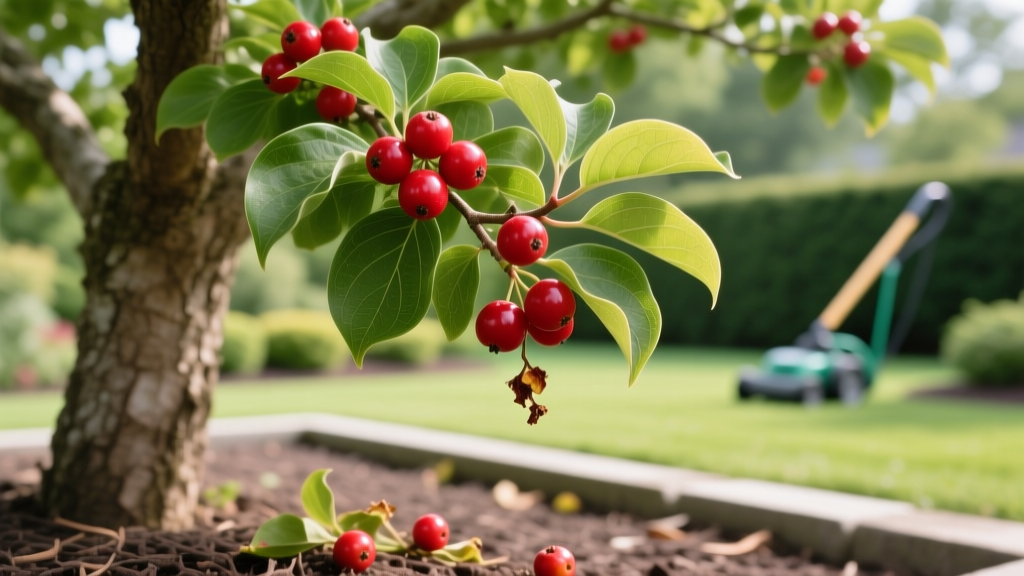
Chinese Dogwood Berries: Diagnosing Missing Fruit and Early Drop
The Anatomy of Chinese Dogwood 'Berries'
When homeowners refer to Chinese dogwood berries, they are technically misidentifying the fruit of Cornus kousa. Unlike the true, small red drupes produced by the native flowering dogwood (Cornus florida), the Chinese or Kousa dogwood produces syncarps—fleshy, raspberry-like aggregate fruits that fuse together as they mature. These golf-ball-sized syncarps transition from hard green spheres in July to soft, crimson-red drupes by late September.
Understanding this botanical distinction is critical for problem diagnosis. Because syncarps require a prolonged, energy-intensive development period (nearly three months from pollination to ripening), Cornus kousa is highly susceptible to environmental stressors that trigger premature fruit abortion. If your tree is failing to produce these signature autumn fruits, or if the green syncarps are dropping onto your mulch in mid-summer, the issue almost always traces back to specific cultural, pathological, or pruning errors.
Diagnostic Matrix: Why Aren't Your Berries Forming?
Use the following diagnostic table to identify the primary point of failure in your tree's fruiting cycle. According to NC State Extension, Kousa dogwoods are generally hardy, but their reproductive cycle is easily disrupted by improper maintenance.
| Symptom | Probable Cause | Targeted Solution |
|---|---|---|
| Tree flowers heavily in spring, but no green berries form by July. | Poor pollination or late spring frost damaging the central ovary. | Plant pollinator-attracting companion shrubs; avoid frost pockets for new plantings. |
| Tree produces neither spring bracts nor autumn berries. | Immature tree (seed-grown) or severe shade deficit. | Wait 5-7 years for seed-grown trees; ensure minimum 4 hours of direct dappled sunlight. |
| Green syncarps form but drop prematurely in July/August. | Mid-summer drought stress or Dogwood Borer (Synanthedon scitula) infestation. | Implement deep-root drip irrigation; inspect trunk for sawdust-like frass and treat. |
| Berries rot on the branch before ripening; leaves show brown margins. | Anthracnose (Discula destructiva) or Botrytis blight due to poor airflow. | Apply copper-based fungicide in spring; perform structural pruning for canopy aeration. |
Premature Berry Drop: Environmental and Pathological Triggers
The most frequent complaint regarding Chinese dogwood berries is premature summer drop. When a Cornus kousa experiences hydraulic failure in July, it initiates a survival mechanism: shedding its energy-expensive fruit to preserve moisture for the primary vascular system.
The Hydration Deficit
Kousa dogwoods possess shallow, fibrous root systems that are highly sensitive to soil moisture fluctuations. While established trees can survive drought, they will not sustain fruit development without consistent hydration. A fruiting Kousa requires exactly 1 to 1.5 inches of water per week during the summer months. Overhead sprinklers are inefficient and promote foliar fungal diseases; instead, utilize a soaker hose arranged in a spiral pattern from the trunk out to the drip line, running for 45 minutes twice a week during dry spells.
The Dogwood Borer Threat
If your watering protocol is adequate but green berries are still dropping, inspect the lower trunk and branch collars for the Dogwood Borer. This clearwing moth larvae tunnels into the cambium layer, severing the phloem pathways that transport carbohydrates to the developing fruit.
⚠ Warning: Pruning Wounds Invite Borers
The Dogwood Borer primarily enters through mechanical wounds or improper pruning cuts. Never prune a Kousa dogwood with dull shears, and avoid pruning during the adult moth flight period (May through June). If borer frass (sawdust-like excrement) is visible at the trunk base, apply a permethrin-based trunk spray immediately, focusing on the lower 3 feet of the trunk and major scaffold branches.
The Pruning Mistake That Eliminates Next Year's Crop
A massive point of failure for landscape professionals and DIYers alike is misunderstanding the fruiting wood of Cornus kousa. Unlike some fruit trees that bear on new wood, Chinese dogwoods set their flower and subsequent fruit buds on old wood during the late summer and early autumn.
If you prune your tree in November to 'clean it up' for winter, or in early March before the spring flush, you are physically removing the microscopic inflorescence buds that would have become this year's berries. The only acceptable window for structural pruning is immediately after the spring bracts fade in late June. Limit pruning to the removal of crossing branches, water sprouts, and lower canopy limbs to improve air circulation, which directly reduces the fungal pressure that causes fruit rot.
Step-by-Step Remediation Plan for Fruiting Failure
If your Chinese dogwood is mature (over 7 years old), receives adequate sunlight, but consistently fails to produce berries, execute this 4-step soil and canopy remediation protocol based on guidelines from Clemson University Extension.
- Test and Amend Soil pH: Cornus kousa requires a slightly acidic soil pH between 5.5 and 6.5. In alkaline soils (pH > 7.0), the tree suffers from iron chlorosis, severely limiting photosynthesis and fruit set. If your soil test reads above 6.5, apply pelletized elemental sulfur at a rate of 1 lb per 100 square feet in the fall to gradually lower the pH.
- Correct Fertilization Ratios: Avoid high-nitrogen lawn fertilizers (like 32-0-4) that wash into the tree's root zone. Excess nitrogen promotes vegetative leaf growth at the direct expense of reproductive fruit buds. Apply a slow-release 12-4-8 or 16-4-8 fertilizer in early March, broadcasting it evenly under the drip line at a rate of 1 lb per inch of trunk diameter.
- Optimize the Mulch Ring: Maintain a 3-inch layer of arborist wood chips extending 4 feet from the trunk. This regulates soil temperature and retains moisture. Crucial: Keep the mulch 3 inches away from the trunk bark to prevent collar rot, which will girdle the tree and halt fruit production entirely.
- Implement Preventative Fungicide: If Anthracnose is prevalent in your region, apply a chlorothalonil or copper-based fungicide at bud break in spring, repeating every 14 days until the leaves are fully expanded. Protecting the leaf canopy ensures the tree has the photosynthetic capacity to sustain the 90-day berry development cycle.
Are Chinese Dogwood Berries Safe? (Toxicity and Cleanup)
A common secondary concern for homeowners is the safety and messiness of the fallen fruit. According to UMass Extension, Chinese dogwood syncarps are non-toxic to humans, dogs, and cats. In fact, they are technically edible, though the mealy, astringent texture and large seeds make them unpalatable for most people. They are, however, a highly valued food source for migratory birds in late autumn.
💡 Pro-Tip: Hardscape Placement
Because the ripe, red syncarps are fleshy and drop heavily in October, avoid planting Cornus kousa directly over concrete patios, light-colored walkways, or parked vehicles. The tannins in the fruit will stain porous stone and concrete permanently. Plant your tree centered in a mulched landscape bed at least 8 feet away from high-traffic hardscaping to enjoy the visual display without the cleanup burden.
By aligning your maintenance schedule with the specific physiological needs of Cornus kousa—protecting old wood from untimely pruning, maintaining strict summer hydration, and managing soil acidity—you can reliably transform a barren canopy into a spectacular autumn display of Chinese dogwood berries.