
Tree Care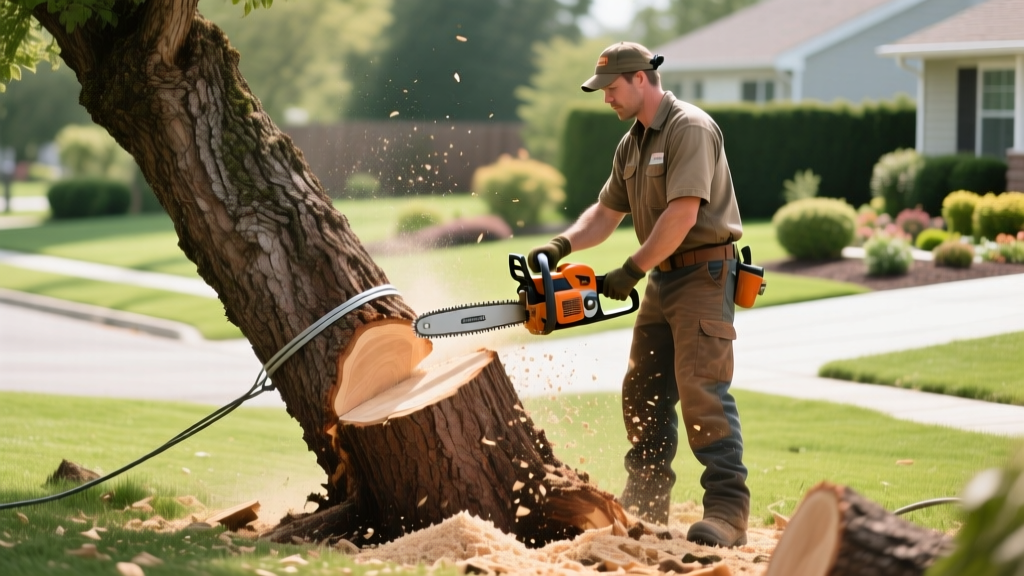
How to Chop Down a Tree Safely: Beginner Felling Guide
Felling a tree in your backyard requires precise geometry, proper equipment, and a strict adherence to safety protocols. While hiring a certified arborist costs between $800 and $2,500 depending on trunk diameter and proximity to structures, homeowners can safely fell small-to-medium yard trees (under 14 inches in diameter at breast height) by following professional logging techniques adapted for residential spaces.
This guide details the exact measurements, gear specifications, and cutting sequences required to chop down a tree safely without damaging your property or risking severe injury.
Assess the Tree: When to Abort and Call a Pro
Before starting your chainsaw, evaluate the tree's structural integrity and surroundings. According to the Arbor Day Foundation, trees with severe decay, deep cracks, or heavy deadwood in the canopy pose unpredictable falling risks.
⚠️ WARNING: Do Not Fell the Tree Yourself If:
- The tree has a severe lean (greater than 15 degrees) opposite your desired fall direction.
- Branches are tangled with overhead utility lines or extend over your home's roofline.
- The trunk exhibits advanced heart rot, fungal conks, or a hollow sound when struck with a mallet.
- You lack a clear, 2.5-times-tree-height escape route in your yard.
Essential Gear for Backyard Tree Felling
Personal protective equipment (PPE) is non-negotiable. The Occupational Safety and Health Administration (OSHA) mandates specific protections for chainsaw operators to prevent lacerations and crush injuries. Budget approximately $1,100 to $1,400 for a reliable beginner felling setup in 2026.
| Equipment Category | Recommended Specification | Approx. Cost (2026) |
|---|---|---|
| Chainsaw | 16-18 inch bar, 45-50cc engine (e.g., Stihl MS 250 or Husqvarna 450 Rancher) | $600 - $680 |
| Forestry Helmet | Class E hard hat with integrated face shield and ear muffs (e.g., Husqvarna ProForest) | $80 - $110 |
| Chainsaw Chaps | Kevlar/Tek-warp wrap-around chaps, minimum 32-inch length (e.g., Labonville) | $120 - $150 |
| Felling Wedges | 15-inch spiked plastic wedges (e.g., Timber Wolf 2-pack) | $15 - $25 |
| Felling Axe | 28-inch handle, 3 lb head for driving wedges | $60 - $90 |
The Physics of the Hinge: Why Trees Fall Predictably
Beginners often assume the notch alone dictates where the tree falls. In reality, the hinge wood—the uncut strip of wood left between the notch and the back cut—acts as a mechanical pivot. It guides the tree and prevents it from twisting or kicking back off the stump.
Calculating Your Hinge Thickness
The industry standard for hinge thickness is exactly 10% of the tree's diameter at breast height (DBH). If you are felling a 12-inch thick oak, your hinge must be exactly 1.2 inches thick. If the hinge is too thin, it will snap prematurely, causing the tree to fall erratically. If it is too thick, the tree will not close the notch and will stall, requiring dangerous manual pushing.
Step-by-Step: Executing the Open-Face Notch and Back Cut
Forget the traditional 45-degree V-notch taught in outdated manuals. Professional loggers use the open-face notch (70 degrees or wider) because it allows the tree to fall further before the hinge breaks, maintaining control for a longer duration.
- Clear Your Escape Routes: Identify two paths angled at 45 degrees backward and away from the intended direction of fall. Clear all tripping hazards (vines, branches, rocks) from these paths. Your escape distance must be at least 2.5 times the height of the tree.
- Cut the Top Notch: Stand to the side of the trunk (never directly behind it). Angle your chainsaw bar downward at a steep 70-degree angle. Cut into the trunk to a depth of about one-third of the tree's diameter.
- Cut the Bottom Notch: Make a horizontal cut that meets the exact endpoint of your top cut. The two cuts must intersect perfectly. If they do not meet, you will create a 'step' that acts as a fulcrum, splitting the trunk vertically.
- Remove the Notch Wood: The wedge of wood should pull out cleanly, leaving a wide, 70-degree open mouth facing your target drop zone.
- Execute the Back Cut: Move to the opposite side of the tree. Position your chainsaw bar perfectly horizontal, exactly 1 to 2 inches higher than the bottom line of your front notch. This height differential prevents the tree from sliding backward off the stump.
- Leave the Hinge: Cut straight inward, stopping when you are exactly 10% of the DBH away from the front notch. Do not cut through the hinge.
- Insert Wedges (If Necessary):strong> If the tree is large and the saw bar gets pinched in the back cut, immediately turn off the saw, pull it out, and tap a 15-inch plastic felling wedge into the kerf with your axe to keep the cut open and begin levering the tree forward.
- Retreat: Once the tree begins to tip, pull your saw, engage the chain brake, and immediately walk (do not run) down your 45-degree escape route. Keep your eyes on the canopy for falling dead branches ('widowmakers').
💡 PRO TIP: The Bore Cut Method for Thick Trees
If the tree's diameter is wider than your chainsaw's bar length, use the plunge-cut (bore cut) method. Plunge the tip of the bar directly into the center of the trunk behind the hinge line, cut outward to establish the hinge, and then cut backward toward yourself to leave the holding wood. This prevents the saw from getting bound in heavy timber.
Common Beginner Mistakes and Failure Modes
Understanding why felling accidents happen is critical for avoiding them. Review these common edge cases before making your first cut.
- Barber-Chairing: This occurs when the trunk splits vertically upward before the tree falls, creating a massive, hinged slab of wood that can snap back violently. Fix: Always ensure your back cut is higher than the bottom of the front notch, and never cut the hinge wood.
- Cutting a Dull Chain: A dull chain produces fine sawdust instead of distinct wood chips, forcing you to push the saw. Pushing increases the risk of kickback. Fix: Sharpen the chain with a round file every time you refill the gas tank, or swap to a fresh chain.
- Ignoring Tension and Compression Wood: When limbing the felled tree, branches under tension (bent away from the ground) will snap back like a whip when cut. Fix: Always make a small relief cut on the compression side (the side touching the ground) before finishing the cut on the tension side.
Frequently Asked Questions
How long does it take to chop down an average yard tree?
For a beginner cutting a 12-inch diameter pine or oak with a 50cc chainsaw, the felling process (notching and back cutting) takes roughly 15 to 20 minutes. However, limbing (removing branches) and bucking (cutting the trunk into 16-inch logs) will take an additional 1 to 2 hours depending on the density of the canopy.
Can I use an electric battery-powered chainsaw to fell a tree?
Yes, but only for small trees (under 10 inches DBH). Modern 56V or 80V lithium-ion chainsaws (like the EGO Power+ 16-inch) offer sufficient torque for small yard trees. However, for trees over 12 inches, the limited run-time and slower chain speed of battery models increase the risk of the bar getting pinched mid-cut. Stick to gas-powered saws for medium-to-large trunks.

