
Tree Care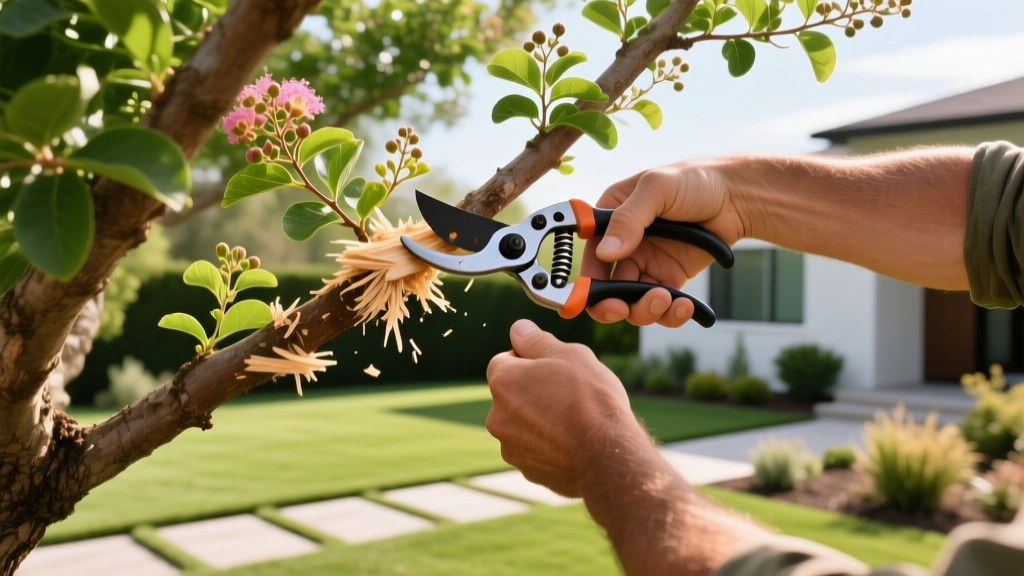
Controlling Crape Myrtle Height: A Pruning & Selection Guide
The Crape Myrtle Height Spectrum
The most effective way to manage crape myrtle height begins long before you plant. Crape myrtles (Lagerstroemia indica and its hybrids) are bred into four distinct size categories. Attempting to force a standard-sized cultivar to remain a shrub through aggressive pruning is a losing battle that compromises the tree's vascular system and aesthetic form. According to the Clemson University Home & Garden Information Center, matching the cultivar's genetic mature height to your available vertical space is the single most critical decision in crape myrtle care.
| Size Category | Mature Height | Mature Spread | Notable Cultivars | Best Application |
|---|---|---|---|---|
| Dwarf | 2 to 5 feet | 3 to 5 feet | Pocomoke, Chickasaw, New Orleans | Foundation plantings, low borders, patio containers |
| Semi-Dwarf | 6 to 12 feet | 6 to 10 feet | Hopi, Acoma, Zuni, Sioux | Screening, near single-story rooflines, courtyard centerpieces |
| Intermediate | 13 to 20 feet | 10 to 15 feet | Tuscarora, Catawba, Tonto, Comanche | Driveway lining, large island beds, two-story privacy screens |
| Standard / Tree | 21 to 30+ feet | 15 to 25 feet | Natchez, Muskogee, Tuskegee, Dynamite | Street trees, large shade canopies, distant focal points |
Selecting the Right Cultivar for Overhead Clearances
When planting near infrastructure, you must calculate the mature crape myrtle height against overhead obstructions. A standard 'Natchez' will easily reach 30 feet with a 20-foot spread. Planting this under a 20-foot power line guarantees future conflicts with utility companies, who will likely top the tree indiscriminately.
Decision Framework: Vertical Space Allocation
- Under Power Lines (15-20 ft clearance): Restrict selection to Semi-Dwarf cultivars (max 12 feet). Allow 3 feet of vertical buffer for wind sway.
- Near Single-Story Rooflines (10-12 ft eaves): Choose Dwarf or Semi-Dwarf varieties. Plant at least 8 feet away from the foundation to account for mature canopy spread, not just height.
- Open Lawn / Street Edge (No overhead limits): Standard cultivars are ideal. They develop the highly prized exfoliating bark on their lower trunks, which is only visible when allowed to grow to their natural 25+ foot height.
Step-by-Step Pruning to Maintain Target Crape Myrtle Height
If you have selected the right cultivar but need to refine its shape or slightly restrict its crape myrtle height to maintain sightlines, you must use thinning cuts rather than heading cuts. Thinning removes a branch back to its point of origin (the trunk or a larger lateral branch), preserving the tree's natural vase-like architecture.
1. Timing and Tool Selection
Prune in late winter (February to early March in USDA Zones 7-9) while the tree is completely dormant but before spring bud break. As of 2026, professional-grade tools remain a worthwhile investment to prevent bark tearing. Use bypass pruners (like the Felco F2, approx. $65) for branches under 1/2 inch, loppers for 1/2 to 1.5 inches, and a fine-toothed pruning saw (like the Silky Gomboy 210, approx. $55) for anything larger.
2. The Three-Step Thinning Process
- Remove the 'Three Ds': Cut out all dead, damaged, and diseased wood first. Make cuts flush with the branch collar—the swollen area where the branch meets the trunk. Never leave stubs.
- Eliminate Inward and Crossing Growth: Identify branches growing toward the center of the canopy or rubbing against adjacent limbs. Remove the weaker of the two crossing branches at its point of origin.
- Reduce Height via Lateral Reduction: If the tree is slightly too tall, identify the longest vertical leaders. Trace them down to a lateral side branch that is at least one-third the diameter of the leader being removed. Make your cut just above this lateral branch. This transfers the apical dominance to the side branch, lowering the overall height without triggering a massive flush of weak water sprouts.
Warning: The Anatomy of 'Crape Murder'
Topping—cutting thick trunks back to arbitrary, blunt stubs—is often mistakenly called 'pruning.' According to Texas A&M AgriLife Extension, this practice destroys the tree's natural form, delays blooming by up to a month, and creates large, unhealed wounds that invite wood-decaying fungi. The resulting 'Medusa head' of whippy, unattached water sprouts is structurally weak and highly susceptible to wind breakage and powdery mildew due to poor air circulation.
Correcting an Overgrown or Topped Crape Myrtle
If you have inherited a property with a severely topped crape myrtle, or one that has wildly outgrown its space due to years of improper heading cuts, you can rehabilitate it. This is not a one-season fix; it requires a structured three-year plan to restore structural integrity.
- Year 1 (The Reset): In late winter, use a pruning saw to cut the blunt, knobby 'knuckles' (the swollen topping wounds) back to the original, un-topped trunk or to a major lateral branch. Expect the tree to look stark and heavily amputated. It will push aggressive new growth in the spring.
- Year 2 (Selection and Thinning): The tree will produce dozens of water sprouts from the new cut sites. In early summer, select 2 to 3 of the strongest, best-angled sprouts per cut site to become the new primary branches. Physically rub off or snap off all other competing sprouts while they are still green and flexible.
- Year 3 (Refinement): By the third winter, the selected branches will have lignified (turned woody). Perform standard thinning cuts to remove any secondary crossing branches, allowing the canopy to open up and resume its natural vase shape.
Soil and Fertilization Impacts on Vertical Growth
Excessive nitrogen is a primary driver of uncontrollable vertical growth in crape myrtles. Homeowners often apply high-nitrogen lawn fertilizers (like 28-0-3) near the tree's drip line, which forces the tree to push rapid, weak vertical shoots that ruin the desired height profile.
Crape myrtles are light feeders. If a soil test indicates a deficiency, apply a balanced, slow-release fertilizer (such as 8-8-8 or 10-10-10) in early spring at a rate of no more than 1 pound of actual nitrogen per 1,000 square feet of root zone. Avoid fertilizing after July, as late-season growth will not harden off before winter freezes, leading to tip dieback that complicates your height management strategy the following year.
Frequently Asked Questions
Can I use chemical growth regulators to stop my crape myrtle from getting taller?
While paclobutrazol-based growth regulators are used in commercial nursery production to suppress internode elongation, they are not recommended for residential landscape use on crape myrtles. Improper dosing can cause severe leaf puckering, chlorosis, and long-term stunting that makes the tree highly vulnerable to crape myrtle bark scale (Eriococcus lagerstroemiae). Mechanical pruning via lateral reduction remains the safest, most effective method.
How much does professional crape myrtle pruning cost?
As of 2026, hiring an ISA-certified arborist to properly thin and structurally prune a standard-sized crape myrtle typically costs between $175 and $350 per tree, depending on regional labor rates and canopy accessibility. Be wary of budget 'tree services' that quote $50 per tree; these operators almost exclusively use the harmful topping method because it is faster and requires less technical skill.
Does crape myrtle height affect its bloom production?
Yes. Crape myrtles bloom exclusively on new wood (the current season's growth). When you top a tree, the massive flush of water sprouts it produces in response to the trauma results in smaller, weaker flower panicles that often droop or break under their own weight. A properly pruned tree with a balanced root-to-shoot ratio will produce fewer, but significantly larger and more robust flower clusters.

