
Tree Care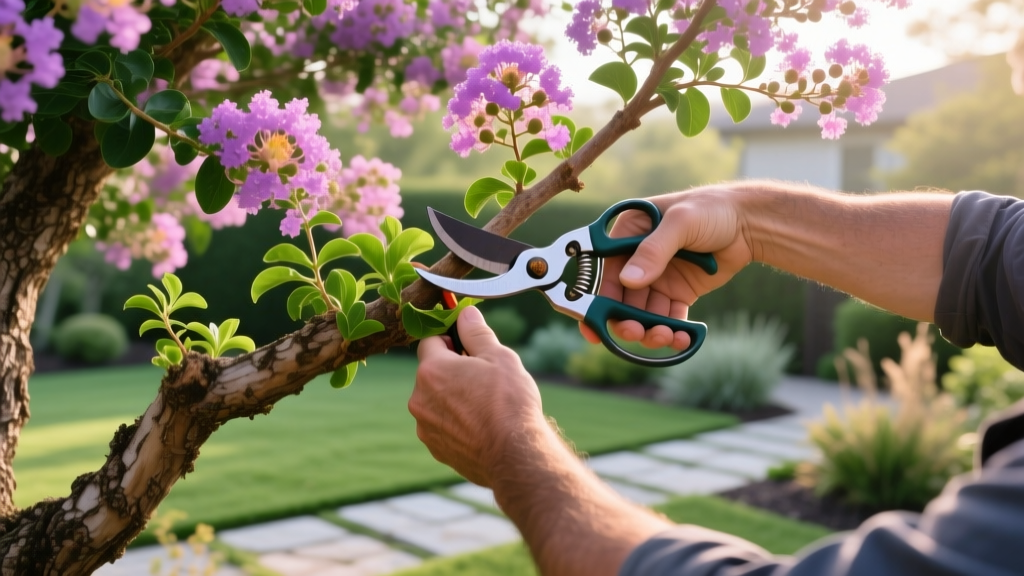
How to Prune and Shape Crape Myrtle Bushes for Maximum Blooms
The Shrub-Form Advantage: Why Choose Crape Myrtle Bushes?
While standard crape myrtles (Lagerstroemia indica and its hybrids) are frequently trained into small, multi-trunk trees, crape myrtle bushes offer a distinct landscaping advantage. Shrub-form and dwarf cultivars provide dense privacy screens, vibrant eye-level color, and require significantly less structural maintenance than their towering counterparts. When maintained correctly, these bushes produce a massive canopy of summer blooms without the leggy, bare-trunk aesthetic that plagues poorly managed tree forms.
Transitioning from tree-care logic to shrub-care logic is critical. Treating a bush-form crape myrtle like a tree will result in sparse lower branching, while aggressive topping (colloquially known as 'crape murder') will destroy the plant's natural, graceful habit. This guide details the exact horticultural techniques required to establish, shape, and maintain crape myrtle bushes for maximum floral output.
Selecting the Right Shrub-Form Cultivars
Not all crape myrtles are suited for bush habits. Planting a standard 25-foot tree cultivar and attempting to prune it into a 4-foot bush will result in a constant, losing battle against the plant's apical dominance. Select true dwarf or semi-dwarf cultivars bred specifically for compact, branching growth.
| Cultivar | Mature Height | Bloom Color | Mildew Resistance |
|---|---|---|---|
| Pocomoke | 2 - 3 ft | Deep Rose Pink | High |
| Chickasaw | 4 - 5 ft | Lavender | High |
| Tonto | 8 - 10 ft | Fuchsia / Maroon | Moderate |
| Zuni | 10 - 12 ft | Medium Lavender | High |
Step-by-Step Planting Guide for Bush Habits
Proper initial planting dictates the long-term density of your crape myrtle bushes. These shrubs demand well-draining soil and full sun (minimum 8 hours of direct, unfiltered sunlight) to trigger heavy flowering.
- Dig the Correct Hole: Excavate a hole exactly as deep as the nursery container's root ball, but 2.5 times as wide. Crape myrtles are highly susceptible to root rot if planted too deep; the root flare must sit 1 to 2 inches above the surrounding grade.
- Score the Root Ball: Use a sterilized utility knife to make four vertical, 1-inch-deep slices down the sides of the root ball. This severs circling roots and forces the shrub to establish lateral feeder roots into the native soil.
- Backfill Without Heavy Amendment: Avoid the 'bathtub effect' by backfilling exclusively with native soil. Amending the planting hole with rich compost in heavy clay soils creates a moisture trap that drowns the shrub. If your soil is exceptionally poor, top-dress the surrounding 4-foot radius with 2 inches of compost after planting.
- Initial Watering Metric: Apply 3 gallons of water immediately after planting. For the first 60 days, water the shrub twice weekly with 2 gallons per session, adjusting based on rainfall. Taper off by week 9 to encourage deep drought tolerance.
The 'No-Crape-Murder' Pruning Framework
The most common mistake homeowners make with crape myrtle bushes is topping them—hacking off the top third of the canopy in late winter. According to the Clemson University Home and Garden Information Center, this practice, known as crape murder, forces the plant to push out weak, whippy, unbranched shoots that cannot support the weight of summer blooms and are highly prone to wind breakage.
Warning: Stop Topping Your Shrubs
Topping crape myrtle bushes destroys their natural architectural form, delays blooming by up to a month, and creates knobby, unsightly 'knuckles' at the cut sites where the plant repeatedly attempts to heal. Always prune selectively back to a lateral branch or bud.
Topping crape myrtle bushes destroys their natural architectural form, delays blooming by up to a month, and creates knobby, unsightly 'knuckles' at the cut sites where the plant repeatedly attempts to heal. Always prune selectively back to a lateral branch or bud.
The 3-Step Selective Pruning Method
Execute this framework in late winter (February to early March), just before the buds break dormancy but after the threat of severe freezing has passed.
- Step 1: Base and Sucker Removal. Cut any root suckers emerging from the ground completely flush with the soil line. For bush forms, select 3 to 5 primary, well-spaced canes emerging from the base and remove all other competing basal shoots.
- Step 2: Interior Thinning. Identify crossing, rubbing, or inward-growing branches. Using sharp bypass pruners, remove these branches entirely at their point of origin (the branch collar). This opens the canopy center to sunlight and airflow, which is critical for preventing powdery mildew.
- Step 3: Heading Cuts for Density. To encourage bushy lateral growth, make heading cuts on the primary branches. Locate an outward-facing bud and make a clean, 45-degree angled cut exactly 1/4 inch above the bud. Never leave stubs, as they will die back and invite wood-boring insects.
Fertilization and Pest Management
Crape myrtle bushes are light feeders. Excessive nitrogen promotes aggressive, sappy vegetative growth at the direct expense of flower production and increases susceptibility to aphids.
Fertilizer Protocol
Apply a balanced, slow-release granular fertilizer (such as an 8-8-8 or 10-10-10 NPK ratio) in early spring (March). The University of Florida IFAS Extension recommends applying 1 pound of fertilizer per 100 square feet of root zone. Broadcast the granules evenly from the base to the drip line, water them in thoroughly, and do not fertilize again after June, as late-season feeding stimulates tender growth that will die in winter freezes.
Managing Pests and Fungi
- Powdery Mildew: Appears as a white, dusty coating on new leaves in humid spring weather. Prevent it by planting resistant cultivars (like those from the 'Indian Tribe' series) and ensuring proper canopy airflow. If infection occurs, spray with a fungicide containing myclobutanil or propiconazole at the first sign of symptoms.
- Crape Myrtle Aphids: These pale yellow insects cluster on the undersides of leaves in early summer, excreting sticky honeydew that leads to black sooty mold. For minor infestations, blast the shrub with a strong jet of water or apply insecticidal soap. Note on Neonicotinoids: While systemic imidacloprid drenches were historically used, many states now restrict their use on blooming shrubs to protect pollinators. Rely on horticultural oils applied in the dormant season, or use targeted contact sprays post-bloom.
Troubleshooting Common Bush-Form Issues
Why isn't my crape myrtle bush blooming?
Diagnosis: Lack of blooms is almost always caused by one of three factors: insufficient sunlight (less than 8 hours), late-season pruning (which removes the current year's flower buds), or excessive nitrogen fertilizer. Move the shrub if it is shaded by larger trees, halt all pruning after March, and switch to a low-nitrogen, high-phosphorus fertilizer (like a 5-10-10 bloom booster) next spring.
Why is the bark peeling off the trunks?
Diagnosis: Do not panic. Smooth, exfoliating bark is a natural, highly desirable characteristic of mature crape myrtles. As the shrub ages, the outer gray bark peels away in sheets to reveal a beautiful, mottled under-bark ranging from cinnamon to pale gray. This is a sign of a healthy, maturing plant, not a disease.
My bush is growing leggy and bare at the bottom.
Diagnosis: This occurs when the shrub is reaching for light or has been repeatedly topped, causing apical dominance to suppress lower lateral buds. To fix this, perform a 'rejuvenation cut' in late winter: cut the three main canes back to 12 inches above the soil line. The shrub will push out dense, vigorous new basal growth in the spring, restoring its full, bushy habit within one growing season.

