
Tree Care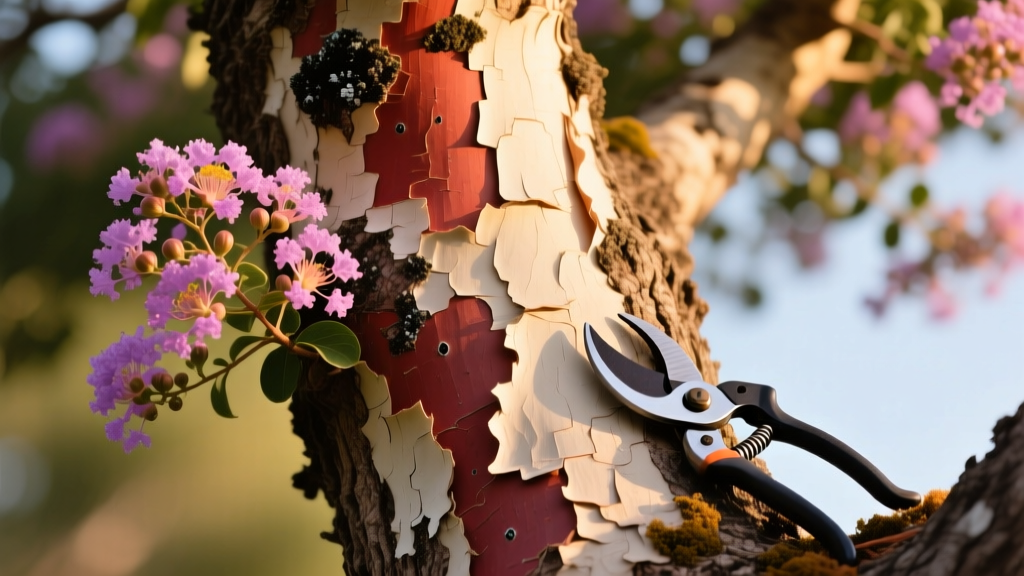
Crape Myrtle Trunk Care: Peeling Bark, Sooty Mold, and Pruning Tips
The crape myrtle (Lagerstroemia indica) is heavily prized for its vibrant summer blooms, but its true architectural value lies in its trunk. While beginners often focus exclusively on the canopy, the smooth, mottled, exfoliating bark provides stunning winter interest and structural elegance. However, improper pruning, aggressive maintenance, and specific pest infestations can permanently ruin this feature. Understanding the biology of the crape myrtle trunk is the first step toward cultivating a healthy, visually striking specimen in your landscape.
The Anatomy of a Crape Myrtle Trunk: Why It Peels
The peeling or "exfoliating" bark of a mature crape myrtle is a natural biological process, not a sign of disease or distress. As the tree grows, the rigid outer layer of bark cannot expand. To accommodate the expanding cambium layer beneath, the tree sheds its outer bark in thin, papery sheets. This reveals the fresh, colorful inner bark beneath, which gradually oxidizes and changes color over the winter months.
Pro Tip: Cultivar Selection for Trunk Beauty
If you are planting a new tree specifically for winter trunk interest, select cultivars bred for exceptional bark. 'Natchez' features striking chestnut-brown to light gray peeling bark. 'Fantasy' offers a brilliant reddish-brown trunk that contrasts beautifully with evergreen shrubs. 'Muskogee' and 'Kiowa' both develop smooth, slate-gray and tan mottled trunks as they mature.
If you are planting a new tree specifically for winter trunk interest, select cultivars bred for exceptional bark. 'Natchez' features striking chestnut-brown to light gray peeling bark. 'Fantasy' offers a brilliant reddish-brown trunk that contrasts beautifully with evergreen shrubs. 'Muskogee' and 'Kiowa' both develop smooth, slate-gray and tan mottled trunks as they mature.
Young crape myrtles often have rough, scaly, or unremarkable brown bark. Do not attempt to manually peel the bark off a young tree; the exfoliation process typically begins only after the tree reaches 3 to 5 years of age and the trunk diameter exceeds 2 inches. Manually stripping immature bark exposes the vulnerable cambium layer to pathogens and sunscald.
Step-by-Step: Cleaning and Limbing Up Your Trunk
To showcase the beautiful trunk, you must "limb up" the tree by removing lower lateral branches and basal suckers. This elevates the canopy and exposes the mottled bark. According to the University of Florida IFAS Extension, proper limb removal is critical to prevent tearing the delicate inner bark.
The 3-Cut Pruning Method
For any lateral branch thicker than 1 inch, never use a single cut. The weight of the falling branch will strip the bark down the side of the trunk, leaving a massive, rot-prone wound. Use this exact sequence:
- The Undercut: Using a sharp pruning saw (like the Silky Gomboy 210), cut one-third of the way through the branch from the underside, about 6 inches away from the trunk.
- The Top Cut: Move 1 inch further out on the branch and cut completely through from the top down. The branch will snap off cleanly at the undercut, preventing bark tearing.
- The Collar Cut: Remove the remaining 6-inch stub by cutting just outside the "branch collar" (the swollen area where the branch meets the trunk). Do not cut flush with the trunk; this destroys the tree's natural compartmentalization zone and invites decay.
For basal suckers emerging from the root flare, use sharp bypass pruners (such as Felco 2) to cut them flush with the soil line. Leaving even a half-inch stub will result in three new suckers sprouting from the cut node the following spring.
Troubleshooting Common Crape Myrtle Trunk Issues
The smooth bark of a crape myrtle makes it highly susceptible to specific environmental and biological stressors. Use this diagnostic matrix to identify and treat trunk anomalies.
| Symptom | Diagnosis | Actionable Treatment |
|---|---|---|
| Black, powdery coating on bark | Sooty Mold (fungus growing on aphid/scale honeydew) | Wash trunk with 1 tbsp mild dish soap per gallon of water using a soft brush. Treat canopy pests with insecticidal soap. |
| White, waxy, crusty bumps on bark | Crape Myrtle Bark Scale (Acanthococcus lagerstroemiae) | Apply Dinotefuran soil drench in early spring. Scrub off heavy crusts with a soft-bristle brush to expose pests to treatment. |
| Deep vertical cracks on south-facing bark | Sunscald / Frost Cracking (winter temp fluctuations) | Wrap young trunks with white tree wrap in late fall. Never apply nitrogen fertilizer after August 1 to allow bark hardening. |
| Swollen, knobby "knuckles" at branch junctions | "Crape Murder" (previous topping damage) | Perform drop-crotch pruning just below the knuckle to a lateral branch over a 2-3 year period to restore structure. |
Deep Dive: Crape Myrtle Bark Scale (CMBS)
First identified in the US in 2004, CMBS is a devastating pest that specifically targets the trunk and branches. The Clemson University Home & Garden Information Center notes that severe infestations can completely encrust the trunk in white wax, stunting growth and killing the tree. Because the waxy covering protects the insects from contact sprays, systemic insecticides are required. While Imidacloprid was historically the standard, many regions now restrict its use due to pollinator concerns. Dinotefuran (e.g., Safari 20SG) applied as a soil drench when the tree begins to leaf out in spring is currently the most effective and compliant treatment option.
Stop "Crape Murder": Protecting the Trunk Structure
The most common mistake beginners make is "topping" or "pollarding" the tree—chopping off the top third of the canopy in late winter. This practice, colloquially known as "crape murder," destroys the natural form of the tree and permanently ruins the trunk's aesthetic.
"Topping crape myrtles delays blooming, weakens the tree's structure, and destroys the natural beauty of the exfoliating trunk by creating unsightly, rot-prone knuckles that will never heal smoothly."
— University of Florida IFAS Extension Guidelines on Crape Myrtle Pruning
When a trunk is topped, the tree responds by pushing out dozens of weak, spindly "water sprouts" from the cut site. The tree attempts to heal the massive, unnatural wound by forming a swollen callus tissue (a "knuckle"). This knuckle never develops the beautiful peeling bark of the lower trunk; instead, it remains rough, dark, and highly susceptible to fungal wood rot. If you have inherited a topped crape myrtle, do not attempt to fix it in a single season. Select 3 to 5 of the strongest, most upright water sprouts emerging just below the knuckle, and prune away the rest. Over the next three years, gradually cut back the knuckle itself just above your selected new leaders, allowing the tree to rebuild a natural, tapering trunk structure.
Seasonal Trunk Maintenance Calendar
Maintaining a pristine crape myrtle trunk requires timing your interventions to match the tree's biological cycles.
- Winter (Dormant Season): This is the time for structural pruning and trunk inspection. Apply a 2% to 4% horticultural oil (such as Bonide All Seasons) to the trunk and branches on a day when temperatures are above 40°F to smother overwintering scale insects and aphid eggs. Remove any crossing branches that are rubbing against the main trunk, as the friction will scrape away the delicate inner bark.
- Spring (Bud Break): Apply systemic soil drenches for bark scale just as the buds begin to swell and sap flow increases. Remove any winter-damaged bark that is hanging loosely, but do not pull bark that is still firmly attached to the cambium.
- Summer (Active Growth): Monitor the trunk for sooty mold. If you notice black powder accumulating on the lower trunk, inspect the canopy above for aphids. Treating the canopy stops the honeydew drip that feeds the trunk mold. Keep mulch pulled at least 3 inches away from the base of the trunk to prevent collar rot and rodent damage.
- Fall (Hardening Off): Cease all fertilization and heavy watering by late August. This allows the trunk's outer bark to harden and mature before the first freeze, significantly reducing the risk of winter frost cracking.
By shifting your focus from just the summer canopy to the structural integrity of the crape myrtle trunk, you transform your landscape into a four-season architectural display. Proper pruning techniques and proactive pest management ensure the bark remains the undisputed star of your winter garden.

