
Tree Care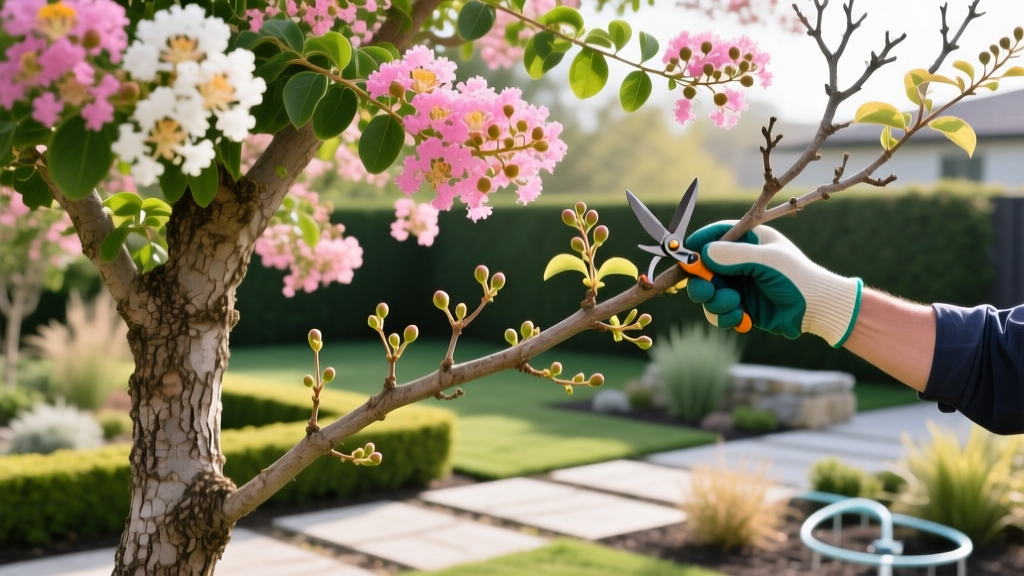
Crape Myrtle Zone Guide: Seasonal Planting & Pruning Calendars
Crape myrtles (Lagerstroemia indica and its hybrids) are the undisputed champions of the southern summer landscape, offering 90 to 120 days of continuous bloom. However, treating a crape myrtle in Zone 7b (like Richmond, VA) the exact same way as one in Zone 9a (like Orlando, FL) guarantees suboptimal blooms, winter dieback, or severe pest vulnerability. Understanding your specific crape myrtle zone dictates everything from soil temperature planting thresholds to systemic pest control windows.
This guide provides a precise, zone-specific seasonal calendar and actionable maintenance metrics to ensure your Lagerstroemia specimens thrive, flower heavily, and resist regional pathogens.
Decoding the Crape Myrtle Zone Map
While many nursery tags broadly state 'Zones 7-9', the micro-climates within these zones drastically alter your maintenance schedule. According to the USDA Plant Hardiness Zone Map, the absolute minimum winter temperatures dictate which cultivars will survive without dieback.
- Zone 6b/7a (Marginal Edge - 0°F to 5°F): Crape myrtles often behave as herbaceous perennials or shrubs here. Top growth frequently dies back to the snow line. Cultivars like 'Acoma' or 'Centennial Spirit' are required, and they must be heavily mulched. Expect 60-75 days of bloom rather than 120.
- Zone 7b/8a/8b (The Core Sweet Spot - 5°F to 20°F): This is the ideal crape myrtle zone. Trees develop classic peeling bark, reach 20-30 feet in height, and achieve maximum bloom density. Cultivars like 'Natchez', 'Tuscarora', and 'Dynamite' excel here.
- Zone 9a/9b (Southern Edge - 20°F to 30°F): Trees thrive and grow rapidly, but the lack of winter chilling hours can delay spring leaf-out and reduce bloom uniformity on high-chill cultivars. Low-chill hybrids are necessary.
Regional Seasonal Care Calendar
Timing is everything. Applying a systemic insecticide in Zone 8 in May is effective; applying it in Zone 7 in May might miss the critical spring sap-flow window. Use this matrix to schedule your annual maintenance.
| Maintenance Task | Zone 7 (e.g., Richmond, VA) | Zone 8 (e.g., Atlanta, GA) | Zone 9 (e.g., Orlando, FL) |
|---|---|---|---|
| Spring Planting | Mid-April to May | March to April | February to March |
| Structural Pruning | Early to Mid-March | Mid-February | Late January |
| First Fertilization | April 15 - May 1 | March 15 - April 1 | February 15 - March 1 |
| CMBS Soil Drench | April (at bud swell) | March (at bud swell) | February (at bud swell) |
| Fall Planting Window | Not Recommended | Sept - Oct (with mulch) | Oct - Nov (Ideal) |
Zone-Specific Planting Windows & Soil Metrics
The most common cause of first-year crape myrtle failure is planting in soil that is too cold, which leads to root rot (Phytophthora) before the taproot establishes. According to Clemson University's Home and Garden Information Center, crape myrtles require warm soil to initiate new root growth.
The 65°F Soil Temperature Rule
Do not plant container-grown or balled-and-burlapped crape myrtles until the soil temperature at a 4-inch depth consistently reads 65°F or higher for five consecutive days. Use a digital soil probe thermometer rather than relying on ambient air temperature. In Zone 7, air temps might hit 75°F in March, but heavy clay soils can remain in the 50s until late April, making spring planting risky without raised berms.
Fall vs. Spring Planting by Zone
In Zone 9, fall planting (October-November) is vastly superior to spring planting. The soil remains warm enough for root establishment through December, while the cooler air reduces transpiration stress. By the time the brutal Zone 9 summer heat arrives in May, the root system is fully anchored. Conversely, in Zone 7, fall-planted trees risk severe winter desiccation before roots can secure adequate moisture, making spring planting the only viable option.
Pruning Timing and the Chill Hour Dilemma
Pruning a crape myrtle too early in the winter stimulates tender new growth that will be destroyed by a late frost. Pruning too late removes the current season's bloom wood, as crape myrtles flower exclusively on new wood produced in the current spring.
The exact timing for structural pruning is when the leaf buds begin to swell and turn a distinct reddish-green, but before they break open. In Zone 8, this physiological trigger typically occurs between February 10th and February 25th.
⚠️ Warning: The Zone 9/10 Chill Hour Deficit
Many gardeners in deep South Florida (Zone 10a) wonder why their crape myrtles refuse to bloom despite perfect fertilization and full sun. Crape myrtles require a dormant chilling period—typically 150 to 300 hours of temperatures below 45°F—to break dormancy uniformly. If your zone does not accumulate these chill hours, the tree will exhibit erratic, sparse leaf-out and fail to trigger the hormonal cascade required for flower panicle initiation. In Zone 10, abandon Lagerstroemia indica and pivot to low-chill alternatives like the Vitex (Chaste Tree) or tropical Hibiscus.
Many gardeners in deep South Florida (Zone 10a) wonder why their crape myrtles refuse to bloom despite perfect fertilization and full sun. Crape myrtles require a dormant chilling period—typically 150 to 300 hours of temperatures below 45°F—to break dormancy uniformly. If your zone does not accumulate these chill hours, the tree will exhibit erratic, sparse leaf-out and fail to trigger the hormonal cascade required for flower panicle initiation. In Zone 10, abandon Lagerstroemia indica and pivot to low-chill alternatives like the Vitex (Chaste Tree) or tropical Hibiscus.
Stop 'Crape Murder'
Topping crape myrtles (cutting all branches back to the same arbitrary height) destroys the tree's natural architecture and creates weak, knuckled joints that snap in high winds. Instead, practice 'drop-crotching': prune back to a lateral branch that is at least one-third the diameter of the branch being removed. The Texas A&M AgriLife Extension strongly advocates for this method to maintain structural integrity and promote larger, sturdier bloom panicles rather than dozens of weak, spindly shoots.
Pest Management Timing: Crape Myrtle Bark Scale (CMBS)
Crape Myrtle Bark Scale (Eriococcus lagerstroemiae) is a devastating piercing-sucking insect that coats branches in white, waxy ovisacs and promotes heavy black sooty mold. Because the waxy coating protects them from contact sprays, systemic soil drenches are the only effective treatment.
Systemic Drench Application Metrics
The active ingredient of choice is Imidacloprid (e.g., Bayer Advanced 12 Month Tree and Shrub Insect Control, typically 1.47% concentration). However, the timing of the application is strictly zone-dependent:
- The Mechanism: Imidacloprid must be taken up by the roots and translocated upward through the xylem via spring sap flow.
- Zone 7 Timing: Apply in mid-April. Applying in March is useless, as the roots are dormant and the chemical will leach away before uptake.
- Zone 8/9 Timing: Apply in early to mid-March, exactly as the first leaf buds break.
- Application Rate: Mix 1.5 to 2.5 ounces of the liquid concentrate per inch of trunk circumference (measured at breast height). Pour the mixture in a 12-inch band directly over the root ball, not against the trunk flare, and water it in with 1/4 inch of irrigation to move it into the top 6 inches of soil where feeder roots reside.
Fertilization: NPK Ratios and Late-Season Cut-offs
Crape myrtles are relatively light feeders compared to fruit trees. A standard 8-8-8 or 10-10-10 granular fertilizer is sufficient. Apply at a rate of 1 pound of actual nitrogen per 1,000 square feet of root zone area in early spring.
Critical Cut-off Date: Never fertilize a crape myrtle after July 15th in Zones 7 and 8. Late-season nitrogen applications force the tree to produce soft, succulent vegetative growth in August and September. This growth will not have time to lignify (harden off) before the first frost, resulting in severe winter dieback that can kill the upper canopy of the tree.
FAQ: Crape Myrtle Zone Edge Cases
Can I grow a crape myrtle in Zone 6?
Yes, but with managed expectations. You must select dwarf or semi-dwarf cultivars bred for extreme cold tolerance, such as 'Chickasaw' or 'Pocomoke'. Plant them in a microclimate protected from winter winds (like the south side of a brick wall), and treat them as a dieback shrub. They will die to the ground most winters but will resprout from the roots and bloom in late summer.
Why is my Zone 8 crape myrtle blooming a month later than my neighbor's?
Cultivar genetics dictate bloom timing. Early bloomers like 'Tuscarora' and 'Catawba' will start flowering in late June in Zone 8. Late bloomers like 'Natchez' and 'Fantasy' may not initiate panicles until late July. Additionally, heavy spring pruning delays bloom time by 2 to 3 weeks, as the tree must expend energy regenerating lost vegetative mass before it can transition to reproductive flowering.
Does soil pH affect crape myrtles in different zones?
Crape myrtles prefer a slightly acidic soil pH between 5.0 and 6.5. In the highly alkaline soils of Zone 8/9 regions like Texas or Florida, a high pH locks up iron and manganese, causing severe chlorosis (yellowing leaves with green veins). If your soil pH is above 7.0, apply chelated iron or elemental sulfur to lower the pH, rather than simply applying more standard fertilizer.

