
Tree Care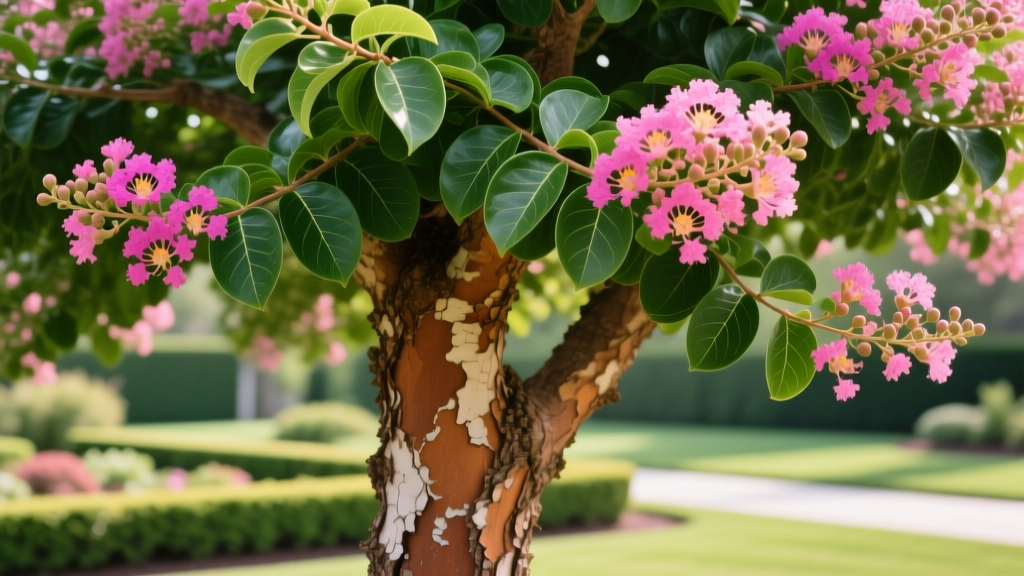
Crape Myrtles Problem Diagnosis: Fixing Bark, Leaves, and Blooms
Crape myrtles (Lagerstroemia indica) are notoriously resilient landscape staples, but the introduction of invasive pests and widespread improper pruning have shifted them from 'plant-and-forget' ornamentals to trees requiring active diagnostic management. Homeowners frequently misdiagnose symptoms, treating fungal issues when the root cause is an insect vector, or applying fertilizers to trees that are actually suffering from structural damage. Accurate problem diagnosis is the only way to restore the health and prolific blooming cycles these trees are famous for.
Crape Myrtle Bark Scale (CMBS) Identification & Eradication
First detected in the US in 2013, Crape Myrtle Bark Scale (Eriococcus lagerstroemiae) has become the most destructive pest threatening these trees. Unlike the azalea bark scale which primarily targets branches, CMBS colonizes the entire trunk and scaffolding branches, eventually girdling and killing the tree.
Diagnostic Symptoms
- White Waxy Bumps: Look for tiny, white, felt-like bumps clustered along the bark, particularly in branch crotches and on the main trunk.
- Black Sooty Mold: As the scale insects feed, they excrete honeydew. This sticky substance promotes the growth of black sooty mold, making the trunk look like it has been charred by fire.
- Premature Leaf Drop: Heavy infestations cause severe canopy thinning and stunted new growth.
Diagnostic Warning: Do not confuse CMBS with the tree's natural exfoliating bark. Crape myrtles naturally shed their outer bark in patches to reveal smooth, mottled inner bark. If the white spots are raised, waxy, and scrape off to reveal a pinkish-purple insect underneath, you are dealing with CMBS.
Targeted Treatment Protocol
Contact sprays are largely ineffective because the waxy scale covering protects the insect. You must use systemic insecticides that the tree absorbs and distributes to the feeding sites. According to Clemson University Extension, the two most effective active ingredients are Dinotefuran and Imidacloprid.
- Dinotefuran (e.g., Safari 20SG): This is the gold standard for rapid knockdown. Apply as a trunk spray. Mix 0.5 to 1.0 fl oz of product per inch of trunk diameter (measured at breast height). Spray the lower 3 to 4 feet of the trunk until runoff. The tree absorbs the chemical through the bark within 14 days. Cost: Approximately $60 to $80 for a 6 oz bottle, which treats multiple average-sized trees.
- Imidacloprid (e.g., Bayer Advanced 12 Month Tree & Shrub): Best for long-term, preventative maintenance. Apply as a soil drench in early spring before new growth emerges. Mix 1.6 fl oz per inch of trunk diameter in a gallon of water and pour it directly over the root zone. Cost: Roughly $25 to $35 per bottle.
Note: To manage sooty mold, simply treat the scale. Once the honeydew source is eliminated, the black mold will naturally weather off the bark over a few months.
Fungal Pathogens: Powdery Mildew vs. Sooty Mold
Fungal diseases frequently plague crape myrtles, particularly in humid climates with poor air circulation. However, the treatment depends entirely on correctly identifying which fungus is present.
Powdery Mildew (Erysiphe lagerstroemiae)
The Diagnosis: A white to grayish powdery coating appears on new leaves, shoots, and flower buds. Unlike sooty mold, this fungus directly attacks plant tissue, causing leaves to curl, turn yellow, and drop. It severely inhibits bloom development, causing flower buds to abort before opening.
The Solution: Powdery mildew thrives in cool, humid nights and warm days.
- Cultural: Ensure trees receive a minimum of 6 to 8 hours of direct sunlight. Prune out interior crossing branches to increase airflow.
- Chemical: If planting new trees, select resistant varieties like 'Natchez', 'Muskogee', or 'Tuscarora'. For existing susceptible trees, apply a fungicide containing Myclobutanil (e.g., Spectracide Immunox) or Propiconazole (e.g., Bonide Infuse) at the first sign of spring bud break. Repeat every 10 to 14 days during humid spells. A standard hose-end sprayer application costs about $15 to $20 per season.
Identifying the Root Cause of Sooty Mold
As mentioned in the CMBS section, sooty mold (Capnodium spp.) is a secondary pathogen. It does not infect plant tissue; it grows on the sugary honeydew excreted by sap-sucking insects. If your crape myrtle leaves are coated in black powder, look at the undersides of the leaves above the blackened areas. You will find either Crape Myrtle Aphids (Sarucallis kahawaluokalani) or Bark Scale. Treat the aphids with a strong blast of water or insecticidal soap, and treat the scale with the systemic protocols outlined above.
Reversing "Crape Murder" and Restoring Bloom Cycles
"Crape murder" is the colloquial term for the severe, indiscriminate topping of crape myrtles, usually performed in late winter. Homeowners mistakenly believe that chopping the tree back to thick, ugly stunts will force more vigorous blooming. In reality, this practice destroys the tree's natural architecture, delays flowering by weeks, and produces weak, spindly shoots that cannot support the weight of the blooms.
The 3-Year Corrective Pruning Framework
Fixing a topped crape myrtle requires patience. According to NC State Extension guidelines, you must use "drop-crotch" pruning to gradually restore the canopy. Never make flat, horizontal cuts across the middle of a branch.
| Year | Corrective Action | Expected Outcome |
|---|---|---|
| Year 1 | Identify the 3 to 5 strongest, most upright shoots growing from the ugly "knuckle" (the old topping cut). Remove all other spindly shoots flush with the knuckle. Leave the selected leaders alone. | Reduces energy waste on weak shoots; directs growth into primary structural branches. |
| Year 2 | Select the single best, straightest shoot from each knuckle to become the new main trunk. Make a drop-crotch cut to remove the competing shoots, cutting just above a lateral branch that is at least 1/3 the diameter of the removed shoot. | Establishes a new, natural canopy structure; begins to hide the old knuckles. |
| Year 3 | Thin out interior crossing branches and watersprouts. Remove any branches growing inward toward the center of the canopy. Do not top the new leaders. | Restores natural weeping form and maximizes sunlight penetration for heavy blooming. |
Nutrient Deficiencies and Soil pH Diagnostics
If your crape myrtle has healthy bark, no fungal issues, and proper structure, but still exhibits pale yellow leaves or fails to bloom, the problem is likely subterranean. Crape myrtles are not heavy feeders, and over-fertilizing with high-nitrogen lawn fertilizers will actually suppress blooming by forcing excessive vegetative leaf growth at the expense of flower buds.
Iron Chlorosis vs. Nitrogen Deficiency
- Iron Chlorosis: If the new leaves at the tips of the branches are yellow but the veins remain dark green, the soil pH is likely too high (alkaline), locking up iron. Crape myrtles prefer a slightly acidic soil pH between 5.0 and 6.5. Apply a chelated iron supplement (like Fe-EDDHA) as a soil drench, or apply elemental sulfur to lower the pH over time.
- Nitrogen Deficiency: If the older leaves deeper in the canopy are turning uniformly pale green or yellow, the tree lacks nitrogen. Apply a balanced, slow-release fertilizer (e.g., 8-8-8 or 10-10-10) in early spring just as buds break. Use exactly 1 pound of fertilizer per 100 square feet of root zone area. Avoid fertilizing after June, as late-season growth will not harden off before winter freezes.
Accurate diagnosis requires observing the exact location and color of the symptoms, combined with a $15 to $30 professional soil test from your local cooperative extension. By matching the specific symptom to the targeted biological or structural solution, you can ensure your crape myrtles remain vibrant, structurally sound, and heavily blooming for decades.

