
Tree Care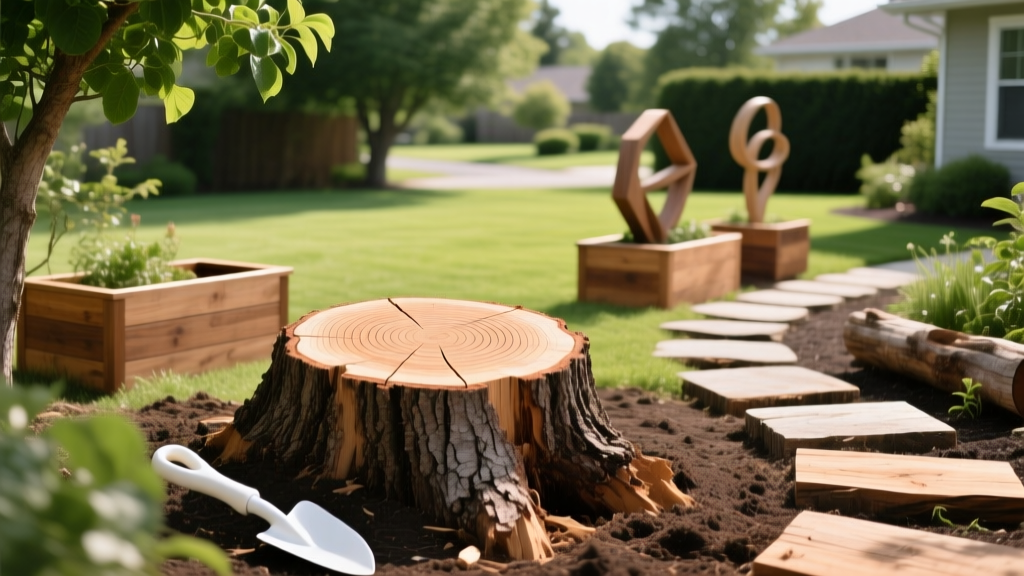
Creative Short Tree Stump Ideas & Safe Removal Tips
The Short Stump Dilemma: Repurpose or Remove?
When a tree is felled, arborists typically leave a 'short stump'—defined as the remaining trunk section measuring between 4 and 12 inches above grade. While standard tree removal contracts often promise flush cutting, leaving a short stump is sometimes intentional to protect surrounding hardscaping from root disruption or to avoid severing underground utilities. However, these low-profile remnants present a unique challenge: standard commercial stump grinders (like the Vermeer SC362 or Rayco RG74T) require 12 to 18 inches of vertical clearance to safely swing the cutter wheel without striking the soil, which dulls the $8-per-tooth carbide tips and risks catastrophic housing damage.
Homeowners are left with two distinct paths: integrate the short stump into the landscape design using specialized preservation techniques, or employ alternative removal methods suited for low-clearance obstacles. Below, we break down high-value short tree stump ideas and the precise engineering required to execute them, followed by data-driven removal protocols for when the stump simply has to go.
5 High-Value Short Tree Stump Ideas for Your Landscape
Rather than viewing a 6-inch oak or pine remnant as an eyesore, treat it as a structural anchor for your garden design. These five applications require minimal woodworking but deliver high visual impact.
1. The Natural Planter Pedestal
A flat-topped short stump is the ideal base for heavy, oversized planters or concrete birdbaths that would otherwise sink into soft topsoil. Execution: Use a 24-inch level to check the cut surface. If uneven, shave the high side with a Makita XSB02Z 36V chainsaw. Seal the end grain with two coats of TotalBoat Clear Penetrating Epoxy to prevent moisture wicking from the planter above, which accelerates heartwood decay.
2. Hollowed-Out Succulent Terrarium
Stumps between 8 and 12 inches in diameter can be hollowed to create living planters. Because the wood is already in contact with the soil, it provides natural capillary moisture to the roots. Best Plants: Trailing sedums, sempervivum (hens and chicks), and creeping thyme. Avoid water-heavy annuals that will trap moisture against the inner walls and invite fungal rot.
3. Illuminated Hardscape Marker
Transform perimeter stumps into low-voltage pathway lighting anchors. Execution: Drill a 3/4-inch hole into the side of the stump, 2 inches below the top edge. Route a 12V landscape wire through a shallow trench to the stump and install a WAC Lighting InvisiLED hardscape LED fixture. The wood acts as a natural shielding hood, casting a downward glow onto the walkway without light pollution.
4. The Moss and Fairy Garden Base
Short stumps in heavily shaded, north-facing yard zones are perfect for cultivating sheet moss (Hypnum) or ferns. Execution: Score the bark vertically with a drawknife to create micro-crevices. Pack these crevices with a mix of sphagnum peat moss and buttermilk (a traditional horticultural binder) to accelerate moss colonization. The stump will be fully green within 8 to 12 weeks.
5. Rustic Side Table with Epoxy River Top
For stumps with a diameter exceeding 14 inches, sand the top surface to 220 grit using a random orbital sander. Fill natural cracks and checking (splits in the wood) with a UV-stable, two-part clear epoxy resin like Liquid Glass. Top with a custom-cut piece of 1/4-inch tempered glass for a weatherproof, functional patio side table.
The Removal Dilemma: Dealing with Sub-12-Inch Stumps
If repurposing isn't an option, removing a short stump requires bypassing standard grinding equipment. According to the University of Minnesota Extension, attempting to force a large commercial grinder over a flush stump often results in severe turf tearing and soil compaction. Instead, professionals and DIYers must rely on chemical acceleration, manual extraction, or specialized micro-grinding.
Removal Method Comparison Matrix
| Method | Estimated Cost | Time to Complete | Labor Intensity | Best For |
|---|---|---|---|---|
| Chemical Rotting (KNO3) | $15 - $25 | 4 - 8 Weeks | Low | Softwoods (Pine, Spruce) |
| Manual Mattock Extraction | $0 (Tool rental: $40) | 3 - 6 Hours | Extreme | Stumps under 8" diameter |
| Professional Micro-Grinding | $150 - $300 | 1 Hour | None (Outsourced) | Hardwoods near hardscaping |
| Epsom Salt Desiccation | $5 - $10 | 6 - 12 Months | Low | Budget-conscious, patient DIYers |
Step-by-Step: Accelerated Chemical Decay for Short Stumps
For short stumps where manual digging is impossible due to surrounding root networks or proximity to retaining walls, chemical acceleration using Potassium Nitrate (KNO3) is the most efficient DIY method. Products like Spectracide Stump Remover utilize KNO3 to rapidly feed wood-decaying fungi while starving the cambium layer of residual sugars.
- Drill the Reservoir Pattern: Using a Milwaukee M18 Fuel 1/2-inch Hammer Drill and a 1-inch spade bit, drill 8 to 10 vertical holes into the top of the stump. Space the holes 2 inches apart, drilling as deep as the bit allows (typically 6 inches) without breaking through the sides.
- Pack the Nitrate: Fill each hole to the brim with granular Potassium Nitrate stump remover. Do not use standard fertilizers, as the nitrogen-to-potassium ratio is incorrect for targeted wood breakdown.
- Hydrate and Seal: Pour warm water into the holes until the granules dissolve into a thick slurry. Immediately cover the entire stump with a heavy-duty, 6-mil black polyethylene tarp, securing the edges to the soil with landscape staples to trap heat and moisture.
- The Breakdown Phase: After 4 to 6 weeks, remove the tarp. The wood should have the consistency of a damp sponge. Use a heavy-duty digging bar or mattock to chip away the softened wood, backfilling the void with native topsoil.
Arborist Warning: Never burn a chemically treated stump. Potassium nitrate is a primary ingredient in gunpowder and smoke bombs. Applying fire to a KNO3-soaked stump will result in a violent, uncontrollable flare-up rather than a slow burn, posing a severe fire hazard to nearby structures and dry turf.
Pest Management: Protecting Repurposed Stumps
If you choose to keep the stump as a landscape feature, you must actively manage the risk of wood-destroying insects. The Environmental Protection Agency (EPA) notes that decaying wood in direct contact with soil is a primary vector for subterranean termite colonization, which can eventually migrate to your home's structural sill plates.
To safely integrate a short stump into your yard without inviting pests:
- Apply a Borate Preservative: Treat the exposed wood and the soil interface with a borate-based preservative like Bora-Care. Borates penetrate deep into the wood cellulose, rendering it toxic to termites and carpenter ants while remaining safe for surrounding ornamental plants once cured.
- Install a Physical Root Barrier: If the stump is within 15 feet of your home's foundation, dig a narrow trench 12 inches deep around the stump's perimeter and insert a High-Density Polyethylene (HDPE) root and termite barrier to block subterranean migration paths.
- Monitor with Bait Stations: Place two or three wooden termite monitoring stakes (such as Spectracide Termite Stop stakes) in the soil within a 3-foot radius of the stump. Inspect them quarterly for feeding activity.
Frequently Asked Questions
Will a short stump continue to sprout new branches?
Yes, if the tree was a deciduous species like elm, poplar, or willow, the root system will push 'suckers' or epicormic shoots through the bark in an attempt to survive. To stop this, apply a systemic herbicide containing Triclopyr (such as Ortho Brush-B-Gon) directly to the freshly cut cambium ring within 15 minutes of the final chainsaw cut. If the stump is already months old, drill shallow holes into the bark and apply the herbicide to the exposed sapwood.
How long does a chemically preserved stump last in the landscape?
A short stump treated with a penetrating epoxy sealer on the end grain and a copper naphthenate preservative on the bark can last 10 to 15 years in a temperate climate. Without end-grain sealing, moisture ingress will cause the center heartwood to rot out within 3 to 5 years, leaving a fragile, hollow shell that is prone to collapsing under weight.

