
Tree Care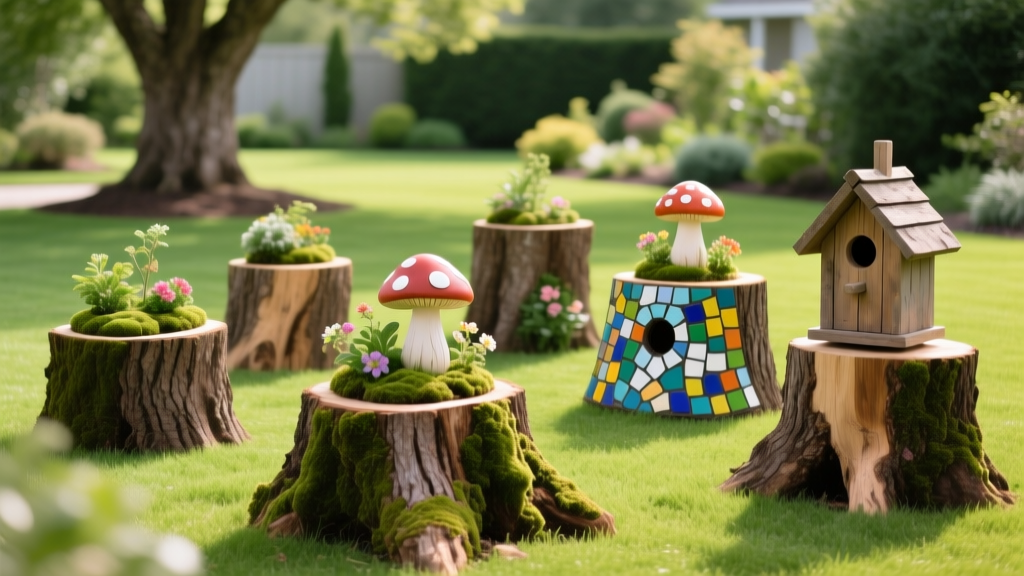
Top Tree Stump Decorating Ideas for Removed Yard Trees
When a hazardous or dead tree is felled, the remaining stump presents a common landscaping dilemma. Professional stump grinding typically costs between $3.50 and $4.50 per inch of diameter in 2026, meaning a standard 24-inch oak stump can cost upwards of $250 to remove completely. Before you hire a grinding service, consider that a healthy, structurally sound stump is a valuable architectural element. By exploring practical tree stump decorating ideas, you can upcycle this organic remnant into a functional garden feature, saving money while adding unique character to your yard.
Assessing Your Stump: The Preservation Decision Framework
Not every stump is a candidate for decoration. Before investing time and materials into a project, evaluate the wood's structural integrity and species-specific decay rate. Hardwoods like White Oak, Hickory, and Black Locust contain high levels of natural tannins and rot-resistant heartwood, allowing them to remain structurally sound for 15 to 25 years. Conversely, softwoods like Pine, Spruce, and Fir can succumb to fungal decay and become spongy within 3 to 7 years.
⚠️ Pest & Pathogen Warning: Inspect the base of the stump for 'frass' (fine, sawdust-like droppings) or the presence of carpenter ants and subterranean termites. If the tree was removed due to highly contagious pathogens like Oak Wilt or Armillaria root rot (honey fungus), do not decorate the stump. Leaving infected wood in the soil can spread the disease to adjacent healthy trees via root grafts. In these cases, complete grinding and soil treatment are mandatory.
5 High-Impact Tree Stump Decorating Ideas
The following projects range from low-effort natural integrations to advanced woodworking upcycles. Choose the method that aligns with your stump's height, diameter, and your available toolset.
1. The Hollowed-Out Stump Planter
Transforming a stump into a planter is one of the most popular tree stump decorating ideas because it directly integrates the wood into your garden's ecosystem. This works best on stumps with a diameter of at least 14 inches.
- Excavation: Use a reciprocating saw equipped with a 9-inch pruning blade (such as the Milwaukee 48-00-5140) to cut a grid pattern into the top of the stump, leaving a 2-inch thick outer wall. Pry out the wood chunks with a digging bar.
- Drainage: Drill four to six 1-inch drainage holes through the bottom of the basin and out the side of the stump using a spade bit. Without drainage, the trapped water will accelerate internal rot and drown your plants.
- Soil Mix: Fill the cavity with a mix of 60% high-quality topsoil and 40% organic compost. Avoid heavy clay soils that retain too much moisture against the wood walls.
- Plant Selection: Choose shade-tolerant, shallow-rooted plants. Hostas, Japanese Painted Ferns, and trailing Creeping Jenny thrive in the microclimate created by the decaying wood.
2. Deep-Pour Epoxy River Table
If your stump was cut perfectly level and features intricate grain patterns or natural voids, sealing it with deep-pour epoxy creates a stunning, weatherproof outdoor table. This requires a flat-cut hardwood stump.
- Preparation: Sand the top surface down to 80-grit to expose fresh, dry wood. The moisture content of the wood must be below 12% to prevent the epoxy from clouding or bubbling.
- Damming: Build a temporary melamine dam around the perimeter of the stump if you plan to pour over the edges, or use high-quality painter's tape to protect the bark if you want a live-edge finish.
- The Pour: Use a specialized outdoor-rated deep-pour epoxy, such as Liquid Glass Deep Pour Epoxy (approximately $130 for 1.5 gallons). Mix in a UV-resistant pigment if you want to add color to the natural voids.
- Finishing: Once cured (typically 72 hours), sand the surface progressively from 120-grit up to 3000-grit, and finish with a UV-stable automotive clear coat to prevent yellowing from sun exposure.
3. The Moss and Lichen Sanctuary
For a zero-maintenance approach that embraces the natural decay cycle, turn the stump into a moss sanctuary. This is ideal for stumps located in deeply shaded, damp areas of the yard where grass refuses to grow.
- Inoculation: Create a moss slurry by blending a handful of native moss with one cup of buttermilk and one cup of water. Paint this mixture generously over the top and sides of the stump.
- Maintenance: Mist the stump lightly with a hose during dry spells for the first four weeks until the rhizoids anchor into the wood bark.
4. Tiered Fairy or Gnome Garden
Utilize the varying heights of the stump and its exposed surface roots to build a miniature landscape. Carve shallow shelves into the sides of the stump using a wood carving gouge or a rotary tool with a burr bit. Fill these shelves with succulents like Sempervivum (Hens and Chicks) which require minimal soil depth and excellent drainage.
5. Wildlife Brush and Perch Base
According to the Arbor Day Foundation, decaying wood is a critical component of local ecosystems. Leave the stump exactly as it is, but drive a heavy-duty iron rebar spike into the top to serve as a mounting post for a bluebird house or a suet feeder. Stack loose brush and fallen branches around the base to create a habitat for beneficial ground beetles and solitary native bees.
Project Comparison Matrix: Cost, Effort, and Lifespan
Use the table below to determine which tree stump decorating idea aligns with your budget and long-term landscaping goals.
| Decorating Idea | Estimated Material Cost | Skill Level & Tools | Expected Lifespan |
|---|---|---|---|
| Hollowed Planter | $25 - $45 | Intermediate (Reciprocating Saw, Drill) | 3 - 7 Years |
| Epoxy River Table | $120 - $180 | Advanced (Sander, Epoxy, Clear Coat) | 10+ Years |
| Moss Sanctuary | $5 - $15 | Beginner (Paintbrush, Blender) | 5 - 15 Years |
| Fairy Garden Shelves | $30 - $60 | Intermediate (Rotary Tool, Gouges) | 2 - 5 Years |
How to Seal and Preserve a Decorative Stump
If your chosen project requires the wood to remain structurally rigid (like a table or a bench), you must halt the natural decay process. The end grain of a tree stump acts like a bundle of microscopic straws, absorbing moisture from the soil and rain up to 50 times faster than the side grain. The University of Minnesota Extension notes that proper moisture management is the primary factor in preventing wood-decaying fungi from colonizing yard stumps.
Step 1: Wood Hardening. If the outer layers of the stump feel soft or punky, apply a penetrating wood hardener like Minwax High Performance Wood Hardener ($16 per quart). This acrylic resin soaks into the soft fibers and cures into a rigid, plastic-like shell.
Step 2: End-Grain Sealing. Apply a commercial wax-based end-grain sealer, such as Anchorseal 2 ($38 per gallon). This is the exact product used by professional sawmills to prevent log checking and splitting. Apply two heavy coats to the top surface and the bottom 6 inches of the trunk where it meets the soil line.
Step 3: Topcoat Protection. For horizontal surfaces that will face direct sunlight and rain, finish with three coats of a marine-grade Spar Urethane (like Minwax Helmsman). Spar urethane contains UV blockers and flexible resins that expand and contract with the wood's natural seasonal movement without cracking.
When to Abandon Decorating and Grind the Stump
While upcycling is cost-effective, certain conditions mandate professional removal. If the stump begins to lean, indicating that the structural roots have failed, it becomes a physical hazard. Additionally, if you notice large, honey-colored mushrooms (Armillaria mellea) fruiting at the base of the stump in late autumn, the wood is actively being consumed by aggressive root rot fungi. In this scenario, hire a certified arborist to grind the stump at least 12 inches below grade and remove the surrounding infected soil to protect your remaining landscape.
'A decorated stump is a temporary garden feature, not a permanent fixture. Homeowners should plan for the eventual decomposition of the wood and avoid building heavy, permanent masonry structures directly over an unsealed, decaying stump.'
Frequently Asked Questions
Will a decorated stump attract termites to my house?
A stump located more than 20 feet from your home's foundation poses a minimal risk of structural termite transfer. However, if the stump is within 10 feet of your house, the moisture and cellulose can attract subterranean termites. In close-proximity scenarios, it is safer to grind the stump or treat the surrounding soil with a non-repellent termiticide like Termidor SC.
Can I speed up the rotting process if I want the stump to disappear naturally?
Yes. Drill several 1-inch holes into the top and sides of the stump, fill them with a high-nitrogen stump removal chemical (typically 100% potassium nitrate), and soak the wood with water. Cover the stump with a dark plastic tarp to trap heat and moisture. This method accelerates the breakdown of the lignin and cellulose, turning a hardwood stump to spongy mulch in 12 to 18 months, compared to the natural 15-year timeline.
Is it safe to burn a stump that has been treated with sealants?
No. If you have applied epoxy resins, spar urethane, or wood hardeners to the stump, do not attempt to burn it. The combustion of these synthetic polymers releases highly toxic volatile organic compounds (VOCs) and hazardous fumes. Only burn raw, untreated wood.

