
Tree Care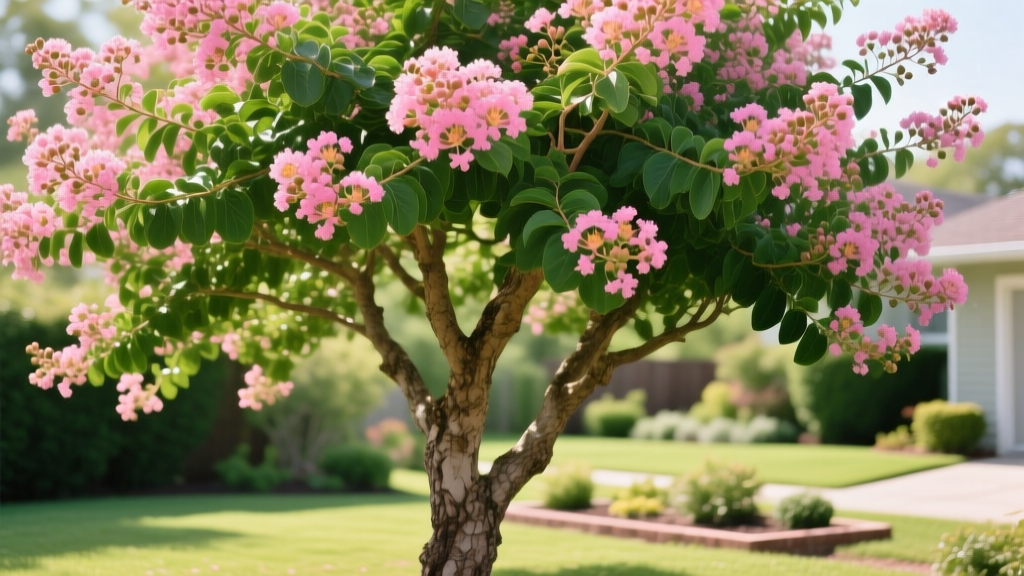
Crepe Myrtle Growth Rate: Timeline, Spacing & Costs
The Reality of Crepe Myrtle Growth Rates by Cultivar
The crepe myrtle (Lagerstroemia indica) is a staple of warm-climate landscapes, prized for its extended summer bloom period and striking exfoliating bark. While often broadly categorized as a 'fast-growing' tree, the actual crepe myrtle growth rate depends heavily on the specific cultivar, soil drainage, and nitrogen availability. According to the Clemson University Home & Garden Information Center, these trees generally add 1 to 2 feet of height per growing season, but this metric fractures when you separate dwarf shrubs from standard canopy trees.
Understanding the precise annual growth rate is critical for dosage and coverage planning. Overestimating the growth rate of a semi-dwarf variety leads to sparse hedges, while underestimating a standard variety results in overcrowded canopies that trap humidity and invite powdery mildew.
| Cultivar Category | Example Varieties | Annual Growth Rate | Mature Height (10-15 Yrs) | Canopy Spread |
|---|---|---|---|---|
| Miniature / Dwarf | Pocomoke, Chickasaw | 3 to 6 inches | 3 to 5 feet | 3 to 4 feet |
| Semi-Dwarf | Hopi, Zuni, Acoma | 1 to 1.5 feet | 5 to 10 feet | 4 to 8 feet |
| Intermediate | Osage, Sioux, Tonto | 1.5 to 2 feet | 10 to 15 feet | 8 to 12 feet |
| Standard / Tall | Natchez, Dynamite, Muskogee | 2 to 3 feet | 20 to 30+ feet | 15 to 25 feet |
Spacing and Coverage: Calculating Your Planting Footprint
Because the crepe myrtle growth rate dictates rapid canopy expansion in standard varieties, calculating the correct planting footprint prevents future structural conflicts with roofs, power lines, and neighboring properties. The NC State Extension Plant Toolbox emphasizes that mature spread is just as critical as mature height when determining coverage area.
The Coverage Formula
- Specimen Planting: Measure the mature canopy width of your chosen cultivar and add 2 to 3 feet of clearance. For a Natchez (20-foot spread), plant at least 11 feet away from foundations and hardscapes.
- Privacy Hedges (Semi-Dwarf/Intermediate): To create a dense visual barrier, divide the mature spread by 2. If planting Sioux (10-foot spread), space the trunks exactly 5 feet apart. This forces the lateral branches to interlock within three growing seasons.
- Street / Driveway Allees: Standard varieties should be spaced 12 to 15 feet apart on-center to allow the distinctive peeling bark on the lower trunks to remain visible and well-ventilated.
Warning: The 'Crape Murder' Coverage Myth
Many homeowners plant standard varieties too close to structures, then attempt to control the growth rate through severe winter topping (often called 'crape murder'). This practice destroys the tree's natural architecture, forces weak epicormic sprouting, and drastically reduces bloom density. Always select a cultivar whose natural mature height fits your vertical clearance.
Many homeowners plant standard varieties too close to structures, then attempt to control the growth rate through severe winter topping (often called 'crape murder'). This practice destroys the tree's natural architecture, forces weak epicormic sprouting, and drastically reduces bloom density. Always select a cultivar whose natural mature height fits your vertical clearance.
Fertilizer Dosage to Maximize Growth Without Sacrificing Blooms
Manipulating the crepe myrtle growth rate requires precise fertilizer dosages. Unlike shade trees that benefit from heavy nitrogen applications, crepe myrtles require a balanced approach. Excessive nitrogen accelerates vegetative growth but suppresses flower bud initiation and increases susceptibility to aphids and powdery mildew.
Establishment Phase (Years 1-2)
During the first two years, the goal is root establishment and structural trunk growth. Apply a balanced 10-10-10 or 8-8-8 granular fertilizer.
- Dosage: 0.5 to 1 pound of actual nitrogen per 1,000 square feet of root zone.
- Application Area: Broadcast evenly from 6 inches away from the trunk out to the drip line (the outer edge of the canopy).
- Timing: Early spring (March) just before bud break. A second, lighter application can be made in late May if soil tests indicate severe nutrient deficiency.
Mature Phase (Years 3+)
Once the tree reaches its desired structural height, shift to a low-nitrogen, high-phosphorus formulation (such as 5-10-10 or a specialized bloom-booster) to prioritize flower production over vertical growth.
- Dosage: Reduce nitrogen application to 0.25 pounds per 1,000 square feet.
- Organic Alternative: Top-dress the root zone with 1 inch of screened compost annually. This provides a slow-release micronutrient profile that supports steady, manageable growth without the aggressive flushes caused by synthetic salts.
2026 Planting and Maintenance Cost Breakdown
Budgeting for a crepe myrtle installation requires factoring in nursery stock size, soil amendments, and ongoing chemical interventions. Prices below reflect early 2026 landscape industry averages for the Southeastern and Mid-Atlantic United States.
| Cost Category | Item / Service | Estimated 2026 Cost |
|---|---|---|
| Nursery Stock | 7-Gallon (4-5 ft tall) | $65 - $95 |
| Nursery Stock | 15-Gallon (6-8 ft tall) | $140 - $190 |
| Nursery Stock | 30-Gallon / B&B (10-12 ft tall) | $350 - $550 |
| Soil Amendment | Mycorrhizal root dip & compost | $25 - $45 per tree |
| Professional Labor | Planting service (per tree) | $125 - $250 |
| Annual Pruning | Structural corrective pruning | $85 - $150 per tree |
Hidden Costs: Pest and Disease Interventions
The most common financial surprise for crepe myrtle owners is the cost of treating Lagerstroemia-specific pests. The crape myrtle bark scale (CMBS) has become a pervasive issue. If your trees contract CMBS, expect to pay for systemic soil drenches containing imidacloprid or dinotefuran.
- DIY Systemic Drench: $20 to $40 per season for a mature tree (using a 1.47% imidacloprid concentrate mixed at 3 ounces per inch of trunk diameter).
- Professional Fungicide/Pesticide Application: $75 to $125 per visit for powdery mildew prevention (chlorothalonil) or aphid control during the humid summer months.
Decision Framework: Selecting the Right Size for Your Yard
Use this rapid decision matrix to align your spatial constraints with the correct crepe myrtle growth rate and cultivar category.
Scenario A: Planting under low power lines or near single-story eaves (Max clearance 12 feet).
Action: Select Semi-Dwarf or Intermediate varieties (Zuni, Tonto). Do not buy standard varieties and plan to prune them down; the physiological stress will invite wood-boring insects.
Scenario B: Creating a dense, 6-foot privacy screen along a property line.
Action: Select Semi-Dwarf varieties (Hopi). Plant 4 feet apart. Apply 1 lb of 10-10-10 fertilizer per 1,000 sq ft each spring for the first three years to accelerate the lateral interlocking growth rate.
Scenario C: Shade for a patio or driveway focal point.
Action: Select Standard varieties (Natchez, Dynamite). Plant as a standalone specimen at least 15 feet from concrete to prevent root-related heaving. Budget for a 30-gallon size if immediate canopy coverage is required, saving 5 to 7 years of growth time.
By matching the specific cultivar's genetic growth rate to your exact spatial and financial parameters, you eliminate the need for aggressive corrective pruning and ensure a landscape that matures gracefully into its environment.

