
Tree Care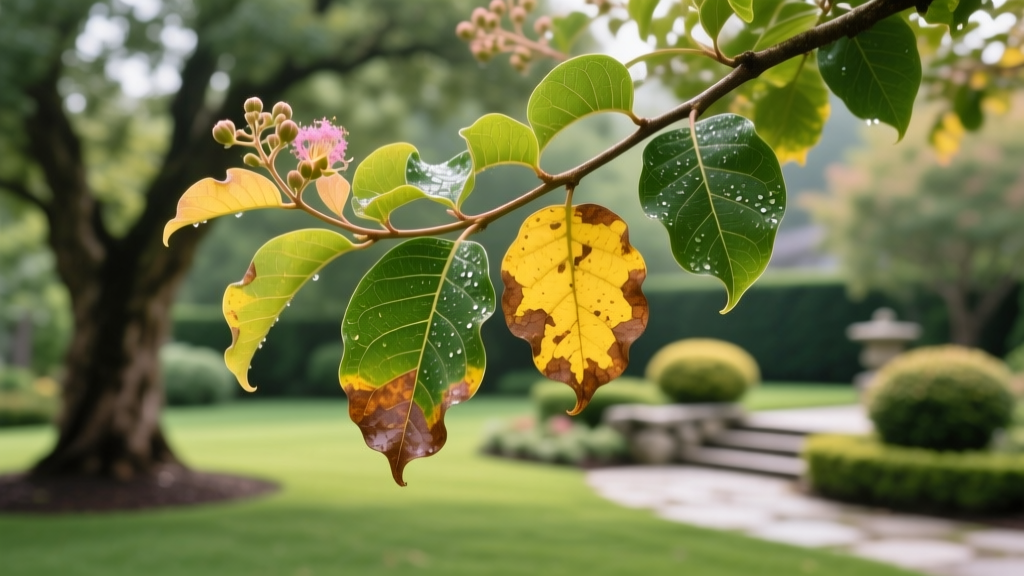
Crepe Myrtle Leaves Turning Yellow or Brown? Causes & Fixes
Diagnosing Crepe Myrtle Leaf Problems
Crepe myrtles (Lagerstroemia indica and hybrids) are famously resilient landscape trees, but their foliage is highly susceptible to specific environmental and biological stressors. When crepe myrtle leaves begin to discolor, spot, or drop prematurely, it is rarely a random occurrence. The symptoms map directly to fungal pathogens, sap-sucking insects, or soil chemistry imbalances.
Before purchasing any treatments, you must accurately identify the stressor. Misdiagnosing a fungal infection as a nutrient deficiency and applying nitrogen fertilizer will only exacerbate fungal growth. Use the diagnostic matrix below to match your visual symptoms to the correct underlying cause.
Symptom-to-Cause Diagnostic Matrix
| Visual Symptom | Primary Suspect | Secondary Indicator | Immediate Action Required |
|---|---|---|---|
| Dark brown/black angular spots on leaves | Cercospora Leaf Spot | Premature defoliation starting at the lower canopy | Apply chlorothalonil fungicide; improve air circulation |
| White, powdery coating on new growth | Powdery Mildew | Distorted, stunted young shoots and failed flower buds | Apply myclobutanil or neem oil; prune crowded branches |
| Yellowing leaves with green veins intact | Iron Chlorosis | Soil pH tests above 7.0; symptoms appear on newest leaves first | Apply chelated iron (Fe-EDDHA); lower soil pH with sulfur |
| Sticky residue and black soot on leaves | Crape Myrtle Aphids | Ants farming the aphids; leaves curl downward | Apply insecticidal soap or systemic imidacloprid soil drench |
Fungal Pathogens: Leaf Spot and Powdery Mildew
Fungal diseases thrive in the humid, stagnant air conditions common in late spring and early summer. According to Clemson University Extension, Cercospora leaf spot (Cercospora lythracearum) has become the most destructive foliage disease for crepe myrtles in the southeastern United States.
Treating Cercospora Leaf Spot
Cercospora does not usually kill the tree, but severe infections cause the plant to drop up to 80% of its leaves by mid-summer, drastically reducing photosynthesis and weakening the tree for the following year.
- Chemical Control: Use a fungicide containing Chlorothalonil (e.g., Bonide Fung-onil) or Myclobutanil (e.g., Spectracide Immunox). Apply at the first sign of spotting in late May or early June.
- Application Rate: Mix 2.25 teaspoons of Chlorothalonil concentrate per gallon of water. Spray to the point of runoff, ensuring thorough coverage of the lower and interior leaves where humidity traps spores.
- Frequency: Reapply every 10 to 14 days during periods of frequent rainfall. Stop applications once the summer heat consistently exceeds 90°F, as fungal pressure drops in high heat.
Managing Powdery Mildew
Powdery mildew (Erysiphe lagerstroemiae) targets tender new growth and flower panicles. Unlike Cercospora, powdery mildew does not require free water on the leaf surface to infect; it thrives in high humidity and dry foliage.
For organic management, apply a 2% solution of cold-pressed neem oil or a potassium bicarbonate spray (1 tablespoon per gallon of water) in the early evening to prevent leaf burn. For severe infections, synthetic fungicides containing Tebuconazole provide superior curative action.
Insect Pressure: Aphids and Sooty Mold
The crape myrtle aphid (Tinocallis kahawaluokalani) is a species-specific pest that feeds exclusively on crepe myrtle phloem. As they feed, they excrete a sugar-rich waste called honeydew. This honeydew coats the crepe myrtle leaves and serves as a breeding ground for sooty mold, a black fungus that blocks sunlight and impedes photosynthesis.
The Systemic vs. Contact Treatment Decision
Choosing the right insecticide depends on the tree's size and the time of year.
- Contact Sprays (Insecticidal Soap/Neem): Best for small, accessible trees or late-season outbreaks. You must spray the undersides of the leaves where aphids congregate. This method requires reapplication every 5 to 7 days and only kills aphids present at the time of spraying.
- Systemic Soil Drench (Imidacloprid): Best for large, multi-trunk specimens. Products like Bayer Advanced 12 Month Tree & Shrub Protect & Feed are mixed with water and poured around the base of the trunk. The roots absorb the chemical and distribute it to the leaves. Crucial timing rule: Apply imidacloprid in early spring before the tree blooms. Never apply systemic neonicotinoids during the flowering stage, as they will be present in the nectar and are highly toxic to foraging bees.
Nutrient Deficiencies and Soil Chemistry
If your crepe myrtle leaves are turning a uniform pale green or yellow, but lack the distinct spots or powdery coatings of fungal diseases, the issue is likely rooted in the soil. Crepe myrtles require a soil pH between 5.0 and 6.5 to efficiently uptake micronutrients.
Pro Tip: The Alkaline Soil Trap
Many homeowners plant crepe myrtles near new construction or concrete foundations. Runoff from concrete raises soil pH above 7.5, locking up iron and manganese. If your soil pH is high, standard iron sulfate will not work. You must use Fe-EDDHA chelated iron, which remains available to the plant roots even in highly alkaline soils up to pH 9.0.
Many homeowners plant crepe myrtles near new construction or concrete foundations. Runoff from concrete raises soil pH above 7.5, locking up iron and manganese. If your soil pH is high, standard iron sulfate will not work. You must use Fe-EDDHA chelated iron, which remains available to the plant roots even in highly alkaline soils up to pH 9.0.
To correct nitrogen deficiencies (characterized by older, lower leaves turning yellow uniformly and dropping), apply a balanced, slow-release granular fertilizer like Espoma Tree-tone (6-2-3) in early March. Use 3 pounds of fertilizer per inch of trunk diameter, scattering it evenly from the trunk out to the drip line.
The 'Crape Murder' Warning: How Pruning Affects Leaf Health
Stop Topping Your Trees
Severely cutting back the main branches of a crepe myrtle (known as 'crape murder' or pollarding) forces the tree to push out dense, weak, whip-like shoots. This hyper-dense foliage canopy traps moisture and blocks UV light, creating the exact microclimate that Cercospora leaf spot and powdery mildew require to thrive. Properly pruned crepe myrtles with open, vase-shaped canopies naturally resist fungal leaf diseases.
Severely cutting back the main branches of a crepe myrtle (known as 'crape murder' or pollarding) forces the tree to push out dense, weak, whip-like shoots. This hyper-dense foliage canopy traps moisture and blocks UV light, creating the exact microclimate that Cercospora leaf spot and powdery mildew require to thrive. Properly pruned crepe myrtles with open, vase-shaped canopies naturally resist fungal leaf diseases.
As noted by the University of Florida IFAS Extension, crepe myrtles require minimal pruning. Limit your pruning to removing crossing branches, suckers at the base, and dead wood during the late winter dormancy period. Never top the main scaffold branches.
Annual Leaf Care Calendar
Maintaining healthy crepe myrtle leaves requires a proactive, season-by-season approach rather than reactive panic when spots appear.
- February (Dormancy): Prune dead wood to open the canopy. Apply a 2-inch layer of pine bark mulch around the root zone, keeping it 3 inches away from the main trunks to prevent rot. Apply imidacloprid soil drench if aphids were a problem the previous year.
- April (Bud Break): Broadcast slow-release fertilizer (6-2-3 NPK). Conduct a soil pH test using a digital meter or mail-in kit. Apply elemental sulfur if pH is above 6.5.
- June (Early Summer): Begin scouting the lower canopy for Cercospora spots. Apply preventative chlorothalonil fungicide if the weather forecast predicts prolonged humidity and rain.
- August (Peak Heat): Ensure the tree receives 1 to 1.5 inches of water per week via deep, infrequent soakings. Avoid overhead irrigation, which wets the leaves and promotes fungal spore germination.
- November (Leaf Drop): Rake and destroy all fallen leaves. Do not compost diseased foliage, as home compost piles rarely reach the 140°F required to kill Cercospora and mildew spores. Bag and discard them to reduce the inoculum load for the following spring.

