
Tree Care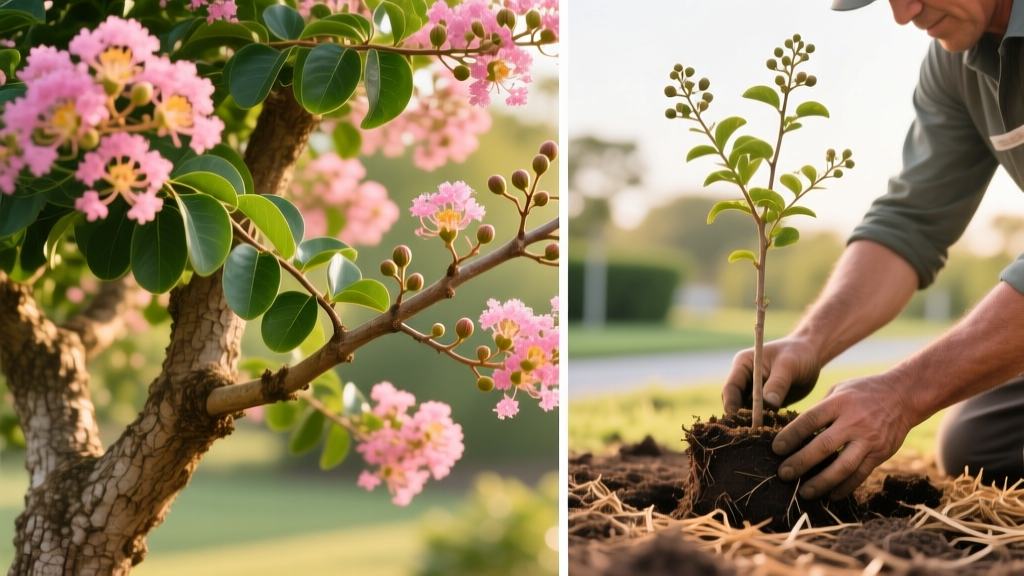
How to Plant and Prune Crepe Myrtle Trees: A Beginner's Guide
Understanding the Crepe Myrtle (Lagerstroemia)
Crepe myrtles (often spelled crape myrtles) are scientifically classified under the genus Lagerstroemia. These deciduous trees and shrubs are prized in USDA Hardiness Zones 7 through 9 for their exceptionally long summer bloom periods, which can last from 60 to 120 days. Beyond their vibrant floral displays, modern hybrids offer striking exfoliating bark that provides crucial winter interest when the leaves have dropped.
For beginners, the most critical factor in successful crepe myrtle care is matching the tree's mature size to your available space. Planting a cultivar that grows 30 feet tall beneath a 15-foot power line guarantees future structural issues and unnecessary, damaging pruning.
Warning: Avoid 'Crepe Murder'
Topping or severely cutting back the main trunks of a crepe myrtle is a harmful practice known as 'crepe murder.' This destroys the tree's natural architectural form, promotes weak, whip-like growth that cannot support heavy blooms, and creates large, unsightly knuckles at the cut sites. Always prune selectively to enhance the natural shape, never to arbitrarily reduce height.
Topping or severely cutting back the main trunks of a crepe myrtle is a harmful practice known as 'crepe murder.' This destroys the tree's natural architectural form, promotes weak, whip-like growth that cannot support heavy blooms, and creates large, unsightly knuckles at the cut sites. Always prune selectively to enhance the natural shape, never to arbitrarily reduce height.
Choosing the Right Cultivar for Your Landscape
The National Arboretum has spent decades developing Lagerstroemia indica and Lagerstroemia fauriei hybrids that resist powdery mildew. Selecting a named cultivar rather than a generic seedling ensures predictable sizing and disease resistance. Below is a decision matrix for popular, beginner-friendly varieties:
| Cultivar | Mature Height | Bloom Color | Best Use Case |
|---|---|---|---|
| Natchez | 20 - 30 ft | White | Large shade tree, street lining |
| Tuscarora | 15 - 20 ft | Dark Pink | Focal point, patio privacy screen |
| Sioux | 10 - 15 ft | Medium Pink | Mid-sized yard, foundation corner |
| Pocomoke | 3 - 5 ft | Rose Pink | Low borders, container gardening |
Step-by-Step Planting Instructions
Proper installation dictates the long-term vigor of your tree. Crepe myrtles require full sun (minimum 6 to 8 hours of direct sunlight daily) to produce abundant blooms and resist fungal diseases.
- Test and Adjust Soil pH: Crepe myrtles thrive in slightly acidic soil with a pH between 5.0 and 6.5. If your soil is too alkaline, the tree may suffer from iron chlorosis (yellowing leaves with green veins). Apply elemental sulfur according to package rates to lower pH if necessary.
- Dig the Hole: Excavate a hole that is twice as wide as the nursery container, but no deeper than the root ball. Planting too deep suffocates the root flare and invites trunk rot.
- Position the Tree: Remove the container and gently tease out any circling roots with your fingers. Place the tree in the hole so the top of the root ball is level with or slightly above (1 inch) the surrounding grade.
- Backfill Native Soil: Avoid the 'bathtub effect' by backfilling with the native soil you just dug out. Do not heavily amend the backfill with rich compost, as this discourages roots from expanding into the surrounding earth.
- Mulch Correctly: Apply a 2 to 3-inch layer of pine bark or hardwood mulch over the root zone to retain moisture. Keep the mulch at least 3 inches away from the trunk base to prevent rodent damage and bark decay.
Pro Tip: Watering Schedule
Newly planted crepe myrtles need deep watering twice a week for the first three months. Apply 10 to 15 gallons per session using a slow-drip hose. Once established (after year one), they are highly drought-tolerant and rarely need supplemental irrigation.
Newly planted crepe myrtles need deep watering twice a week for the first three months. Apply 10 to 15 gallons per session using a slow-drip hose. Once established (after year one), they are highly drought-tolerant and rarely need supplemental irrigation.
The Correct Way to Prune
Pruning should be performed in late winter (February to early March) while the tree is fully dormant and before new spring growth emerges. Because crepe myrtles bloom on new wood, late winter pruning encourages vigorous spring shoots that will bear summer flowers.
What to Cut (The 3-Step Method)
- Remove Suckers: Cut off any shoots emerging from the base of the trunk or the root system below ground level. These sap energy from the main canopy.
- Eliminate the 'Three Ds': Remove all Dead, Damaged, or Diseased wood back to healthy tissue.
- Thin the Canopy: Remove branches that are crossing, rubbing together, or growing inward toward the center of the tree. Cut any lateral branches that are thinner than a pencil. This improves air circulation, drastically reducing the risk of powdery mildew.
Pest and Disease Management
While modern hybrids are bred for resistance, environmental stress can still invite pests. Identifying the issue early is key to saving the tree.
Crape Myrtle Bark Scale (CMBS)
First identified in the US in 2010, CMBS is a devastating insect that appears as white, waxy, felt-like patches on the bark. It secretes honeydew, leading to black sooty mold. If you spot white crust on the trunks, treat the soil around the base in early spring with a systemic insecticide containing dinotefuran or imidacloprid. The tree absorbs the chemical through its roots, killing the scale as it feeds on the sap.
Aphids and Powdery Mildew
Yellowish-green aphids often cluster on new growth in late spring. For minor infestations, a strong blast of water from a garden hose is sufficient. For severe outbreaks, apply a 2% to 4% dormant horticultural oil spray in late winter, or use insecticidal soap during the growing season. Powdery mildew looks like a white dusting on leaves and buds; it is best managed preventatively by ensuring proper spacing (10+ feet apart) for airflow and planting resistant cultivars like 'Natchez' or 'Tuscarora'.
Seasonal Maintenance Calendar
Maintain your tree's health year-round with this simplified schedule:
- Early Spring (March): Apply a balanced, slow-release fertilizer (such as an 8-8-8 or 10-10-10 NPK ratio) at a rate of 1 pound per inch of trunk diameter. Prune dormant wood.
- Late Spring (May): Inspect for aphids and powdery mildew. Refresh mulch if it has decomposed to less than 2 inches thick.
- Summer (June - August): Deadhead spent flower clusters (cut just below the seed head) to encourage a second, smaller flush of blooms in early fall. Water deeply during severe droughts.
- Fall (October - November): Rake and destroy fallen leaves if the tree had fungal issues during the summer to prevent spores from overwintering in the soil.
By selecting the right cultivar, planting at the correct depth, and pruning selectively rather than destructively, your crepe myrtle will serve as a vibrant, low-maintenance anchor in your landscape for decades. For further regional advice, consult resources from the Clemson University Cooperative Extension or the Texas A&M AgriLife Extension.

