
Tree Care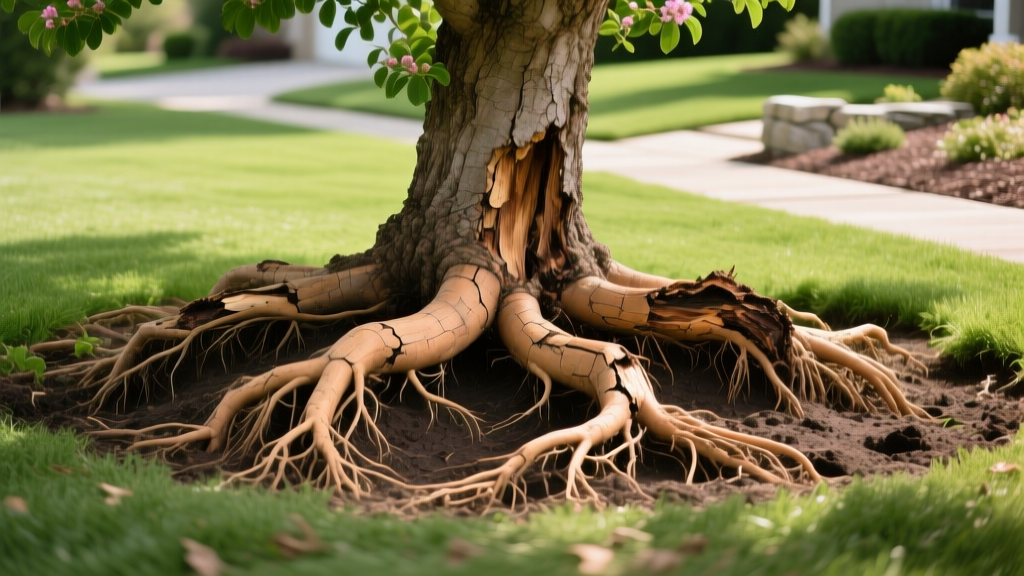
Crepe Myrtle Root System Issues: Diagnosis and Repair Guide
Understanding the Crepe Myrtle Root System Architecture
Before diagnosing underground issues, you must understand how Lagerstroemia (crepe myrtle) roots actually grow. Contrary to popular belief, the crepe myrtle root system is not aggressively invasive. It lacks the thick, structural taproots that plague species like oaks or willows. Instead, it relies on a dense, fibrous network of lateral roots.
These roots typically remain confined to the top 12 to 18 inches of soil. The horizontal spread generally extends 1.5 times the width of the tree’s canopy. While this shallow architecture makes the tree highly drought-tolerant once established, it also creates specific vulnerabilities in compacted urban soils, leading to surface heaving, girdling, and moisture-related diseases.
⚠️ Critical Root Zone Warning: Never sever roots larger than 2 inches in diameter. Furthermore, avoid cutting any roots within the tree's Critical Root Zone (CRZ), calculated as 1 foot of radial distance from the trunk for every 1 inch of trunk Diameter at Breast Height (DBH). Severing roots inside the CRZ compromises structural stability and invites fatal pathogen entry.
Diagnosing Common Crepe Myrtle Root Problems
When a crepe myrtle exhibits canopy dieback, stunted summer blooming, or premature leaf drop, the culprit is often subterranean. Here is how to identify the three most frequent root system failures.
1. Surface Root Heaving and Hardscape Damage
Because the crepe myrtle root system is shallow, roots will naturally seek the path of least resistance. In heavily compacted clay soils or areas with poor drainage, roots push upward toward the oxygen-rich surface layer. Over time, these lateral roots thicken, causing concrete sidewalks to buckle or driveway edges to crack. You will diagnose this by seeing thick, woody roots (1 to 3 inches in diameter) visibly breaching the mulch line or turf grass.
2. Stem-Girdling and Circling Roots
Girdling occurs when roots grow in a circular pattern around the main trunk, eventually choking off the phloem and xylem tissues. This is almost always a legacy issue from improper nursery container practices. Diagnosis: Look for a trunk that lacks a natural root flare at the soil line (appearing like a telephone pole stuck in the ground). You may also notice a flattened side of the trunk or unexplained canopy dieback on one specific side of the tree during mid-summer heat.
3. Root Rot (Phytophthora and Armillaria)
Crepe myrtles are highly susceptible to Phytophthora root rot in poorly drained soils. Diagnosis: Scrape the bark at the soil line. Healthy cambium is bright green. Infected tissue appears dark brown, water-soaked, and smells faintly of fermentation. Above ground, the leaves will turn pale yellow and drop prematurely, starting at the lower canopy.
Step-by-Step Solutions for Root Issues
Once you have accurately diagnosed the specific failure mode, apply the following targeted interventions.
Fixing Surface Roots: Mulching vs. Pruning
Do not cover exposed surface roots with thick layers of topsoil; this will suffocate the root system and accelerate decline. Instead, use the mulch bed expansion method:
- Expand the Mulch Bed: Extend your mulch ring to cover the exposed roots, using 2 to 3 inches of coarse arborist wood chips. Keep the mulch at least 4 inches away from the main trunk flare.
- Targeted Root Pruning: If a root is actively destroying a driveway and cannot be mulched over, it must be cleanly severed. Use a sharp bypass lopper (such as the Felco 200, approx. $65) for roots under 1.5 inches. For roots up to 2 inches, use a reciprocating saw with a dedicated pruning blade.
- Seal the Cut: While pruning paint is generally discouraged for canopy cuts, applying a copper-based fungicide paste to large subterranean root cuts prevents soil-borne pathogens from entering the vascular system.
Correcting Girdling Roots via AirSpade Excavation
If your tree lacks a root flare, manual digging with a shovel will cause too much collateral damage to the fine feeder roots. The industry standard solution is pneumatic excavation.
- Hire an ISA-Certified Arborist: Request an AirSpade service. This tool uses compressed air (at 90-120 PSI) to fracture compacted soil without tearing the delicate root bark.
- Radial Trenching: The arborist will excavate a 3-foot radius around the trunk to expose the girdling roots.
- Strategic Severing: Using sterilized pruning shears, the arborist will make clean cuts on both sides of the girdling root and remove the offending section, allowing the trunk to expand naturally.
- Cost Expectation: AirSpade excavation typically costs between $150 and $250 per hour in 2026, with a standard root flare excavation taking 2 to 3 hours.
Treating Phytophthora Root Rot
If drainage cannot be immediately corrected via French drains or grading, you must intervene chemically to save the tree.
- Apply Phosphite Fungicides: Use a potassium phosphite product like Agri-Fos (approx. $45-$60 per quart). Phosphites do not cure the rot, but they stimulate the tree's natural defense mechanisms (phytoalexin production) to wall off the infection.
- Application Method: Mix 1 to 2 ounces of Agri-Fos per gallon of water and apply as a soil drench over the entire drip line. Alternatively, use a systemic trunk injection performed by a professional for faster vascular uptake.
- Improve Soil Aeration: Vertically mulch the drip line by drilling 2-inch wide, 12-inch deep holes using a bulb auger, and backfill them with expanded shale or pumice to introduce oxygen to the suffocating roots.
Intervention Comparison Matrix
| Intervention Method | Target Problem | Average Cost (2026) | Risk Level to Tree | Longevity of Fix |
|---|---|---|---|---|
| Mulch Bed Expansion | Minor Surface Roots | $50 - $150 (DIY) | Very Low | Permanent (if maintained) |
| Manual Root Pruning | Hardscape Heaving | $100 - $300 | Moderate to High | 5-10 Years (roots may regrow) |
| AirSpade Excavation | Girdling / Buried Flare | $300 - $750 | Low (when done by pro) | Permanent |
| Phosphite Soil Drench | Early Root Rot | $45 - $120 (DIY) | Low | Requires Annual Reapplication |
Preventative Planting and Spacing Guidelines
The most effective way to avoid crepe myrtle root system problems is proper initial placement. According to Clemson University Cooperative Extension, spacing requirements vary drastically by cultivar size.
Pro Tip: Never plant large-cultivar crepe myrtles in narrow parking lot islands or 3-foot sidewalk cutouts. The restricted soil volume guarantees surface heaving and premature tree decline within 10 to 15 years.
- Dwarf Cultivars (e.g., 'Pocomoke', 'Chickasaw'): Grow 2 to 4 feet tall. Require a minimum of 3 feet of clearance from foundations and hardscapes.
- Medium Cultivars (e.g., 'Acoma', 'Sioux'): Grow 10 to 15 feet tall. Require a minimum of 5 to 7 feet of clearance.
- Large Cultivars (e.g., 'Natchez', 'Muskogee'): Grow 20 to 30 feet tall. Require a minimum of 10 to 12 feet of clearance from foundations, driveways, and underground utility lines.
Frequently Asked Questions
Do crepe myrtle roots destroy house foundations?
No. As noted in research regarding tree root myths by Penn State Extension, tree roots do not actively seek out and crack solid, poured concrete foundations. Roots only exploit pre-existing cracks in search of moisture. Because the crepe myrtle root system lacks aggressive taproots, it poses virtually zero threat to structurally sound home foundations.
How far do crepe myrtle roots spread?
The lateral spread of a crepe myrtle root system typically extends 1.5 times the width of the tree's canopy. For a mature 'Natchez' crepe myrtle with a 20-foot canopy spread, the root system can reach up to 30 feet across, though the vast majority of the critical feeder roots remain concentrated within the immediate drip line.
Can I plant a crepe myrtle over a septic drain field?
It is not recommended. While crepe myrtle roots are not as notoriously invasive as weeping willows, their shallow, moisture-seeking lateral roots can infiltrate the perforated pipes of a septic drain field if planted too closely. Maintain a minimum distance of 20 feet between large crepe myrtle cultivars and any septic infrastructure.

