
Tree Care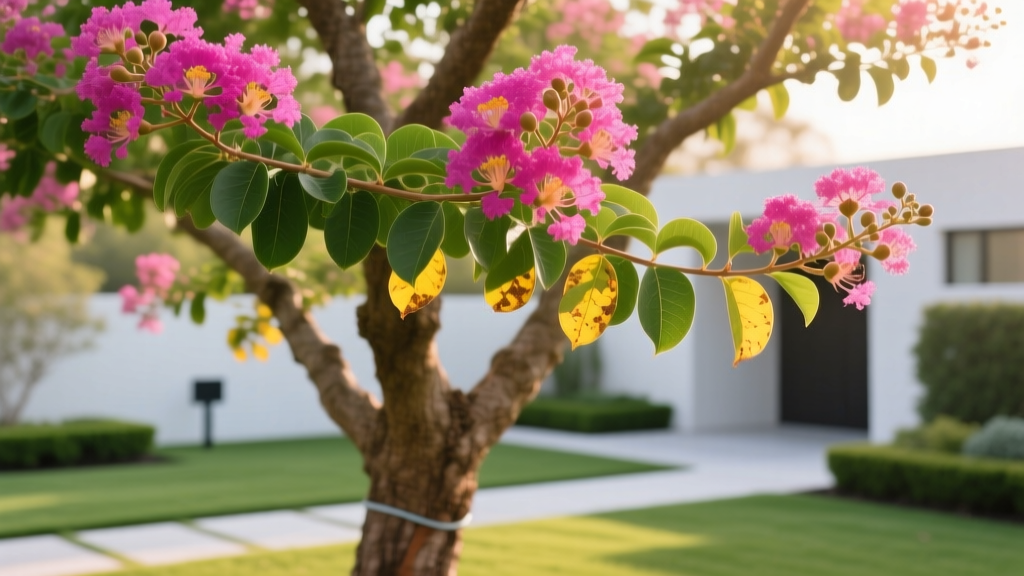
Diagnosing the Color of Crepe Myrtle Trees: Bloom and Leaf Fixes
Understanding Crepe Myrtle Color Anomalies
Crepe myrtles (Lagerstroemia indica and its hybrids) are celebrated for their multi-season visual interest, but unexpected shifts in the color of crepe myrtle trees often signal underlying environmental stress, pathogens, or improper maintenance. While these trees are remarkably drought-tolerant once established, their foliage, blooms, and bark are highly reactive to microclimate changes and pest pressures. Diagnosing these color shifts early prevents permanent canopy loss and structural decline.
Mythbusting Alert: Unlike hydrangeas, the bloom color of crepe myrtle trees is genetically fixed. Altering soil pH with aluminum sulfate or lime will not change pink blooms to blue or vice versa. If your blooms are shifting color, the cause is environmental, not chemical.
Bloom Color Anomalies: Why Flowers Fade or Shift
When the vibrant panicles of a Dynamite Red or Tuscarora Pink crepe myrtle begin to look washed out or shift hue, homeowners often suspect soil deficiencies. In reality, bloom discoloration is almost exclusively tied to light exposure, heat stress, and the natural aging cycle of the flower panicle.
UV Degradation and Heat Stress
Intense mid-summer UV radiation accelerates the breakdown of anthocyanin pigments in the flower petals. Red and deep pink varieties are most susceptible to "sun bleaching," where the outer edges of the panicle turn pale pink or white. This is not a disease. To mitigate severe bleaching, ensure the tree receives consistent deep watering (1 to 1.5 inches per week) during peak summer, which maintains cellular turgor and pigment stability.
Nutrient Imbalances
While soil pH does not change bloom color, severe phosphorus or potassium deficiencies can result in weak, sparse, and pale flower clusters. A soil test revealing phosphorus levels below 20 ppm requires an application of a high-phosphorus granular fertilizer (such as a 10-20-10 NPK ratio) at a rate of 1 pound per 100 square feet of root zone in early spring.
Leaf Discoloration Diagnostic Matrix
Foliage is the most accurate indicator of a crepe myrtle's systemic health. Use the matrix below to identify the specific pathogen or pest altering your tree's leaf color.
| Symptom & Color Shift | Primary Cause | Diagnostic Confirmation | Targeted Solution |
|---|---|---|---|
| Yellowing with dark brown angular spots | Cercospora Leaf Spot (Cercospora lythracearum) | Spots merge; premature leaf drop in late summer/fall. | Improve airflow. Apply Chlorothalonil or Myclobutanil fungicide at first sign. |
| White/gray powdery coating | Powdery Mildew (Erysiphe lagerstroemiae) | New shoots and flower buds are distorted and stunted. | Prune infected tips. Apply Neem oil or Propiconazole systemic fungicide. |
| Black, sooty coating on leaf surface | Sooty Mold (Fungus growing on insect honeydew) | Presence of aphids or whiteflies on leaf undersides. | Treat the insects, not the fungus. Use Imidacloprid soil drench or insecticidal soap. |
| Uniform pale green/yellow leaves | Nitrogen Deficiency or Poor Drainage | No spots; older leaves affected first; slow growth. | Apply balanced 10-10-10 fertilizer; check for soil compaction over root zone. |
According to the Clemson University Cooperative Extension, Cercospora leaf spot has become increasingly problematic in humid southern climates due to the widespread planting of highly susceptible older cultivars. Newer introductions from the National Arboretum (such as the 'Fantasy' and 'Kiowa' series) exhibit strong genetic resistance to this defoliating fungus.
Bark Color Changes: Natural Exfoliation vs. Disease
The bark of mature crepe myrtles naturally exfoliates in late spring and summer, revealing a smooth underbark that ranges in color from pale green and soft tan to vibrant cinnamon and mottled gray. This color transition is a hallmark of the species and indicates a healthy, maturing tree.
When Bark Color Signals Danger
If the trunk exhibits dark, water-soaked lesions that do not peel, or if the bark remains black and emits a foul, fermented odor, the tree is likely suffering from bacterial wetwood or Phytophthora root rot. Root rot, often caused by chronic overwatering or heavy clay soils lacking drainage, prevents the cambium layer from producing new, colorful bark. The University of Florida IFAS Extension recommends correcting soil grading to divert water away from the root flare and applying a phosphite-based fungicide (such as Agri-Fos) via trunk injection for severe Phytophthora cases.
Step-by-Step Treatment Protocol for Discolored Foliage
If your tree is suffering from the "Black Soot" or "Brown Spot" scenarios outlined above, follow this precise 3-step rehabilitation protocol to restore the natural green color of the canopy.
- Step 1: Eradicate the Honeydew Source (For Sooty Mold)
Sooty mold cannot be scrubbed off permanently without killing the aphids producing the sugar base. In early spring, apply a systemic insecticide containing Imidacloprid (e.g., Bayer Advanced 12 Month Tree and Shrub Protect & Feed, approx. $30 for 32oz). Mix at a rate of 1.5 ounces per gallon of water for every inch of trunk diameter. Pour directly over the root zone. - Step 2: Fungicide Application (For Cercospora & Mildew)
For fungal leaf spots, use a contact fungicide containing Chlorothalonil (e.g., Bonide Fung-onil, approx. $18 for 16oz). Spray the entire canopy until runoff just as the leaves emerge in spring. Repeat every 10 to 14 days during periods of high humidity and rainfall. Do not apply when temperatures exceed 90°F to prevent phytotoxicity (leaf burn). - Step 3: Canopy Thinning
Remove up to 15% of the inner, crossing branches using sterilized bypass pruners. This increases UV penetration and air circulation, drastically reducing the microclimate humidity that fungal spores require to germinate.
Cost-Saving Tip: Avoid the practice known as "crepe murder" (severe winter topping). Topping forces the tree to expend massive energy reserves producing dense, weak, vegetative water sprouts. These sprouts create a tangled canopy with zero airflow, virtually guaranteeing severe powdery mildew and leaf discoloration by mid-July.
Seasonal Maintenance Calendar for Vibrant Color
Maintaining the optimal color of crepe myrtle trees requires proactive, season-specific interventions rather than reactive treatments.
- Late Winter (February): Prune dead wood and pencil-thin twigs. Apply a 2-inch layer of pine bark mulch, keeping it 3 inches away from the trunk base to prevent collar rot.
- Early Spring (March-April): Apply a slow-release, balanced fertilizer (e.g., Espoma Tree-tone 6-3-2, approx. $25 for 18lb bag). Avoid high-nitrogen synthetic fertilizers, which force rapid, pale-green growth that attracts aphids.
- Early Summer (May-June): Monitor for aphids on new terminal growth. Blast minor infestations off with a high-pressure water hose before resorting to chemical treatments.
- Late Summer (August): Deadhead spent, brown flower panicles. While this does not change the color of existing blooms, it redirects the tree's energy away from seed production and often triggers a secondary, albeit smaller, flush of brightly colored blooms in early autumn.
Frequently Asked Questions
Why are the leaves on my newly planted crepe myrtle turning yellow and dropping?
Transplant shock and improper watering are the primary culprits. Newly planted crepe myrtles require deep, infrequent watering to establish roots. Shallow, daily sprinkling suffocates the roots in heavy soils, leading to hypoxia. The roots cannot uptake iron or nitrogen, resulting in chlorotic (yellow) leaves. Switch to watering deeply twice a week, providing 5 gallons per caliper inch of trunk.
Can I paint the gray trunks of my crepe myrtle to enhance the color?
Never paint or seal the bark of a living tree. Crepe myrtle bark is thin and actively breathes. Applying latex paint, wood sealants, or "wound dressings" traps moisture against the cambium layer, inviting wood-decaying fungi and completely halting the natural, colorful exfoliation process.
Do white-flowering crepe myrtles require different care than red ones?
White-flowering cultivars (like 'Natchez' or 'Acoma') generally exhibit superior resistance to powdery mildew compared to older red and purple varieties. However, they are equally susceptible to Cercospora leaf spot and aphid damage. The core diagnostic and treatment protocols remain identical across all bloom colors.

