
Tree Care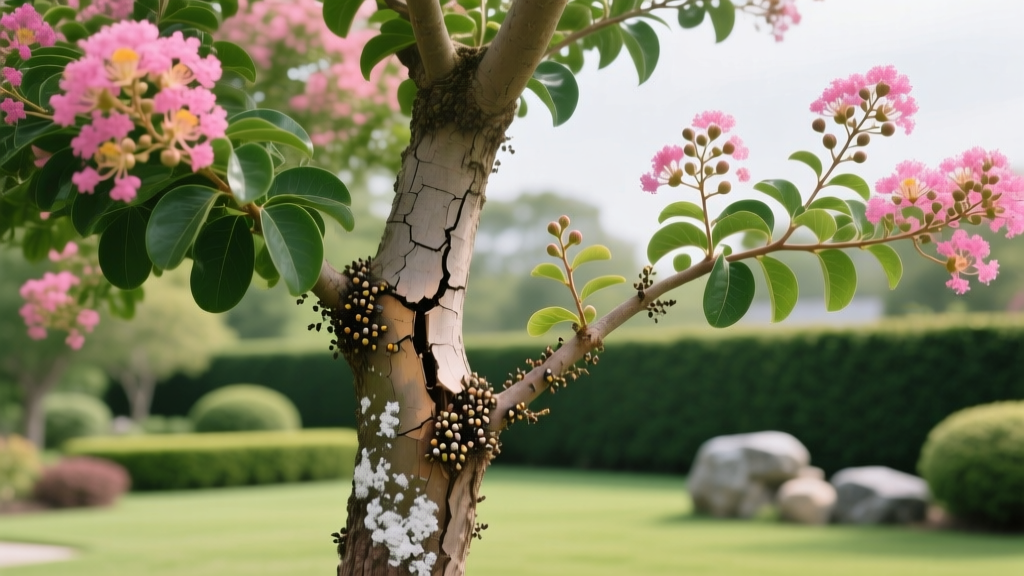
Crepe Myrtle Tree Problems: Diagnosis and Treatment Solutions
The crepe myrtle tree (Lagerstroemia indica) is a staple in southern and transitional zone landscapes, prized for its vibrant summer blooms, exfoliating bark, and drought tolerance. However, their widespread planting has made them a primary target for specific pathogens and sap-sucking insects. When a crepe myrtle fails to bloom, develops discolored foliage, or shows crusty white patches on its trunk, homeowners often misdiagnose the issue, leading to ineffective treatments and permanent structural damage.
This diagnostic guide breaks down the exact symptoms, underlying biological causes, and specific chemical or cultural solutions for the most destructive crepe myrtle tree problems encountered in modern landscapes.
Crape Myrtle Bark Scale (CMBS): The Silent Killer
First identified in the US in 2010, Crape Myrtle Bark Scale (Eriococcus lagerstroemiae) has rapidly become the most severe threat to these trees. Unlike most scale insects that feed on leaves, CMBS feeds exclusively on the bark of the trunk and branches, hiding beneath the exfoliating outer layers.
Warning: Misdiagnosis is Common
Homeowners frequently confuse CMBS with the natural, mottled shedding of crepe myrtle bark. If you can scrape off a white, felt-like, or crusty patch with your fingernail and it leaves a pinkish or bleeding mark underneath, you are dealing with CMBS, not natural bark exfoliation.
Targeted Treatment Protocol
Contact sprays are largely ineffective against CMBS because the insect's felt-like covering repels water-based insecticides. Systemic treatments are mandatory for eradication.
- Early Spring Soil Drench (Preventative): Apply an Imidacloprid-based soil drench (e.g., BioAdvanced 12-Month Tree & Shrub Insect Control) just as the leaf buds begin to swell. The standard application rate is 1.5 fluid ounces per inch of trunk diameter, diluted in 1 gallon of water per inch of diameter. Pour this in a trench around the drip line.
- Mid-Summer Trunk Spray (Curative): For heavily infested trees where soil drenches act too slowly, use a Dinotefuran trunk spray (e.g., Safari 20SG). Mix at a rate of 1.25 to 2.5 ounces per 100 gallons of water and spray the trunk and primary scaffolding branches until runoff. Dinotefuran is highly systemic and moves rapidly through the xylem.
Powdery Mildew: The White Dust Menace
Caused by the fungus Erysiphe lagerstroemiae, powdery mildew coats new growth, flower buds, and leaves in a distinct white-to-gray powdery substance. It thrives in high humidity, cool nights, and poor air circulation, often preventing flower buds from opening entirely.
Cultural and Chemical Controls
The most effective long-term solution is replacing susceptible varieties with resistant cultivars. The National Arboretum has developed highly resistant hybrids, including Natchez, Muskogee, Tuscarora, and Tonto. If you are managing an existing, susceptible tree, chemical intervention is required.
Begin spraying at bud break in early spring using a fungicide containing Myclobutanil (e.g., Spectracide Immunox) or Tebuconazole (e.g., Bayer Advanced Disease Control). Apply every 10 to 14 days until the summer heat consistently exceeds 85°F, at which point the fungus naturally becomes dormant. Ensure thorough coverage of the undersides of the leaves.
Sooty Mold: The Symptom, Not the Disease
If your crepe myrtle's leaves and branches are coated in a black, powdery substance that wipes off easily, you are looking at sooty mold (Capnodium species). Sooty mold is not a pathogen that attacks plant tissue; it is a fungus that grows on honeydew—the sugary excrement left behind by sap-sucking insects like aphids and scale.
The Two-Step Eradication Process
- Eliminate the Insects: You must kill the aphids or scale producing the honeydew. A strong jet of water from a hose can dislodge aphid colonies. For persistent infestations, apply Insecticidal Soap or Neem Oil (clarified hydrophobic extract) in the evening to avoid leaf burn. Spray thoroughly, targeting the undersides of the leaves.
- Wash the Mold: Once the insects are gone, the sooty mold will eventually weather away. To speed up the process and restore photosynthesis, wash the foliage with a solution of mild liquid dish soap (2 ounces per gallon of water) and rinse with a hose. The black coating will slough off, revealing healthy green tissue underneath.
Diagnostic Decision Matrix
Use this quick-reference table to identify the specific problem affecting your crepe myrtle tree based on visual symptoms and timing.
| Visual Symptom | Location on Tree | Probable Cause | Primary Treatment |
|---|---|---|---|
| White, felt-like crusts; pinkish bleed when scraped | Trunk and main branches | Crape Myrtle Bark Scale | Imidacloprid soil drench (Spring) |
| White/gray powder on leaves; deformed buds | New growth and flower panicles | Powdery Mildew | Myclobutanil foliar spray (Bi-weekly) |
| Black, soot-like powder on leaves and branches | Leaves, branches, understory | Sooty Mold (from Aphids/Scale) | Insecticidal soap + manual washing |
| Knobby, ugly growths at branch ends; weak shoots | Pruning sites / canopy | 'Crape Murder' (Improper Topping) | Corrective structural pruning |
| Yellowing leaves with green veins; poor bloom | Entire canopy | Iron Chlorosis (High soil pH) | Chelated iron soil application |
'Crape Murder': Diagnosing Human-Induced Damage
The most common 'disease' afflicting crepe myrtles is entirely human-made. 'Crape murder' refers to the severe, indiscriminate topping of the tree's main trunks and scaffolding branches, usually performed in late winter. This practice destroys the tree's natural, elegant branching architecture and forces the growth of weak, whip-like shoots that cannot support the weight of summer blooms.
Corrective Pruning Framework
If you have inherited a heavily topped crepe myrtle, rehabilitation takes 3 to 5 years. Stop cutting the tree back to the same 'knuckles' every year. Instead, employ drop-crotch pruning:
- Identify the weak, whippy shoots growing from the old pruning wounds.
- Select one or two of the strongest shoots that are growing outward and upward.
- Cut the remaining whips back to their point of origin (the knuckle) or to a lateral branch that is at least one-third the diameter of the branch being removed.
- Never make a pruning cut on a branch larger than 1 inch in diameter unless you are removing an entire trunk at the soil line to thin the canopy.
Seasonal Treatment Calendar
Timing is the most critical variable in crepe myrtle tree care. Applying treatments at the wrong phenological stage renders them useless. Follow this annual timeline for optimal health:
- February (Dormancy): Apply a dormant rate of horticultural oil (2-4% solution) to smother overwintering scale and aphid eggs. Prune only to remove crossing branches or dead wood. Do not top.
- March (Bud Swell): Apply Imidacloprid soil drench just as the leaf buds begin to break open. This allows the roots to uptake the systemic insecticide before the canopy fully expands.
- April - May (Spring Flush): Monitor for powdery mildew. Begin preventative fungicide sprays if the cultivar is susceptible and weather is cool/damp.
- June (Pre-Bloom): Inspect for aphids on new growth. Treat with insecticidal soap if honeydew is detected. Ensure the tree receives 1 inch of water per week as flower panicles develop.
- August (Peak Heat): Cease all fungicide applications; powdery mildew cannot survive high summer temperatures. Focus on deep, infrequent watering during droughts.
For ongoing regional updates on invasive pest migrations and specific cultivar resistance ratings, consult the Clemson University Home & Garden Information Center and the Texas A&M AgriLife Extension entomology databases.

