
Tree Care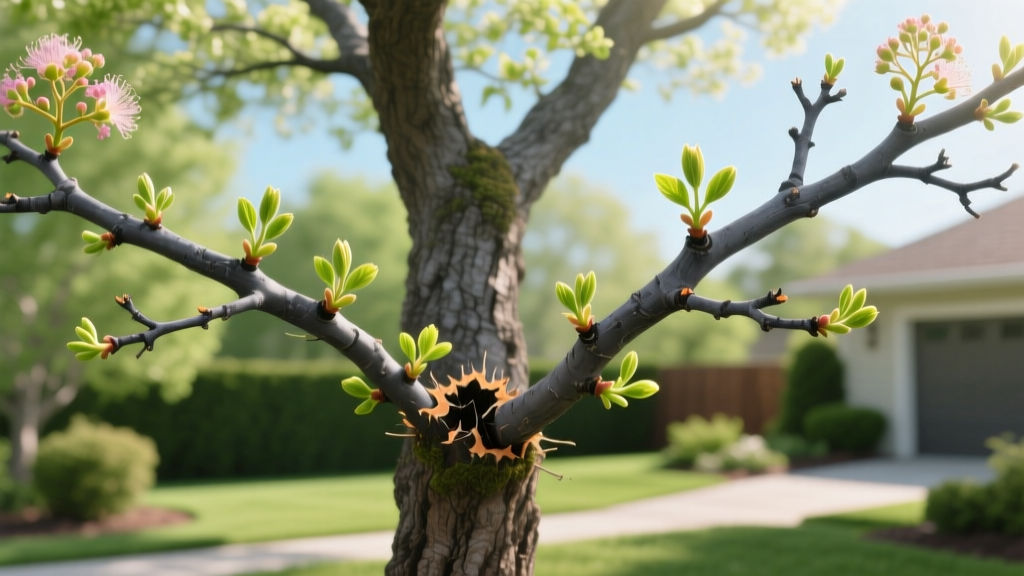
When to Start Cutting Back Crepe Myrtle Trees: A Beginner Guide
The 'Crepe Murder' Epidemic: What Beginners Get Wrong
Crepe myrtles (Lagerstroemia indica) are among the most resilient and rewarding trees in the southern landscape, yet they are routinely subjected to one of the most damaging horticultural practices in existence: 'crepe murder.' This occurs when homeowners indiscriminately hack off the tops of the tree's main trunks, leaving behind blunt, ugly stubs. According to the Clemson University Home & Garden Information Center, this severe topping destroys the tree's natural, elegant vase shape and triggers a host of physiological problems.
Warning: The Hidden Costs of Topping
When you top a crepe myrtle, the tree responds by pushing out dozens of weak, spindly shoots from the cut site. These 'knuckles' of scar tissue cannot support the heavy summer blooms, causing branches to snap in high winds. Furthermore, the dense, chaotic growth blocks airflow, creating a prime environment for powdery mildew and sooty mold. Topped trees also bloom up to six weeks later than properly pruned specimens.
Timing is Everything: When to Prune for Maximum Blooms
The single most common mistake beginners make when cutting back crepe myrtle trees is doing it at the wrong time. Pruning too early in the winter can stimulate new growth that will be killed by a late freeze. Pruning too late in the spring removes the wood that holds the current year's flower buds, as crepe myrtles bloom on new wood generated in the current season.
The ideal window is late winter to early spring, while the tree is completely dormant but just before the buds begin to swell. You want to prune when you can easily see the branch structure without leaves in the way, but the threat of hard freezes (below 28°F) has passed.
USDA Hardiness Zone Pruning Calendar
| USDA Zone | Ideal Pruning Window | Visual Cue to Start |
|---|---|---|
| Zone 6b | Late March to Early April | Buds are plump but tightly closed |
| Zone 7 | Late February to Mid-March | Forsythia bushes begin to yellow |
| Zone 8 | Mid-February to Early March | Soil temperatures consistently hit 45°F |
| Zone 9 | January to Mid-February | Immediately after the coldest winter snap |
Essential Tools for the Job (and What to Skip)
Using the wrong tools crushes the cambium layer (the vascular tissue just beneath the bark), leading to slow-healing wounds and dieback. Never use anvil-style pruners or hedge trimmers on crepe myrtles. Always use sharp, high-carbon steel bypass blades.
- Bypass Hand Pruners (Under 1-inch branches): The Felco F-2 Classic (approx. $62) is the industry standard. Its sap groove prevents blades from sticking, and the hardened steel holds an edge through dozens of trees.
- Bypass Loppers (1-inch to 2.5-inch branches): The Corona SL 4264 (approx. $45) features a 32-inch compound action handle that provides the leverage needed for thick, woody lateral branches without straining your shoulders.
- Pruning Saw (Over 3-inch trunks/limbs): The Silky Gomboy 210 folding saw (approx. $55) cuts on the pull stroke, leaving a glass-smooth finish that heals rapidly without the need for sealants.
- Skip: Chainsaws (unless removing the entire tree), hedge shears, and anvil pruners.
Step-by-Step: The Proper Pruning Method
Follow the Arbor Day Foundation's Pruning Guidelines to maintain the natural architecture of your tree. Your goal is to create an open, vase-like canopy that allows sunlight and air to penetrate the center.
Phase 1: Base and Sucker Removal
- Identify the main trunks (usually 3 to 5 for a multi-trunk specimen).
- Cut away all 'suckers'—the thin, whip-like shoots growing from the root flare at the soil line. Cut these flush with the root base; do not leave stubs.
- Remove any branches growing lower than 4 to 5 feet from the ground to create a clean 'trunk' area and prevent soil-borne fungal spores from splashing onto the foliage.
Phase 2: Canopy Thinning
- Look for branches that are crossing, rubbing, or growing inward toward the center of the canopy. Remove the weaker of the two rubbing branches.
- Thin out densely clustered areas. A good rule of thumb: you should be able to toss a baseball through the canopy without it hitting a branch.
- Remove any dead, diseased, or broken wood, cutting back to healthy, green tissue.
Phase 3: Heading Back (The Right Way)
If your tree has excessively long, arching branches that droop over walkways, you can head them back. Do not cut them arbitrarily in the middle of the stem.
- Trace the long branch back to a lateral side-branch that is at least one-third the diameter of the branch you are removing.
- Make the cut just outside the branch collar (the swollen area where the two branches meet).
- If cutting to a bud, make a 45-degree angled cut exactly 1/4 inch above a bud that is facing outward. This forces the new growth to grow away from the center of the tree.
Pro Tip: The Pencil Test
When thinning the canopy, remove any twigs and branches that are thinner than a standard wooden pencil. These weak shoots will not support heavy flower panicles and only clutter the canopy, restricting vital airflow.
Restoration Pruning: Fixing a Previously 'Murdered' Tree
If you have moved into a home with a crepe myrtle that has already been topped and features large, ugly knuckles, you can restore it over a 2-to-3-year period. Select the three strongest, most upright shoots growing from each knuckle and cut them back to outward-facing buds. Rub off all other emerging shoots with your thumb while they are still soft and green in early spring. Over time, these selected shoots will thicken and take over as the new structural leaders, gradually hiding the old scar tissue.
Post-Pruning Care: Debunking the Wound Paint Myth
Decades ago, it was common practice to paint pruning cuts with black asphalt-based wound sealants. Modern arboriculture has definitively proven this practice is harmful. Wound paints trap moisture and fungal spores against the exposed wood, accelerating decay. A healthy crepe myrtle will naturally compartmentalize the wound and grow callus tissue over the cut within a single growing season. Simply ensure your tools are sterilized between cuts with a 10% bleach solution or 70% isopropyl alcohol to prevent the spread of pathogens.
Frequently Asked Questions
Can I prune my crepe myrtle in the summer to get more blooms?
Major structural pruning should never be done in the summer, as it stresses the tree during peak heat. However, you can perform 'deadheading'—snipping off spent, faded flower panicles just above a set of leaves. This prevents the tree from expending energy on seed production and can stimulate a second, albeit smaller, flush of blooms in late summer (especially in Zones 8 and 9).
Do dwarf crepe myrtle varieties require the same pruning?
No. Dwarf varieties (like 'Chickasaw' or 'Pocomoke') that stay under 4 feet tall require minimal pruning. Simply thin out dead wood and crossing branches in late winter. Heavy heading cuts on dwarf varieties will ruin their dense, mounding habit and drastically reduce their bloom count.
Why is the bark peeling off my crepe myrtle trunks?
Do not panic; this is not a disease. Crepe myrtles are exfoliating trees. As they mature, the smooth outer bark naturally peels away in patches to reveal beautiful, mottled inner bark in shades of cinnamon, pink, and slate gray. Never attempt to pull or scrape the peeling bark off manually, as this can damage the live tissue underneath.