
Tree Care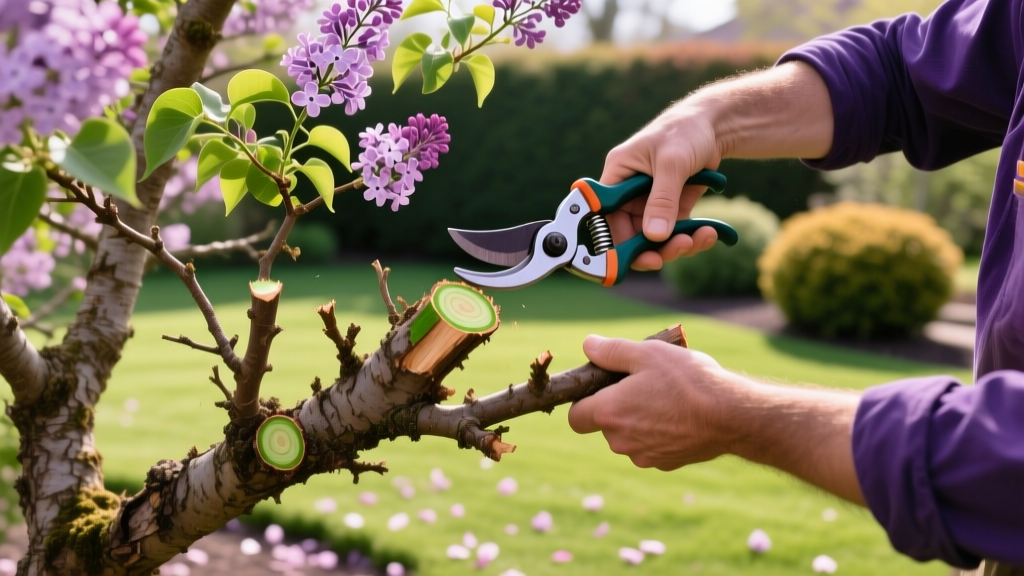
Diagnosing and Cutting Back a Lilac Bush: The 3-Year Rejuvenation Guide
Lilacs (Syringa vulgaris) are remarkably resilient shrubs, but decades of neglect can turn a vibrant spring centerpiece into a leggy, disease-prone thicket. When homeowners notice a severe drop in flower production or a canopy that only produces leaves at the very top, the solution is almost always strategic pruning. However, cutting back a lilac bush requires precise timing and a multi-year approach to avoid shocking the plant or permanently destroying its bloom cycle.
This guide moves beyond generic advice, providing a diagnostic framework to identify exactly why your lilac is failing, followed by a professional 3-year rejuvenation protocol to restore its structural integrity and floral density.
Diagnostic Matrix: Why Your Lilac Needs Cutting Back
Before making a single cut, you must diagnose the underlying issue. Randomly hacking at branches will only exacerbate stress. Use this diagnostic matrix to match your shrub's symptoms with the correct pruning solution.
| Symptom | Diagnosis | Targeted Pruning Solution |
|---|---|---|
| Few or zero flowers; dense, dark green foliage | Excess nitrogen or old, unproductive wood | Implement 3-year rejuvenation; stop lawn fertilizer overlap |
| White, powdery coating on late-summer leaves | Powdery Mildew (Erysiphe syringae) | Thin interior canopy to 4-6 main trunks for UV/airflow |
| Sawdust-like frass at base; sudden branch wilting | Lilac Borer (Podosesia syringae) | Cut infested canes below soil line and burn; do not compost |
| Foliage only at top 10% of stems; bare, woody base | Apical dominance and shaded lower nodes | Hard cutback of oldest canes to 6-8 inches above grade |
| Spent brown flower heads remaining through winter | Energy diverted to seed production | Deadhead immediately post-bloom to redirect energy to buds |
The Critical Timing Rule for Cutting Back a Lilac Bush
The most common fatal error in lilac care is pruning at the wrong time of year. Lilacs bloom on 'old wood,' meaning the flower buds for next spring are formed during the summer months immediately following the current year's bloom.
WARNING: The Pruning Window
You must finish cutting back a lilac bush within two to three weeks after the spring flowers fade. If you prune in late summer, fall, or early spring, you will physically remove the pre-set flower buds, guaranteeing a bloomless shrub the following year. According to the University of Minnesota Extension, late-season pruning is the primary cause of 'no-bloom' complaints in established lilacs.
The 3-Year Rejuvenation Protocol
If your lilac is severely overgrown, attempting to cut it all the way down to the ground in a single season (a 'hard reset') can kill older, grafted cultivars or invite aggressive fungal pathogens into the massive wound sites. Instead, use the fractional 3-year rejuvenation method.
Year 1: Clearing the Oldest Wood
- Identify the oldest canes: Look for the thickest stems (usually over 1.5 inches in diameter) with gray, peeling bark.
- Remove one-third: Cut these oldest canes all the way down to 6 to 8 inches above the soil line. Do not cut flush with the dirt, as the remaining stub will push out vigorous new basal shoots.
- Deadhead: Snip off all spent flower panicles just above the first set of leaves below the bloom.
Year 2: Thinning and Shaping
- Remove the next third: Cut half of the remaining old, thick canes down to the 6-8 inch stub height.
- Manage new growth: The stubs from Year 1 will have pushed out multiple new shoots. Select the 3 or 4 strongest, straightest shoots per stub and prune the weaker, spindly ones away at the base.
- Open the center: Remove any inward-growing branches that cross the center of the shrub to maximize sunlight penetration.
Year 3: Finalizing the Framework
- Remove the final third: Cut the last of the original old-growth canes down to the base.
- Establish the permanent framework: Your shrub should now consist entirely of young, vigorous canes. Aim for a final structure of 8 to 12 main stems of varying ages.
- Height reduction: If the new canes are excessively tall (over 8 feet), you can head them back by 20%, making your cuts exactly 1/4 inch above an outward-facing bud at a 45-degree angle.
Pro Tip: The 45-Degree Angle
Always make pruning cuts at a 45-degree angle sloping away from the bud. This ensures rainwater runs off the cut surface rather than pooling against the bud, which prevents localized rot and dieback.
Tool Selection and Pathogen Sanitation
Using the wrong tools crushes the vascular cambium layer of the lilac stem, delaying healing and inviting bacterial blight (Pseudomonas syringae). Match your tool to the stem diameter:
- Stems under 1/2 inch: Use high-quality bypass pruners (e.g., Felco 2). Never use anvil pruners, as they crush the tissue.
- Stems 1/2 inch to 1.5 inches: Use 28-inch bypass loppers (e.g., Fiskars PowerGear) for maximum leverage without tearing the bark.
- Stems over 1.5 inches: Use a Japanese pull saw (e.g., Silky Gomboy 210) with a 210mm blade. Pull saws cut on the pull stroke, preventing the blade from binding in the dense, fibrous lilac wood.
Sanitation Protocol: If you suspect lilac blight or borer activity, you must sterilize your blades between every single cut. Wipe the blades with a rag soaked in 70% isopropyl alcohol. A 10% bleach solution is often recommended, but it will rapidly corrode the carbon steel blades of professional pruners.
Post-Pruning Soil and Nutrient Management
Cutting back a lilac bush triggers a massive demand for energy to produce new basal shoots. You must support this growth with the correct soil chemistry. The University of Wisconsin-Madison Extension notes that lilacs are highly sensitive to soil acidity and nitrogen imbalances.
pH Correction
Lilacs require a slightly alkaline soil pH between 6.5 and 7.0. If your soil is acidic (common in the eastern US), the shrub cannot uptake phosphorus, leading to poor blooming. Test your soil and apply pelletized limestone at a rate of 5 lbs per 100 square feet in late fall to gradually raise the pH.
Fertilizer Selection
Avoid high-nitrogen lawn fertilizers (like 24-4-12) near the root zone. Excess nitrogen forces the plant to produce lush, weak vegetative growth that is highly susceptible to powdery mildew, while suppressing flower bud formation. Instead, apply a low-nitrogen, high-phosphorus granular fertilizer (such as a 5-10-10 or 0-10-10 blend) in early spring just as the leaf buds begin to swell. Bone meal (4-12-0) is an excellent organic alternative to stimulate root and bloom development.
Frequently Asked Troubleshooting Questions
Can I just cut my entire lilac down to the ground in one day?
While common lilacs (Syringa vulgaris) can often survive a hard 'ground-level' reset, you will lose 2 to 3 years of blooms, and the massive wound sites at the soil line are highly vulnerable to fungal crown rot. Furthermore, grafted cultivars (like many Japanese tree lilacs) will revert to their wild rootstock if cut below the graft union. The 3-year fractional method is vastly superior for plant health.
Why are the new shoots growing back so densely after pruning?
This is a natural hormonal response called 'watersprouting.' When you remove the apical meristem (the top bud), auxin hormones are redistributed, causing dormant basal buds to break. You must actively thin these new shoots in Year 2 and Year 3, keeping only the strongest 3-4 per stump, or the shrub will return to a congested, unproductive state.
Should I seal the large pruning cuts with tree wound paint?
No. Modern arboricultural science has conclusively proven that wound dressings and pruning sealants trap moisture and anaerobic bacteria against the cut, accelerating decay. Lilacs possess highly efficient compartmentalization (CODIT) mechanisms; a clean, sharp cut left exposed to air and sunlight will callous over naturally within a few weeks.

