
Tree Care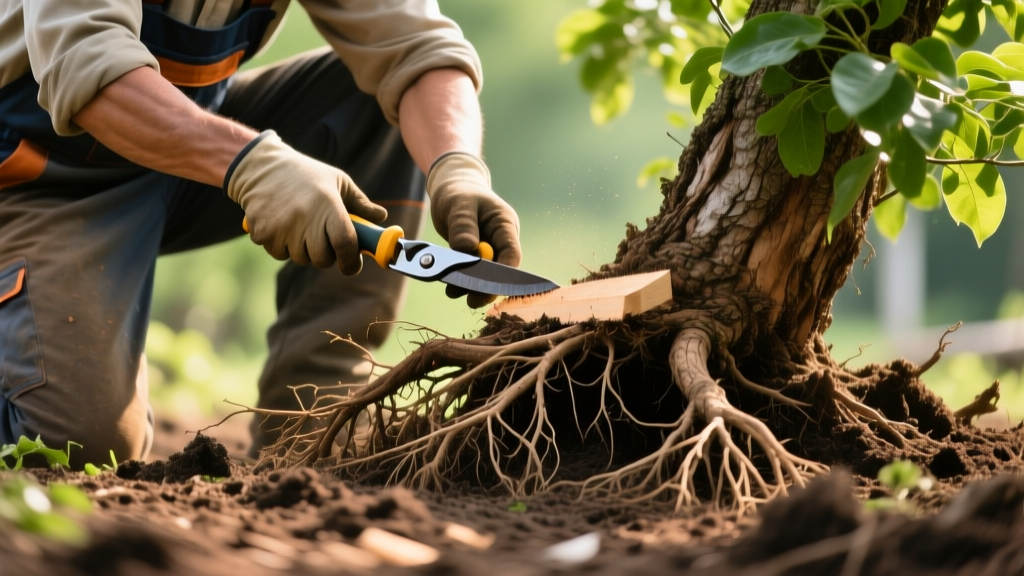
Safely Cutting Tree Roots: A Beginner's Pruning Guide
Why Surface Roots Emerge and When to Intervene
Exposed tree roots create tripping hazards, damage lawnmower blades, and disrupt landscaping. For beginners, the instinct is often to grab a chainsaw or a reciprocating saw and hack away at the offending wood. This approach is a critical mistake. Tree roots are the primary delivery system for water, oxygen, and nutrients; severing them incorrectly invites fatal diseases, structural instability, and canopy dieback.
Surface roots typically emerge due to heavy clay soils, shallow irrigation practices, or natural species traits (such as those seen in Silver Maples, Willows, and Poplars). Before cutting tree roots, you must understand the biological limits of your tree and follow strict arboricultural guidelines to ensure the tree survives the pruning process.
The Critical Root Zone (CRZ): Calculate Before You Cut
The most important concept in root pruning is the Critical Root Zone (CRZ). This is the minimum soil volume required to sustain the tree's health and structural anchorage. The CRZ is calculated using the tree's Diameter at Breast Height (DBH), which is the trunk diameter measured exactly 4.5 feet above the ground.
The CRZ Formula:
Measure the trunk circumference at 4.5 feet high. Divide by 3.14 (Pi) to get the DBH in inches.
Rule of Thumb: Allow 1 foot of CRZ radius for every 1 inch of DBH.
Example: A tree with a 20-inch DBH requires a minimum 20-foot radius of undisturbed critical roots from the center of the trunk.
Measure the trunk circumference at 4.5 feet high. Divide by 3.14 (Pi) to get the DBH in inches.
Rule of Thumb: Allow 1 foot of CRZ radius for every 1 inch of DBH.
Example: A tree with a 20-inch DBH requires a minimum 20-foot radius of undisturbed critical roots from the center of the trunk.
According to the University of Florida IFAS Extension, roots inside this zone are vital for structural support. Cutting large, woody anchor roots inside the CRZ compromises the tree's ability to withstand high winds, creating a severe falling hazard.
The 25% Rule: Safe Pruning Thresholds
Arborists adhere to a strict percentage limit when removing root mass. Never remove more than 25% of a tree's root system in a single year. For beginners and DIY homeowners, a more conservative 15% limit is highly recommended to prevent shock.
| Tree Health & Age | Maximum Root Removal | Recovery Time | Beginner Recommended? |
|---|---|---|---|
| Young, Vigorous (Under 10 years) | Up to 25% | 1-2 Growing Seasons | Yes |
| Mature, Healthy (10-40 years) | 15% to 20% | 2-3 Growing Seasons | Yes, with caution |
| Old, Declining, or Stressed | 5% to 10% (or none) | 3-5+ Years | No (Hire an Arborist) |
Step-by-Step Guide to Cutting Exposed Surface Roots
If your target root is outside the CRZ, or if you are removing a small fraction of a surface root inside the CRZ to clear a walkway, follow this precise procedure.
1. Excavate and Expose the Root
Do not cut blindly through soil. Soil contains silica and microscopic rocks that will instantly dull your pruning saw. Use a hand trowel or an air spade to carefully excavate the soil around the target root, exposing at least 3 to 4 inches of wood on all sides of your intended cut line.
2. Select the Proper Pruning Tools
Avoid axes, machetes, or chainsaws for precision root work. Chainsaws kick back easily when hitting buried rocks, and axes crush the root cambium, leaving jagged wounds that rot. Invest in a high-quality pruning saw with impulse-hardened teeth:
- Silky Gomboy 240 (Medium Teeth): Retails around $45. Exceptional for roots up to 4 inches thick. The curved blade and Japanese pull-stroke design prevent binding in tight soil trenches.
- Corona RazorTOOTH 14-inch Folding Saw: A budget-friendly alternative at roughly $28. Features a 3-sided tooth design that clears sawdust efficiently from deep root cuts.
- Heavy-Duty Root Pruning Shears: For roots under 1.5 inches, use bypass loppers like the Fiskars 28-inch Power-Lever ($40) to ensure a flush, crush-free cut.
3. Execute the Cut
Make a clean, single cut. Do not leave stubs, and do not cut flush against the trunk (which damages the root flare). Leave the cut at least 3 to 4 inches away from the main trunk base. If the root is thick (over 4 inches), use the three-cut method to prevent the heavy root section from tearing the bark as it falls away:
- Undercut: Saw one-third of the way up from the bottom of the root, about 2 inches away from your final cut line.
- Top Cut: Saw down from the top, slightly further out than the undercut, until the root section snaps off cleanly.
- Final Pruning Cut: Make the final, smooth cut at your exact measured mark.
4. Treat the Wound and Backfill
Never apply black pruning sealer, tar, or paint to cut roots. These products trap moisture and anaerobic bacteria against the wood, accelerating decay. Instead, allow the cut to callous naturally in the air for a few hours, then backfill the trench with native soil and cover the area with 2 to 3 inches of coarse arborist wood chips. Keep the mulch at least 3 inches away from the actual trunk flare to prevent collar rot.
Post-Pruning Recovery and Watering Protocols
Cutting tree roots induces immediate hydraulic stress. The tree has lost a percentage of its water-gathering capacity, and you must compensate artificially during the first growing season.
Hydration Math: A pruned tree requires approximately 10 gallons of water per inch of DBH per week during the growing season. For a 15-inch DBH tree, apply 150 gallons weekly using a slow-release soaker hose or a Gator Bag to ensure deep soil penetration rather than surface runoff.
Monitor the canopy closely in late summer. If you notice marginal leaf scorch (browning at the edges of leaves) or premature autumn coloring, the tree is experiencing severe hydraulic failure. Increase watering frequency and consider applying a light layer of compost tea to stimulate new feeder root growth.
When to Call an ISA Certified Arborist
While surface root pruning is manageable for beginners, certain scenarios require professional intervention. Consult an ISA Certified Arborist if you encounter any of the following:
- The root is larger than 4 inches in diameter and located within 10 feet of the trunk.
- The tree shows a noticeable lean that has developed over recent years.
- Fungal conks (mushrooms) are growing on the trunk base or directly on the surface roots, indicating internal heart rot.
- You are dealing with a taproot species like Hickory or Black Walnut, which do not tolerate lateral root disruption well.
Frequently Asked Questions
Will cutting tree roots kill the tree?
Not if you follow the 25% rule and avoid the Critical Root Zone. Trees are highly resilient and can compartmentalize clean, precise cuts. However, tearing roots with heavy machinery or removing massive anchor roots will lead to canopy dieback and eventual death.
Can I just pave or pour concrete over the surface roots instead of cutting them?
No. Pouring concrete or laying impermeable pavers over surface roots suffocates the root system by cutting off oxygen and gas exchange. If you must install a walkway, use permeable materials like crushed gravel, or install a suspended wooden boardwalk that allows air and water to reach the soil below.
How long does it take for a cut root to heal?
Unlike human skin, tree wood does not "heal"; it "seals" through a process called compartmentalization (CODIT). The tree will grow a callus ridge over the cut edge. This process takes one to three full growing seasons, depending on the tree's vigor and species.

