
Tree Care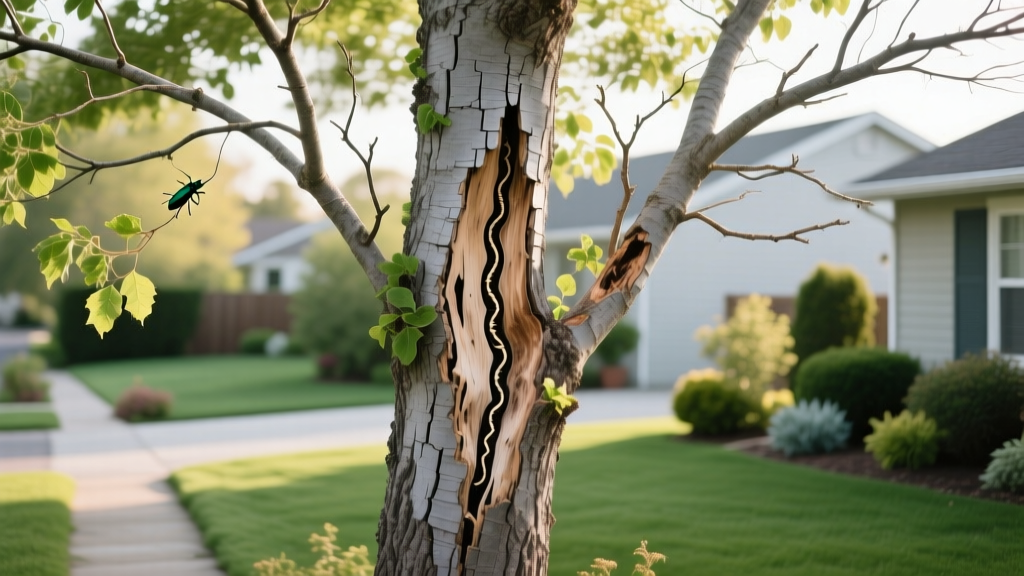
Dead Ash Tree Symptoms: Diagnosis and Rescue Fixes for EAB Damage
The 4-Stage Diagnostic Matrix: Is Your Ash Tree Actually Dead?
The term 'dead ash tree' is frequently misapplied by homeowners observing early canopy thinning. True death in ash species (Fraxinus) is almost exclusively driven by the Emerald Ash Borer (EAB), an invasive beetle whose larvae girdle the tree's vascular system. Before committing to a $1,500+ removal bill or a $300 chemical treatment, you must accurately stage the tree's decline. Once canopy dieback exceeds 50%, the vascular tissue is too degraded to distribute systemic insecticides, rendering rescue impossible.
| Decline Stage | Canopy Dieback | Bark & Trunk Symptoms | Rescue Viability |
|---|---|---|---|
| Stage 1 (Early) | < 10% | No visible D-holes; minor woodpecker flecking. | Highly Rescueable. 2-year trunk injection recommended. |
| Stage 2 (Moderate) | 10% - 30% | Epicormic sprouting (water sprouts) on lower trunk; some bark splitting. | Rescueable. Immediate Emamectin benzoate injection required. |
| Stage 3 (Severe) | 30% - 50% | Blonde woodpecker damage extensive; D-shaped exit holes visible. | Marginal. Treatment may save lower canopy, but top will likely die back. |
| Stage 4 (Dead) | > 50% | Bark sloughing off in large sheets; severe structural decay. | Unrescueable. Immediate hazardous removal required. |
Differentiating EAB from Ash Decline and Fungal Pathogens
Not every dying ash tree is a victim of EAB. Ash decline (often a complex of Verticillium wilt, anthracnose, and environmental stress) can mimic early EAB symptoms. However, the diagnostic hallmark of a dead ash tree killed by EAB is the presence of serpentine, S-shaped larval galleries beneath the bark. According to Purdue University Extension, if you can carefully pry away a loose piece of bark and reveal flattened, winding tunnels packed with fine sawdust (frass), EAB is the definitive culprit. Fungal issues like Verticillium wilt will instead show dark, olive-green streaking in the sapwood when a branch is cross-sectioned, with no insect galleries present.
⚠️ CRITICAL HAZARD WARNING: A Stage 4 dead ash tree loses structural integrity at an alarming rate. Unlike oak or maple, ash wood becomes exceptionally brittle within 12 to 18 months of death due to rapid moisture loss and secondary colonization by Armillaria root rot. Never attempt to climb or manually fell a dead ash tree using standard notch-and-fell techniques; the trunk is highly prone to barber-chairing (splitting vertically) and snapping under load.
Rescue Fixes: Trunk Injection Protocols for Living Ash Trees
If your tree is in Stage 1 or 2, systemic trunk injections are the only scientifically validated rescue fix. Soil drenches containing Imidacloprid are largely ineffective on trees with a Diameter at Breast Height (DBH) greater than 15 inches and face increasing regulatory restrictions in 2026 due to pollinator toxicity concerns.
Step-by-Step Trunk Injection Methodology
Professional arborists utilize high-pressure micro-injection systems (such as the QUIK-jet Air) to bypass the compromised outer phloem and deliver insecticide directly into the active xylem.
- Calculate DBH and Dosage: Measure the trunk circumference at 4.5 feet above grade. Divide by 3.14 to get the DBH. The standard dosage for Emamectin benzoate (Tree-AGE G4) is 0.2 to 0.4 mL per inch of DBH.
- Drill Injection Ports: Using a cordless drill with a 11/64-inch high-carbon steel bit, drill holes every 4 to 6 inches around the base of the trunk. Crucial Detail: Angle the drill bit slightly upward (10-15 degrees) to penetrate the sapwood without piercing the heartwood, which will cause the chemical to pool and fail to distribute.
- Target the Root Flare: Expose the root flare by removing soil and mulch. Place the lowest injection ports 1 to 2 inches above the root collar. This ensures the chemical is pulled upward through the transpiration stream.
- Pressurize and Monitor: Inject at 20-30 PSI. Uptake should occur within 15 to 45 minutes. If uptake stalls, the vascular tissue is too damaged for rescue.
Chemical Efficacy and Cost Comparison
Choosing the right active ingredient dictates your long-term maintenance budget. The USDA APHIS recommends rotating active ingredients when possible to prevent pest resistance, though EAB management currently relies heavily on Emamectin benzoate for its extended residual control.
| Active Ingredient | Brand Example | Residual Control | Avg. Cost (per inch DBH) | Best Use Case |
|---|---|---|---|---|
| Emamectin benzoate | Tree-AGE G4 | 2 Years | $18 - $24 | High-value landscape trees; long-term protection. |
| Azadirachtin | TreeAzin | 1 Year | $12 - $16 | Trees near sensitive waterways; annual rotation. |
| Dinotefuran | Safari (Trunk Spray) | 1 Year | $8 - $12 | Smaller ash trees (<10" DBH) where drilling is impractical. |
Safe Removal Protocols for Unrescueable Dead Ash Trees
When a tree crosses the 50% dieback threshold, it is functionally dead and poses a severe liability. Removal of EAB-killed ash requires specialized rigging. Because the wood is brittle, arborists cannot use climbing spikes (gaffs), as they will punch through the dead bark and fail to grip the cambium. Furthermore, the canopy cannot support the weight of a climber or the friction of a rigging rope.
Removal Execution and Pricing Realities
Expect to pay a premium for dead ash removal compared to healthy hardwoods. In 2026, the national average for removing a mature (20-inch DBH) dead ash tree ranges from $1,200 to $3,500. This cost reflects the mandatory use of bucket trucks or mobile cranes. The arborist will dismantle the tree in small, manageable sections, lowering each piece with a port-a-wrap friction device to prevent the brittle wood from shattering upon impact with the ground.
'The biggest mistake homeowners make with dead ash is waiting. A dead ash tree doesn't just sit there; it actively becomes a projectile hazard. The lateral branches snap off in mild winds, and the main stem becomes top-heavy as the root system rots. If it's within 100 feet of a structure, remove it immediately.'
— Senior ISA Certified Arborist, Municipal Forestry Division
Post-Removal Stump Management and Replanting Strategies
Once the dead ash tree is down, the stump requires specific management. EAB larvae can survive in cut stumps and emerge to infest neighboring trees. Stump grinding must extend a minimum of 6 to 8 inches below grade to destroy any remaining larval galleries in the root collar. Do not leave the stump to rot naturally.
Selecting Non-Host Replacement Species
Replanting in the exact same location requires soil remediation, as the decaying ash roots will temporarily tie up soil nitrogen. Wait at least one full growing season before replanting. When selecting a replacement, avoid other Fraxinus species or closely related hosts like White Fringetree (Chionanthus virginicus). Opt for resilient, non-host alternatives that provide similar canopy architecture and shade profiles:
- Swamp White Oak (Quercus bicolor): Excellent for poorly drained soils where ash previously thrived; provides massive caliper growth and high wildlife value.
- Hackberry (Celtis occidentalis): Highly tolerant of urban compaction and salt; mimics the vase-shaped canopy of a mature Green Ash.
- Ginkgo (Ginkgo biloba 'Autumn Gold'): Ensure you select a male cultivar to avoid foul-smelling fruit; offers unparalleled disease resistance and striking yellow fall color.
- Kentucky Coffeetree (Gymnocladus dioicus): A rugged, deep-rooted native that handles drought and urban heat islands exceptionally well.
By accurately diagnosing the stage of decline and applying targeted, scientifically backed rescue fixes or executing safe removal, you can protect your property and preserve the ecological balance of your landscape against the ongoing threat of the Emerald Ash Borer.

