
Tree Care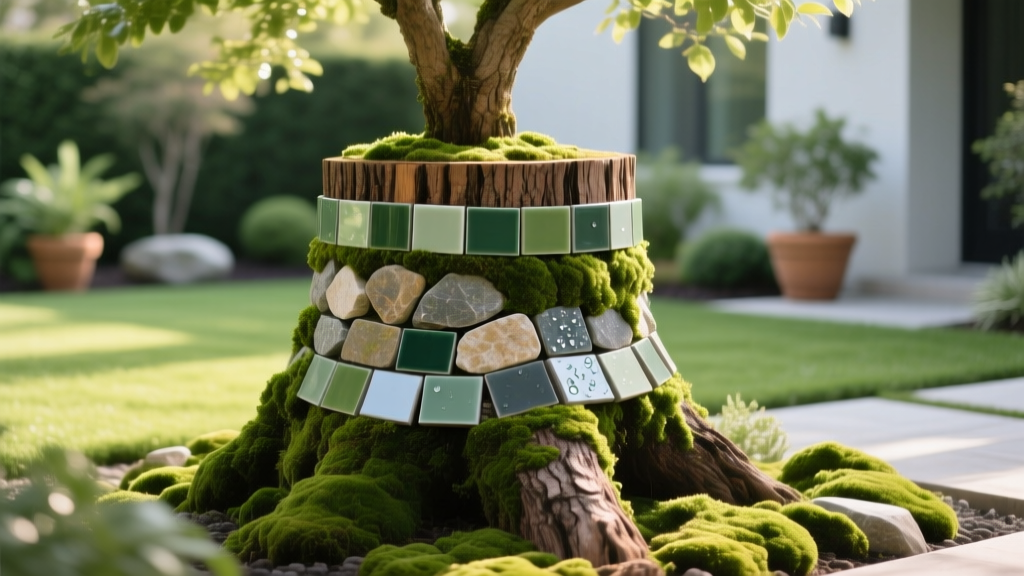
How to Decorate a Tree Stump: Material Coverage and Cost Guide
The Economics of Stump Decoration vs. Removal
Deciding what to do with a leftover tree stump is a common landscaping dilemma. As of 2026, professional stump grinding costs between $3.50 and $5.00 per inch of diameter. For a standard 24-inch oak stump, you are looking at a minimum call-out fee plus grinding charges, easily totaling $300 to $450. In contrast, learning how to decorate a tree stump using targeted materials and precise chemical dosages allows you to transform the eyesore into a landscape feature for $45 to $150, while simultaneously halting the decay process that attracts carpenter ants and termites.
This guide bypasses generic Pinterest crafts and focuses on the structural, chemical, and financial realities of stump decoration. We will cover exact material coverage rates, preservative dosages, and the mathematical formulas required to calculate your specific stump's square footage so you never over-purchase sealants or under-order topsoil.
Step 1: Calculate Your Stump's Surface Area and Volume
Before purchasing wood preservatives, epoxy, or soil, you must calculate the exact surface area and internal volume of your stump. Guessing leads to wasted materials or insufficient coverage, which results in premature rot.
The Formulas
- Top Surface Area (for sealants or planters): Measure the diameter (d). Area = π × (d/2)². Example: A 20-inch stump has a top area of 3.14 × 10² = 314 square inches (2.18 sq ft).
- Lateral Surface Area (for moss or bark sealants): Measure the circumference (C) and height (h). Area = C × h. Example: A 62-inch circumference and 15-inch height yields 930 square inches (6.45 sq ft).
- Internal Volume (for hollowed planters): If hollowing the center, measure the internal diameter and depth. Volume = π × (internal d/2)² × depth. Convert cubic inches to cubic feet by dividing by 1,728.
Pro Tip: Always add 15% to your calculated sealant coverage area. The end-grain (top cut) of a stump acts like a bundle of straws, absorbing up to 30% more liquid preservative than the lateral bark.
Method 1: The Sealed Planter (Soil & Preservative Dosage)
Hollowing out the center of a stump to plant annuals or succulents is the most popular decoration method. However, the constant moisture from the potting soil will rapidly accelerate fungal decay if the wood is not properly dosed with a ground-contact preservative.
Material Coverage & Costs
Do not use standard water-based polyurethanes for the interior cavity; they will peel within one season due to hydrostatic pressure. Instead, use a Copper Naphthenate solution (e.g., Cuprinol Green or generic equivalents). According to the University of Minnesota Extension, copper-based treatments are highly effective at deterring wood-decaying fungi and wood-boring insects in ground-contact scenarios.
- Preservative Dosage: Copper naphthenate covers approximately 150 square feet per gallon on smooth end-grain. For a 24-inch stump (top and interior walls), you need roughly 0.15 gallons (about 19 ounces).
- Soil Volume: A hollowed cavity measuring 16 inches wide and 10 inches deep holds 1.16 cubic feet of soil. Purchase two 1.5 cu ft bags of premium potting mix (approx. $16 total) to allow for settling.
- Drainage Aggregate: Place 2 inches of 3/8-inch pea gravel at the base before adding soil. Coverage: 10 lbs of gravel covers 1 sq ft at 2 inches deep (Cost: $6).
Method 2: The Living Terrarium (Moss Slurry Coverage Rates)
For stumps in shaded, high-humidity areas, encouraging biological growth is more sustainable than fighting it with chemicals. Creating a moss terrarium on the stump's exterior requires a specific biological slurry to ensure the spores adhere to the vertical bark.
The Buttermilk Slurry Formula
Purchasing live moss sheets is expensive ($15–$25 per square foot). Instead, cultivate your own using a dosage-controlled slurry.
- Base Material: Gather 2 cups of dried Sphagnum or Hypnum moss from your property and crumble it into a fine powder.
- Binding Agent: Blend the moss with 2 cups of cultured buttermilk (the lactic acid lowers the bark's pH, creating an ideal environment for bryophytes) and 1 teaspoon of sugar to feed initial bacterial growth.
- Coverage Rate: One quart of this blended slurry will cover approximately 4 to 5 square feet of vertical, textured bark when applied with a paintbrush.
Cost Breakdown: Dried moss ($0 if foraged, $12 if bought), Buttermilk ($3), Sugar ($0.10). Total cost to cover a 3-foot tall, 2-foot wide stump is under $15. Keep the stump misted daily for the first 21 days until the rhizoids anchor into the bark crevices.
Method 3: Epoxy Resin Crack Filling (Precision Dosage)
If your stump has deep radial checks (cracks) from drying, filling them with a tinted 2-part marine epoxy creates a striking "river" effect while structurally stabilizing the wood. This requires strict adherence to volume calculations, as marine epoxy is expensive and unforgiving.
⚠️ WARNING: Exothermic Reactions on Damp Wood
Epoxy resin cures via an exothermic (heat-releasing) reaction. If the stump's internal moisture content is above 12%, the trapped water will boil when the epoxy heats up, causing the resin to cloud, bubble, and fail to bond. Use a pinless moisture meter on the deepest part of the crack before pouring. If moisture is >12%, apply a heat gun to the crack for 15 minutes prior to the pour.
Epoxy resin cures via an exothermic (heat-releasing) reaction. If the stump's internal moisture content is above 12%, the trapped water will boil when the epoxy heats up, causing the resin to cloud, bubble, and fail to bond. Use a pinless moisture meter on the deepest part of the crack before pouring. If moisture is >12%, apply a heat gun to the crack for 15 minutes prior to the pour.
Epoxy Volume and Cost Matrix
Use a slow-curing, deep-pour epoxy (e.g., TotalBoat Clear Penetrating Epoxy or Liquid Glass Deep Pour) to prevent overheating. Standard tabletop epoxies will flash-cure and crack in volumes deeper than 1/2 inch.
| Crack Dimensions (W x L x D) | Volume Required | Epoxy Dosage (Mixed) | Estimated Material Cost |
|---|---|---|---|
| 1" x 12" x 2" | 24 cu inches | 13 oz (Part A + B) | $14.50 |
| 2" x 18" x 4" | 144 cu inches | 78 oz (0.6 gallons) | $58.00 |
| 3" x 24" x 6" | 432 cu inches | 234 oz (1.8 gallons) | $145.00 |
Note: 1 gallon of mixed deep-pour epoxy covers exactly 231 cubic inches. Always mix 10% more than your calculated volume to account for wood absorption into the end-grain walls of the crack.
Comprehensive Material Coverage & Cost Summary
To help you budget your project, here is a side-by-side comparison of the three primary decoration methods, scaled for an average 24-inch diameter, 18-inch tall stump.
| Decoration Method | Primary Materials Needed | Total Coverage Required | Avg. Project Cost (2026) | Longevity |
|---|---|---|---|---|
| Sealed Planter | Copper Naphthenate, Potting Soil, Pea Gravel | 8 sq ft sealant, 1.5 cu ft soil | $65 - $85 | 5-8 Years |
| Moss Terrarium | Sphagnum Moss, Buttermilk, Sugar | 12 sq ft bark coverage | $15 - $25 | Indefinite (Living) |
| Epoxy Hardscape | Deep-Pour Epoxy, Pigment, Moisture Meter | 1.2 gallons mixed resin | $110 - $150 | 10+ Years |
Long-Term Preservation and Pest Deterrence
Decorating a stump does not exempt it from the natural decay cycle. The EPA Safe Pest Control Guidelines emphasize that eliminating moisture and food sources is the primary defense against structural pests. Even if you decorate the top, the lateral roots remain in the soil, acting as wicks that draw groundwater up into the stump's heartwood.
To maximize the lifespan of your decorated stump:
- Isolate the Base: Dig a 4-inch trench around the perimeter of the stump and fill it with crushed gravel. This creates a French drain effect, pulling ground moisture away from the root collar.
- Annual Borate Treatment: If you opted for the moss terrarium and cannot use copper naphthenate (which is toxic to moss), drill three 1/2-inch holes at a 45-degree angle into the base of the stump every spring. Fill these holes with a dry Disodium Octaborate Tetrahydrate (borax) powder. As the stump draws up spring groundwater, it will pull the borate into its vascular system, rendering the heartwood toxic to carpenter ants and termites without harming the exterior moss.
- Cap the Top: If you are not planting inside the stump, seal the top end-grain with a 1/4-inch layer of clear exterior-grade silicone or a custom-cut piece of 16-gauge copper flashing. End-grain absorbs 80% of the moisture that leads to internal heart rot.
By treating your tree stump as a measurable, quantifiable landscaping project rather than a simple craft, you ensure that your materials are applied at the correct dosages, your budget remains intact, and the final installation survives the elements for years to come.

