
Tree Care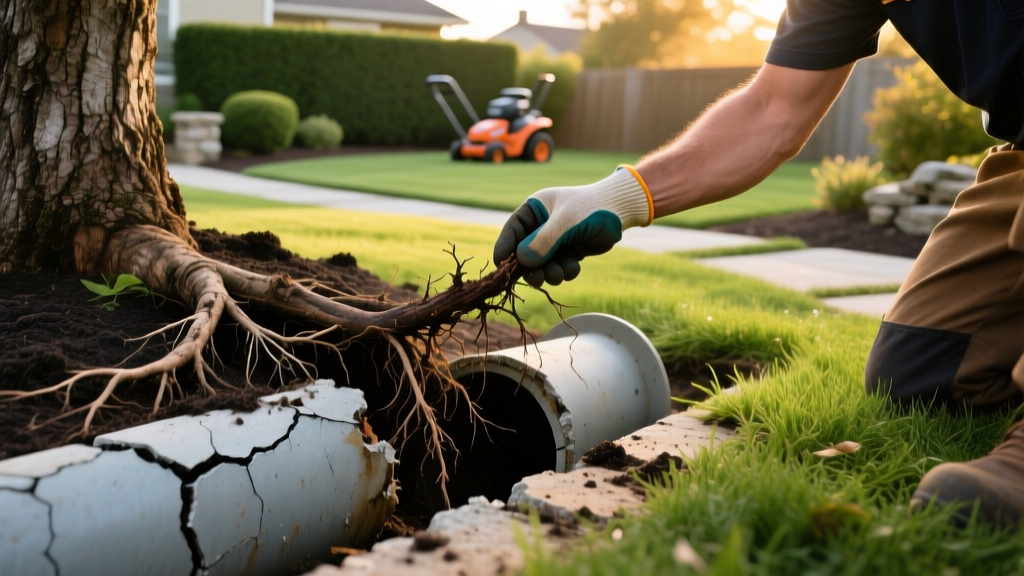
How to Destroy Tree Roots in Sewer Lines and Yards Safely
Learning how to destroy tree roots effectively requires understanding the biological drive behind their growth. Tree roots do not maliciously attack infrastructure; they are simply following moisture and oxygen gradients. When a microscopic crack forms in a clay sewer line or a concrete sidewalk settles, water vapor escapes. Root tips, which can detect moisture gradients from several feet away, will rapidly colonize these vapor leaks. If left untreated, a single hair root can expand to the diameter of a human arm, shattering PVC joints and lifting concrete slabs.
The Anatomy of Root Intrusion: Why They Attack
According to research from the University of Minnesota Extension, the vast majority of a tree's absorptive roots exist in the top 12 to 18 inches of soil, extending well beyond the drip line. Because sewer lateral lines are typically buried 3 to 6 feet deep, roots only reach them when the pipes leak, creating an artificial oasis in the subsoil. Destroying the roots inside the pipe without killing the entire tree requires targeted, localized treatments rather than broad-spectrum soil drenches.
⚠️ CRITICAL ENVIRONMENTAL WARNING:
Never use copper sulfate crystals in municipal sewer systems or near leach fields. Many municipalities (including most of California) have banned copper sulfate in public sewers because heavy metals accumulate in wastewater treatment sludge, rendering it toxic and unusable as agricultural compost. Furthermore, copper sulfate will destroy the beneficial anaerobic bacteria required for your septic tank to function, as noted by the Environmental Protection Agency (EPA).
Decision Matrix: Choosing Your Root Destruction Method
Selecting the correct methodology depends entirely on the location of the intrusion and your budget. Use the matrix below to determine the most appropriate intervention.
| Method | Active Agent / Tool | Target Scenario | Est. Cost (2026) | Tree Survival Impact |
|---|---|---|---|---|
| Foaming Herbicide | Dichlobenil (e.g., Roebic FRK) | Active sewer line blockages | $25 - $40 | Low (Localizes to pipe) |
| Hydro-Jetting | 3,000 - 4,000 PSI Water | Severe pipe occlusion | $350 - $650 | None (Physical cut) |
| CIPP Lining | Epoxy-saturated felt tube | Preventing future intrusion | $80 - $250 / lin. ft. | None (Pipe sealed) |
| Stump Acceleration | Potassium Nitrate (4-0-0) | Lingering surface roots/stumps | $10 - $20 | High (Target is dead wood) |
Chemical Eradication: Targeting Sewer and Pipe Roots
When roots breach a pipe, chemical destruction is the most accessible DIY solution. However, the delivery mechanism is just as important as the active ingredient.
Foaming Dichlobenil vs. Copper Sulfate Crystals
Historically, homeowners flushed copper sulfate pentahydrate crystals down the toilet. The flaw in this method is gravity: crystals sink to the bottom of the pipe, treating only the lower 20% of the root mass while the water flows over them. Furthermore, they wash out into the municipal treatment plant or septic tank.
The modern industry standard for DIY pipe root destruction is Dichlobenil-based foaming root killers (such as Roebic FRK or Zep Root Kill). When mixed with water, these products expand into a dense foam that fills the entire cross-section of a 4-inch pipe. The foam clings to the roof and walls of the pipe, ensuring contact with roots that typically enter through the top joints where condensation drips.
Step-by-Step Foaming Application Protocol
- Locate the Cleanout: Find the main sewer cleanout pipe outside your home, ideally between the house and the street. Applying the foam here ensures it travels in the correct direction toward the municipal main.
- Calculate Dosage: Standard foaming dichlobenil requires 1 pound of product per 50 feet of 4-inch diameter pipe. Measure the distance from your cleanout to the street.
- Prep the Line: If the pipe is entirely backed up with standing water, the foam cannot travel. Use a manual drain auger to puncture a hole through the root mass to allow water to drain before applying the chemical.
- Apply and Isolate: Pour the required amount of granules into the cleanout, followed immediately by 2 to 3 gallons of warm water to activate the foaming agent. Cap the cleanout tightly. The foam will expand and remain active in the pipe for up to 12 hours.
- Flush Dead Roots: Wait 48 hours, then run heavy water flows (like a washing machine drain cycle) to flush the necrotic, blackened root mass out of the pipe.
Mechanical Destruction and Trenchless Repair
Chemicals kill the current root mass, but they do not fix the crack that invited the roots in the first place. If you are dealing with recurring intrusions every 6 to 12 months, mechanical destruction followed by structural repair is mandatory.
Hydro-Jetting and CIPP Lining Costs
Professional hydro-jetting uses specialized nozzles that blast water at 3,000 to 4,000 PSI. Unlike a standard metal root cutter (which simply shaves the roots and leaves the vascular cambium intact to regrow rapidly), hydro-jetting tears the root mass from the pipe walls and scours the interior clean.
Once the pipe is clear, the ultimate permanent solution is Cured-in-Place Pipe (CIPP) lining. A plumber inserts a flexible, epoxy-saturated felt tube into the existing pipe and inflates it. The epoxy cures against the host pipe walls, creating a seamless, jointless 'pipe within a pipe.' Because roots exploit the gaps between pipe joints, a jointless CIPP liner completely eliminates the vapor leaks that attract roots. In 2026, CIPP lining averages between $80 and $250 per linear foot, which is significantly cheaper than the $150 to $300 per foot cost of traditional trench excavation and pipe replacement, especially when factoring in the cost of replacing destroyed landscaping and concrete driveways.
Destroying Surface Roots and Stump Remnants
If your problem is not inside a pipe, but rather large surface roots heaving a sidewalk or the lingering root ball of a recently felled tree, chemical pipe killers will not work. You must accelerate the natural decomposition process.
The Potassium Nitrate Acceleration Method
Potassium nitrate (often sold as Spectracide Stump Remover, containing roughly 98% potassium nitrate) acts as a powerful oxidizer and nitrogen source that feeds the wood-decaying fungi naturally present in the soil.
💡 PRO TIP: DRILL DEEP AND WIDE
Do not just sprinkle stump remover on the surface. Use a 1-inch spade bit on a heavy-duty drill to bore holes 10 to 12 inches deep into the stump and major surface roots. Space the holes 3 inches apart in a grid pattern. Fill each hole to the brim with potassium nitrate granules, add a few ounces of hot water to dissolve the salt into the wood's xylem, and cover with a dark plastic tarp to retain moisture. The wood will become spongy and structurally compromised within 4 to 6 weeks, allowing you to break it apart with a mattock or burn it safely.
Long-Term Prevention: Cupric Carbonate Barriers
If you must plant trees near infrastructure, or if you want to protect a newly repaired sewer lateral without harming the tree, install a physical root barrier. Modern root barriers are not just sheets of plastic; they are infused with cupric carbonate. When a root tip touches the cupric carbonate-infused fabric, the copper ions halt the cell division at the root's apical meristem. The root stops growing in that direction and branches laterally, safely diverting away from your infrastructure without poisoning the tree. Install these barriers at least 24 inches deep and 3 feet away from the pipe or foundation to ensure long-term protection.
"Roots do not have the physical strength to break intact, properly installed PVC or cast iron pipes. They are strictly opportunists. If you have roots in your line, you have a plumbing failure, not a tree problem. Fix the pipe, and the roots will stay out."

