
Tree Care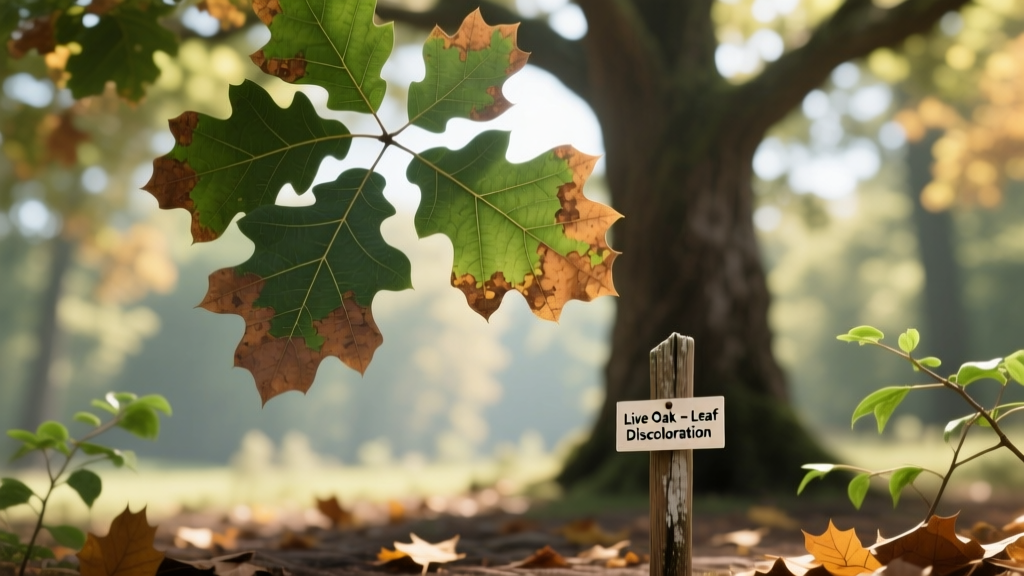
Live Oak Leaves Turning Brown: Causes, Diagnosis, and Fixes
The Diagnostic Challenge of Live Oak Leaf Discoloration
Southern live oaks (Quercus virginiana) and Texas live oaks (Quercus fusiformis) are cornerstone shade trees in USDA zones 7 through 10. Because they are semi-evergreen, their leaf canopy dynamics differ from deciduous oaks. When live oak leaves turn brown, yellow, or develop necrotic spots, homeowners often misdiagnose the issue as simple drought stress or seasonal leaf drop. However, misidentifying a fatal vascular pathogen like oak wilt as a cosmetic fungal issue can cost you a mature, 50-year-old tree worth thousands of dollars in property value.
Accurate diagnosis requires examining the specific pattern of discoloration on the live oak leaves, the timing of the symptom onset, and the tree's environmental history. According to the Texas A&M Forest Service, live oaks are particularly susceptible to specific fungal vectors that require immediate, targeted intervention.
Rapid Symptom Checker: What the Leaves Are Telling You
Before applying any treatments, use this diagnostic framework to narrow down the culprit based on the visual evidence on your live oak leaves:
- Browning follows the leaf veins (Veinal Necrosis): The veins turn brown while the tissue between them remains green or yellow. This is the hallmark of Oak Wilt.
- Browning starts at the leaf margins and tips: Irregular, scorched-looking brown patches along the edges of the leaves, often with a yellow halo. This indicates Anthracnose or Drought Scorch.
- Yellowing between green veins (Interveinal Chlorosis): The leaf veins stay dark green, but the rest of the leaf turns pale yellow or white. This points to Iron Deficiency (often caused by high soil pH) or Hypoxylon Canker in stressed trees.
- Uniform browning and premature sloughing: Entire leaves turn crisp brown and drop rapidly in summer. This is a classic sign of Severe Water Stress or Root Rot (Phytophthora).
The Big Three: Fungal Pathogens Attacking Live Oak Leaves
1. Oak Wilt (Bretziella fagacearum)
Oak wilt is a fatal vascular disease that blocks the tree's xylem, preventing water from reaching the canopy. In live oaks, the pathogen spreads rapidly through interconnected root grafts, often killing entire motts (clusters of trees sharing a root system) within months. The diagnostic key is veinal necrosis. If you pull a browning leaf and see the veins themselves are dead and brown, suspect oak wilt immediately. There is no cure for an advanced infection, but therapeutic macro-injections can save adjacent, uninfected trees.
2. Anthracnose (Apiognomonia quercina)
Unlike oak wilt, anthracnose is a cosmetic, foliar disease that thrives in cool, wet spring weather. It causes irregular brown dead spots on the leaves, primarily along the margins and tips. While it makes the tree look unsightly, anthracnose rarely kills a mature live oak. The tree will typically push out a new flush of growth once the weather warms and dries.
3. Hypoxylon Canker (Hypoxylon atropunctatum)
Hypoxylon is an opportunistic pathogen that attacks live oaks already weakened by drought, construction damage, or soil compaction. While the primary symptoms appear on the trunk (sloughing bark revealing black/brown fungal mats), the secondary symptom is a rapid, uniform browning and shedding of live oak leaves in the affected canopy section. By the time leaf symptoms appear, the fungus has already colonized the sapwood.
Abiotic Stressors: Environmental and Soil Factors
Not all browning leaves are caused by disease. The University of Florida IFAS Extension notes that live oaks are highly sensitive to soil compaction and improper irrigation.
- Drought Stress vs. Overwatering: Live oaks are drought-tolerant once established, but prolonged dry spells without deep watering will cause leaf margins to scorch. Conversely, planting them in heavy clay soils with poor drainage leads to Phytophthora root rot, which mimics drought symptoms because the dying roots cannot uptake water.
- Iron Chlorosis: In alkaline soils (pH above 7.0), iron becomes chemically locked up and unavailable to the roots. The live oak leaves will turn bright yellow while the veins remain green. If left untreated, the yellow tissue will eventually turn brown and necrotic.
Comparison Matrix: Pathogen vs. Environmental Leaf Symptoms
| Condition | Leaf Symptom Pattern | Canopy Distribution | Primary Trigger |
|---|---|---|---|
| Oak Wilt | Brown veins (veinal necrosis) | Starts in upper crown, spreads rapidly | Fungal vascular blockage |
| Anthracnose | Marginal browning, irregular spots | Lower, shaded, and interior branches | Cool, wet spring weather |
| Iron Chlorosis | Yellow tissue, green veins | Scattered, often new growth first | High soil pH (alkalinity) |
| Drought Scorch | Crisp brown leaf margins | Outer edges of canopy, sun-exposed | Prolonged soil moisture deficit |
Step-by-Step Treatment and Prevention Protocols
Protocol A: Managing Oak Wilt
If you suspect oak wilt, do not prune the tree immediately. Pruning creates fresh wounds that attract the sap beetles responsible for spreading the fungal spores above ground.
- Hire an ISA Certified Arborist: Confirm the diagnosis via laboratory testing of a live branch sample.
- Therapeutic Injection: For high-value, uninfected (or early-stage) trees, arborists use macro-infusion of Propiconazole 14.3% (commercial name: Alamo). The standard therapeutic dosage is 0.2 ml of product per inch of Diameter at Breast Height (DBH).
- Root Severance: To stop underground spread, a trenching machine equipped with a 5-foot blade must sever root grafts between infected and healthy trees. This costs between $15 and $25 per linear foot.
Critical Pruning Blackout: Never prune live oaks between February 1 and June 30. This is the peak flight season for oak wilt sap beetles. If emergency pruning is required due to storm damage, seal all cuts immediately with a commercial pruning sealer or latex paint to block beetle access.
Protocol B: Treating Anthracnose and Abiotic Stress
For anthracnose, chemical control is rarely necessary for mature trees. Rake and destroy fallen leaves to reduce overwintering spores. If the tree is young and defoliating heavily, apply a preventive fungicide containing Chlorothalonil or Mancozeb at bud break in early spring, repeating every 10-14 days until leaves are fully expanded.
For iron chlorosis, avoid using standard iron sulfate, which binds instantly in alkaline soils. Instead, apply a chelated iron product containing Fe-EDDHA (ethylenediamine-N,N'-bis(2-hydroxyphenylacetic acid)). EDDHA remains stable in soils with a pH up to 9.0. Apply as a soil drench in early spring at a rate of 1 to 2 ounces per inch of trunk diameter, watered deeply into the root zone.
When to Call a Professional: 2026 Cost Expectations
Diagnosing live oak leaves is often a DIY task, but treating vascular diseases and deep-root issues requires professional equipment. When budgeting for professional tree care, expect the following baseline costs:
- Arborist Consultation & Lab Testing: $150 - $350 (Includes site visit, sample collection, and university lab fees).
- Propiconazole Macro-Infusion: $15 - $25 per inch of DBH. (A 24-inch DBH live oak will cost roughly $360 - $600 per treatment, lasting 1-2 years).
- Deep Root Fertilization / Soil Drench: $10 - $15 per inch of DBH for high-pressure soil injection of chelated micronutrients and bio-stimulants.
- Trenching for Root Graft Severance: $1,200 - $2,500+ depending on linear footage and hardscape obstacles.
Always verify that your tree care provider holds active certification through the International Society of Arboriculture (ISA) and carries comprehensive liability insurance.
Frequently Asked Questions
Why are my live oak leaves dropping in early spring?
This is a normal physiological process. Live oaks are semi-evergreen and undergo their primary leaf exchange in late winter to early spring (February through April). The tree will simultaneously shed older, interior leaves (which turn yellow or brown) while pushing out new, bright green growth. If the new buds are healthy, this is not a disease.
Can I use bleach to clean my pruning shears between cuts?
While a 10% bleach solution kills oak wilt spores, sodium hypochlorite is highly corrosive to high-carbon steel pruning blades, causing pitting and ruining the tool's edge. A superior alternative is spraying tools with a quaternary ammonium disinfectant (like Lysol) or wiping them with 70% isopropyl alcohol, which evaporates quickly and prevents rust.
How do I calculate my live oak's DBH for chemical dosing?
DBH stands for Diameter at Breast Height, measured exactly 4.5 feet above the ground. Wrap a flexible measuring tape around the trunk at this height to get the circumference. Divide that number by 3.14 (Pi) to find the diameter. For example, a trunk with a 62-inch circumference has a DBH of roughly 19.7 inches.

