
Tree Care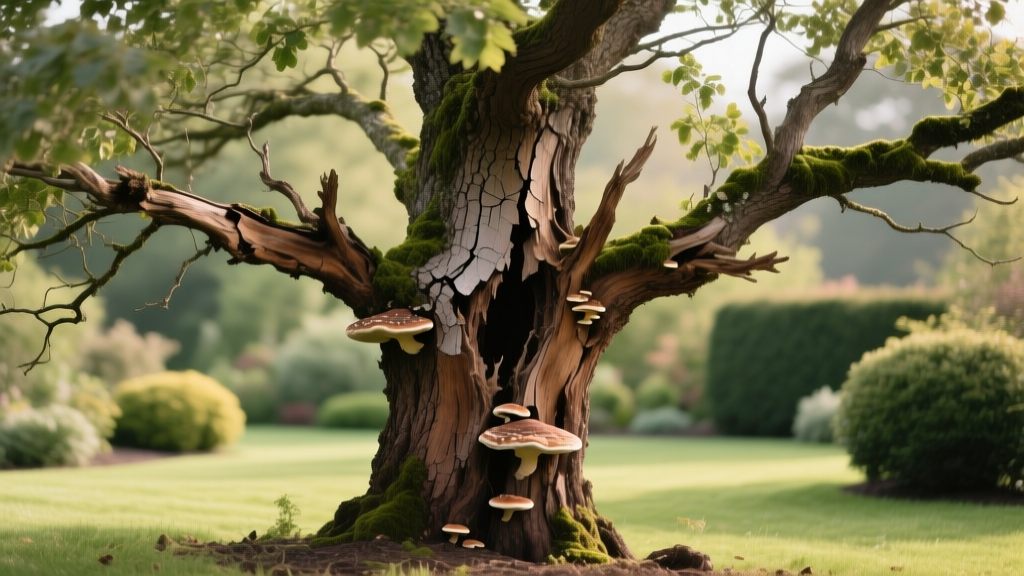
Diagnose Tree Decline: When to Save or Remove Dead Tree Wood
The Scratch Test and Cambium Layer Diagnosis
Before you commit to the heavy machinery and expense required to remove dead tree trunks, you must confirm the tree is actually dead. Many species, particularly oaks and beeches, exhibit marcescence (retaining dead leaves through winter) or enter deep dormancy during drought stress, mimicking death. The definitive diagnostic tool is the vascular cambium inspection.
Using a sterilized Hori Hori knife or a standard grafting knife, scrape a vertical 1-inch strip of bark on the lower trunk, and repeat the process on a tertiary branch in the upper canopy. You are looking for the vascular cambium—the thin layer of actively dividing cells just beneath the outer bark.
- Green and Moist: The tree is alive. Even if the canopy is bare, the root system and trunk are sustaining life. Focus on soil aeration, deep-root fertilization, and hydrological rescue.
- Brown and Brittle: The tissue is necrotic. If this is consistent across the lower trunk and upper canopy, the tree has suffered systemic failure.
- Yellow or Slimy: Indicates active bacterial wetwood (slime flux) or advanced fungal decay compromising the structural integrity of the xylem.
Differentiating Dormancy, Disease, and True Death
Misdiagnosing a sick tree as a dead one leads to unnecessary removal, while leaving a truly dead tree standing creates a severe hazard. Dead wood loses its elasticity and moisture content, making it highly susceptible to sudden limb drop or catastrophic trunk failure during wind events. Use this diagnostic matrix to evaluate your tree's status:
| Symptom Indicator | Dormant / Stressed (Savable) | Diseased (Treatable/Monitor) | Dead / Hazardous (Removal Required) |
|---|---|---|---|
| Cambium Layer | Green, firm, moist | Green but with localized brown streaks | Uniformly brown, dry, and peeling |
| Terminal Buds | Plump, tightly scaled, snap when bent | Shriveled, some empty or hollow | Absent, or crumble to dust when touched |
| Root Flare & Base | Firm soil, visible root flare | Minor fungal fruiting bodies | Soil heaving, extensive conk/mushroom growth |
| Bark Adhesion | Tightly bound to trunk | Loose in isolated patches (e.g., pine beetles) | Falling off in large slabs, exposing dry wood |
Structural Failure Indicators That Mandate Removal
Even if a tree shows marginal signs of life in the upper canopy, specific structural and pathological indicators mean the tree is a ticking time bomb. According to hazard assessment guidelines published by TreesAreGood.org (International Society of Arboriculture), the presence of advanced decay fungi at the root collar is an immediate red flag.
Pathogenic Red Flags
Look for Armillaria mellea (shoestring root rot). If you peel back the bark at the soil line and see white, fan-shaped mycelial mats or black, shoestring-like rhizomorphs, the root system is actively rotting. Similarly, the presence of Ganoderma applanatum (artist's conk) brackets on the lower trunk indicates that 70% or more of the internal heartwood has been consumed by white rot. In both cases, the tree cannot be saved and must be removed before it falls on a target.
The 50% Canopy Dieback Rule
If more than 50% of the canopy is dead, the tree's photosynthetic capacity is insufficient to generate the carbohydrates required to compartmentalize wounds or fight off secondary borers (like the Emerald Ash Borer or Bronze Birch Borer). At this threshold, the Arbor Day Foundation and most certified arborists recommend removal, as the cost of multi-year chemical treatments and deep-root feeding will exceed the cost of replacement.
Expert Warning: Never attempt to climb a dead tree to prune it. Dead wood lacks the tensile strength of living wood. Climbing spikes and rope friction can easily snap brittle branches or cause the trunk to shear. Aerial lifts or crane-assisted removals are mandatory for dead trees over 30 feet.
Cost Breakdown: Professional Removal vs. DIY Sectional Takedown
The cost to remove dead tree structures varies wildly based on Diameter at Breast Height (DBH), proximity to utility lines, and the necessity of a crane. Below is a current market breakdown for professional arborist services.
| Tree Size (DBH & Height) | Standard Removal Cost | Crane-Assisted Cost | Stump Grinding Add-On |
|---|---|---|---|
| Small (Under 12" DBH, <30 ft) | $250 - $550 | N/A (Not required) | $150 - $250 |
| Medium (12"-24" DBH, 30-60 ft) | $700 - $1,400 | +$500 - $800 (Crane Day Rate) | $250 - $450 |
| Large (24"-36" DBH, 60-90 ft) | $1,500 - $2,800 | +$800 - $1,200 (Crane Day Rate) | $400 - $750 |
| Massive (36"+ DBH, 90+ ft) | $3,000 - $5,500+ | +$1,200+ (Crane + Operator) | $700 - $1,200+ |
Note: Stump grinding is typically priced at $3.50 to $5.00 per inch of stump diameter. If the tree is located near septic fields or buried gas lines, manual root excavation may be required, adding $150 to $300 per hour in manual labor.
Safe Takedown Protocol for Medium-Sized Dead Trees
If you are a seasoned DIYer with advanced chainsaw experience, taking down a dead tree under 60 feet in an open area is possible, but it requires specific techniques tailored to brittle wood. Dead trees do not react to hinge cuts the way living trees do; the wood compresses and shatters rather than bending.
Equipment Requirements
- Chainsaw: A 50cc class saw like the Stihl MS 250 C-BE or Husqvarna 450 Rancher with an 18-inch bar and a full-chisel chain (e.g., Oregon 72 series) for fast cutting in dry, hard wood.
- Felling Wedges: 10-degree felling wedges (not standard 5-degree splitting wedges) to provide aggressive lift on dead, heavy trunks.
- Personal Protective Equipment (PPE): Type II chainsaw helmet with integrated face shield and ear muffs, Kevlar chainsaw chaps (Class 2 protection), and steel-toe logging boots.
The Bore Cut (Plunge Cut) Technique
Standard open-faced notches can cause "barber-chairing" in dead trees—where the trunk splits vertically upward before the back cut is complete, launching the saw and the trunk unpredictably. To prevent this, use the bore cut method:
- Cut the Open-Faced Notch: Make a 70 to 90-degree directional notch facing your fall path. The depth should be exactly 1/3 of the tree's DBH.
- Initiate the Bore Cut: From the opposite side of the tree, plunge the tip of your chainsaw bar directly into the center of the trunk, leaving at least 2 inches of uncut wood on both the front (hinge) and back.
- Cut the Hinge: Carefully carve out the back of the bore cut to establish a uniform 1.5 to 2-inch thick hinge wood.
- Set the Wedges and Cut the Back Strap: Insert your 10-degree wedges into the bore cut space. Hammer them tight to transfer the tree's weight off the saw bar. Finally, cut the remaining "back strap" of wood holding the tree, pull your saw, and retreat along a 45-degree escape path.
Stump Management: Grinding vs. Chemical Decomposition
If heavy machinery cannot access your yard, you can accelerate stump decay using chemical accelerators. Drill 1-inch wide, 10-inch deep holes into the top and sides of the freshly cut stump. Fill the holes with 99% Potassium Nitrate (stump remover) and top with hot water. Cover the stump with a dark tarp to retain moisture and heat. This process softens the wood to a spongy consistency within 6 to 12 months, allowing you to break it apart with a mattock. However, for immediate replanting in the same location, mechanical stump grinding to a depth of 12 inches below grade is the only viable option.
Accurate diagnosis is the critical first step in tree management. By utilizing the cambium scratch test, identifying pathogenic fungi, and understanding the structural realities of dead wood, you can make safe, cost-effective decisions about when to nurse a declining tree back to health and when it is time to safely remove dead tree hazards from your property.

