
Tree Care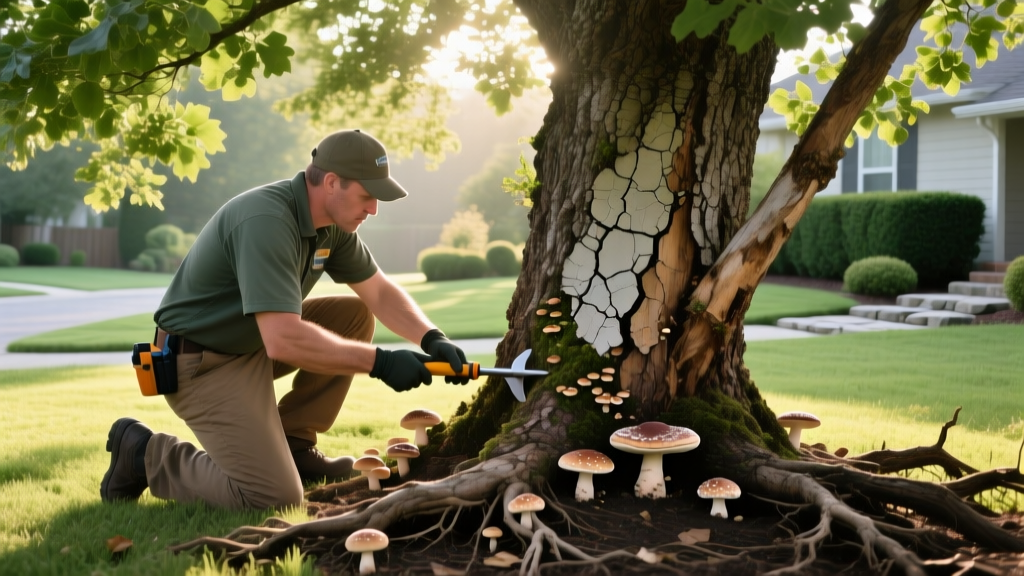
How to Diagnose Hazardous Trees Before Starting Tree Work
The Hidden Dangers of Unassessed Tree Work
Undertaking tree work without a prior structural and biological diagnosis is the leading cause of catastrophic property damage and personal injury in residential landscaping. A tree that appears robust from the driveway may harbor severe internal decay, compromised root anchors, or latent structural failure points. Before you start a chainsaw, hire a climbing crew, or even begin routine pruning, you must conduct a systematic diagnostic assessment. This guide provides a professional-grade framework for evaluating tree risk, identifying specific biological threats, and determining exactly when a project requires a Tree Risk Assessment Qualification (TRAQ) certified arborist.
Visual Diagnostic Framework: Spotting Structural Failure Points
Visual Tree Assessment (VTA) is the foundational methodology used by arborists to identify external symptoms of internal mechanical failure. You must evaluate the tree from the crown down to the root flare.
Included Bark and V-Crotches
The most critical structural defect in mature hardwoods is included bark. This occurs when two or more stems grow closely together, trapping bark inside the union instead of forming continuous wood fibers. Look for V-shaped crotches with an angle of less than 35 degrees. These unions are inherently weak and prone to catastrophic splitting under wind or snow loads. Conversely, U-shaped unions with a visible wood ridge (bark ridge) pushing up between the stems are generally sound. If you identify a V-crotch with included bark on a primary scaffold limb over a target zone (like a roof or driveway), standard pruning will not solve the issue. This requires professional cabling, bracing, or selective limb removal.
Crown Dieback and Reaction Wood
Inspect the canopy for asymmetric dieback. If the upper third of the crown is producing abnormally small leaves or showing premature autumn coloring, the tree is compartmentalizing a severe root or lower-trunk injury. Additionally, look for reaction wood—abnormal swelling at the base of the trunk or on leaning limbs. This indicates the tree is actively trying to reinforce a failing structural joint, meaning the internal stress has already exceeded the wood's natural tolerance.
WARNING: The "Lean" Myth
A gradual lean that has developed over years, accompanied by upward-curving root flare and reaction wood on the tension side, is often a stable, adapted growth pattern. However, a sudden lean, evidenced by heaving soil or cracked earth on the tension side of the root plate, indicates active root plate failure. Do not attempt any tree work on a suddenly leaning tree; the root anchor is already compromised and the tree could upend during pruning.
Biological Diagnostics: Identifying Fungal and Root Pathogens
Structural integrity is entirely dependent on biological health. Fungal pathogens silently consume the lignin and cellulose that give wood its tensile and compressive strength.
- Ganoderma applanatum (Artist's Conk): Look for hard, shelf-like, grayish-brown conks emerging from the lower trunk or root flare. This indicates advanced white rot in the heartwood. By the time conks are visible, the internal decay is typically extensive enough to warrant immediate removal.
- Armillaria mellea (Oak Root Fungus): Peel back a small section of bark at the root flare. If you see white, fan-shaped mycelial mats or black, shoestring-like rhizomorphs, the tree has Armillaria root rot. This pathogen destroys the cambium and structural roots, making the tree a high-risk windthrow hazard.
- Phytophthora Root Rot: Common in poorly drained soils, this water mold causes a distinct, dark, sunken canker at the root collar that often oozes a reddish-brown sap. According to Penn State Extension, once the canker girdles more than 50% of the trunk circumference, the tree's vascular system is critically compromised and removal is the only safe option.
Sounding and Probing: Non-Invasive DIY Diagnostics
When visual cues are ambiguous, you can perform basic acoustic sounding. Using a 2 lb rubber mallet, strike the trunk in a grid pattern from the base up to 8 feet. A sharp, resonant crack indicates solid, healthy wood. A dull, hollow thud suggests internal decay or cavity formation. While this method cannot quantify the exact thickness of the remaining sound wood shell, it effectively maps the vertical extent of a suspected defect.
For surface roots suspected of decay, use a slender steel probe (like a soil probe or a long screwdriver). Push it into the soil and root mass. If the probe penetrates the root tissue with little resistance and the tissue feels spongy or crumbly, the structural root is compromised. Healthy roots will resist penetration and feel firm, similar to a raw potato.
Cost and Risk Matrix: When to Call a TRAQ-Certified Arborist
Not all tree work requires a professional, but misjudging the threshold between DIY and pro-level intervention is costly and dangerous. Use the decision matrix below to determine your next steps. As of 2026, hiring an ISA Certified Arborist with a TRAQ credential for a formal risk assessment typically costs between $350 and $650, a necessary investment before authorizing complex removals.
| Tree Metric / Defect | DIY Tree Work Safe? | Required Professional Action |
|---|---|---|
| DBH under 6 inches, no lean | Yes (Standard pruning/felling) | None required. |
| DBH 6-12 inches, minor deadwood | Conditional (If ground-level reach) | Aerial lift or climbing crew if >15 ft high. |
| V-Crotch / Included Bark >8" DBH | No | Cabling/bracing or weight-reduction pruning. |
| Fungal conks on trunk or root flare | No | TRAQ assessment; likely crane-assisted removal. |
| Sudden lean with soil heaving | No | Immediate exclusion zone; emergency takedown. |
Advanced Professional Diagnostics: What You Are Paying For
When your DIY sounding test reveals a hollow cavity, or when a high-value heritage tree shows early signs of decline, professional arborists deploy advanced diagnostic technology that quantifies the exact risk level.
Sonic Tomography (e.g., PiCUS)
This non-destructive technology maps the internal density of the trunk. Arborists strap a series of acoustic sensors around the trunk perimeter. By measuring the time it takes for sound waves to travel between sensors, the software generates a 2D color-coded cross-section of the trunk. Red and purple areas indicate severe decay or cavities, while brown and green indicate solid wood. This allows the arborist to calculate the exact ratio of remaining sound wood to decay, determining if the tree meets the safety threshold to remain standing.
Resistograph Drilling
For precise, localized measurement of shell thickness, a Resistograph is used. This device drives a 1.2mm micro-drill needle into the wood at a constant speed, measuring the mechanical resistance. The output is a real-time graph showing spikes (solid wood) and drops (decay or hollow spaces). It is highly effective for assessing the structural viability of root flares and lower trunk unions where sonic tomography might struggle due to complex geometry.
Your 48-Hour Action Plan
If your diagnostic assessment reveals any of the high-risk indicators detailed above, execute the following protocol immediately:
- Establish an Exclusion Zone: Cordon off an area around the tree equal to its total height. Do not park vehicles or allow foot traffic within this radius.
- Document the Defects: Take high-resolution, well-lit photographs of the root flare, the trunk defects, and the overall canopy. This aids the arborist in preparing for the site visit.
- Source a TRAQ Arborist: Do not rely on general landscaping companies for hazardous tree work. Use the Arbor Day Foundation resources or the ISA directory to find a professional specifically holding the Tree Risk Assessment Qualification.
- Request a Written Risk Report: Before authorizing any removal or cabling, require a written report detailing the specific defects found, the diagnostic tools used, and the exact mitigation strategy proposed.
Proper tree work begins long before the first cut is made. By systematically diagnosing structural and biological vulnerabilities, you protect your property, ensure the longevity of your landscape, and guarantee that the interventions you apply are both safe and scientifically sound.

