
Tree Care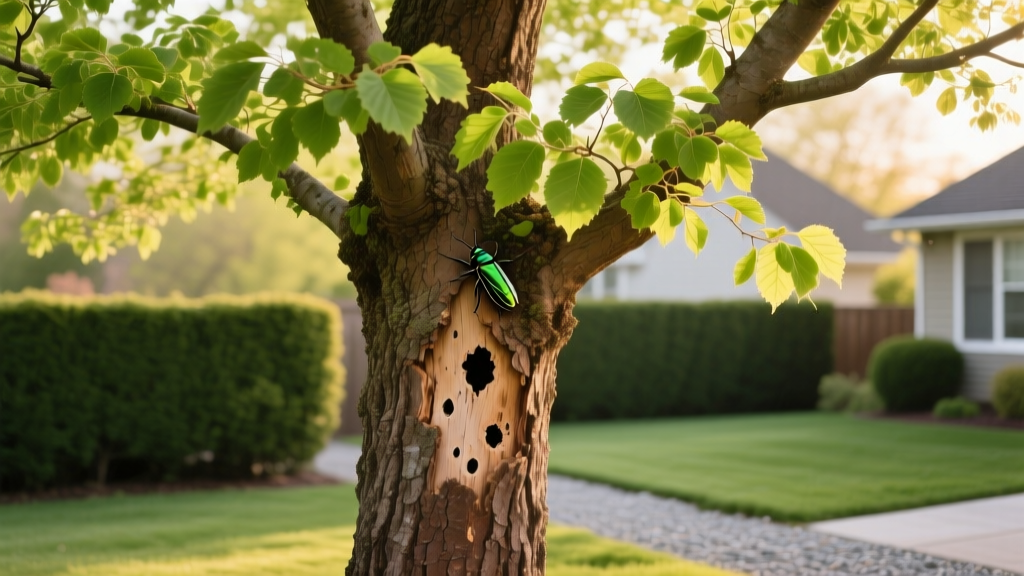
Diagnosing Ash Tree Illness: Spotting and Treating EAB and Ash Yellows
The Big Three: Differentiating Ash Tree Illnesses
Ash trees (Fraxinus spp.) are currently facing unprecedented biological pressure across North America. When homeowners notice canopy thinning, bark splitting, or premature leaf drop, they often default to a generic 'ash tree illness' diagnosis. However, accurately differentiating between an invasive wood-boring pest, a systemic phytoplasma disease, and a cosmetic fungal issue is the difference between saving a legacy tree and wasting thousands of dollars on futile treatments.
Before committing to a treatment plan, you must identify the exact pathogen or pest. Below is a diagnostic matrix to help you separate the three most common ash tree afflictions.
| Illness / Pest | Primary Diagnostic Symptoms | Treatment Viability |
|---|---|---|
| Emerald Ash Borer (EAB) | D-shaped exit holes (1/8 inch), S-shaped larval galleries under bark, canopy dieback starting at the top, epicormic sprouting at the trunk base. | High (if <30% canopy loss) |
| Ash Yellows | Progressive chlorosis (yellowing), witches' brooms (dense clusters of twigs), slow growth, premature fall color, diamond-shaped bark cracks. | None (Removal required) |
| Ash Anthracnose | Brown/black leaf blotches, twig blight, defoliation primarily in wet, cool springs. Mostly affects lower canopy. | Moderate (Fungicides/Pruning) |
Emerald Ash Borer (EAB): The Silent Killer
The Emerald Ash Borer (Agrilus planipennis) is responsible for the death of hundreds of millions of ash trees. Unlike fungal diseases that attack the foliage, EAB larvae feed on the inner bark (phloem and cambium), effectively girdling the tree and cutting off its ability to transport water and nutrients. According to the Emerald Ash Borer Information Network, untreated ash trees typically die within 2 to 4 years of initial infestation.
Visual Diagnostics & The Bark Peel Test
Woodpecker activity (known as 'flecking') is often the first visible sign of EAB, as birds strip away the outer bark to reach the larvae. To confirm, use a drawknife or hatchet to peel back a small section of the outer bark on the lower trunk. If you see serpentine, S-shaped galleries packed with fine, sawdust-like frass, EAB is present. Look for the signature 1/8-inch D-shaped exit holes on the bark surface.
⚠️ The 1/3 Canopy Rule (Critical Threshold): If your ash tree has lost more than 30% of its canopy to EAB damage, the vascular system is too severely compromised to transport systemic insecticides from the root flare to the upper branches. At this stage, chemical treatment will fail. Proactive removal is the only safe and economically sound option.
Proven Treatment Protocols & Costs
If your tree falls below the 30% dieback threshold, systemic insecticides are highly effective. Soil drenches are largely obsolete for mature trees; trunk injections are the industry standard. You must measure your tree's Diameter at Breast Height (DBH)—measure the circumference at 4.5 feet off the ground and divide by 3.14.
- Emamectin Benzoate (Tree-äge G4): The gold standard for EAB. Injected directly into the trunk, it provides 2 years of protection. Cost: $15 to $25 per inch of DBH (e.g., a 20-inch tree costs $300–$500 per treatment cycle).
- Imidacloprid (Xytect / Bayer Advanced): Applied as a soil drench or trunk injection. Requires annual application and struggles to reach the upper canopies of trees exceeding 20 inches DBH. Cost: $5 to $12 per inch of DBH annually.
- Dinotefuran (Safari): Often used as a bark spray for rapid knockdown in heavily infested areas, but only provides 1 year of control. Usually combined with emamectin benzoate.
Ash Yellows: The Unstoppable Phytoplasma
While EAB gets the media attention, Ash Yellows is a devastating, incurable disease caused by the phytoplasma Candidatus Phytoplasma fraxini. It is spread by sap-feeding insects like leafhoppers. Penn State Extension notes that Ash Yellows can mimic drought stress or general decline, making it notoriously difficult to diagnose early.
Differentiating Yellows from Drought Stress
The hallmark symptom of Ash Yellows is the formation of 'witches' brooms'—dense, abnormal clusters of weak, upright twigs that form when the terminal bud dies and lateral buds are stimulated. You will also notice progressive chlorosis (yellowing) that starts at the leaf margins and moves inward, alongside severe stunting of annual twig growth (often less than 1 inch per year). Unlike drought stress, deep watering will not reverse the chlorosis or stimulate growth in a tree infected with Ash Yellows.
Expert Insight: There is no chemical cure for Ash Yellows. Phytoplasmas live entirely within the plant's phloem, and no registered antibiotics can eradicate them in a landscape setting. If more than 20% of the canopy is affected, the tree must be removed to prevent it from becoming a structural hazard and a reservoir for the phytoplasma.
Ash Anthracnose: A Cosmetic Nuisance
Ash Anthracnose is a fungal disease caused by Gnomoniella fraxinea. It thrives in cool, wet spring weather and causes severe leaf distortion, brown blotches along leaf veins, and premature defoliation. While it looks alarming, anthracnose rarely kills a healthy, mature ash tree.
Solution: Rake and destroy fallen leaves in autumn to remove fungal spores. For high-value trees suffering from repeated annual defoliation, preventative fungicide sprays containing chlorothalonil or mancozeb can be applied at bud break and repeated 14 days later.
Decision Framework: Treat, Monitor, or Remove?
Making the right financial and arboricultural decision requires weighing the long-term cost of treatment against the immediate cost of removal. Use this framework to guide your choice:
1. Calculate the Lifetime Treatment Cost
An ash tree with a 24-inch DBH treated with Tree-äge G4 every two years will cost approximately $480 per injection cycle. Over a 20-year period, you will spend roughly $4,800 on chemical treatments. If the tree provides significant shade, increases property value, or holds sentimental value, this investment is justified.
2. Factor in Removal Escalation
If you choose to wait until the tree dies from EAB or Ash Yellows before removing it, you will pay a premium. Dead ash wood becomes exceptionally brittle within 12 to 18 months of death. Arborists cannot safely climb dead ash trees; removal requires specialized rigging, aerial lifts, or cranes.
- Proactive Removal (Live Tree): $800 to $1,500.
- Reactive Removal (Dead/Brittle Tree): $1,800 to $3,500+.
If your ash tree is located near a home, driveway, or power lines, and you do not intend to commit to the biennial injection schedule, proactive removal while the wood is still solid is the most financially prudent decision.
3. Consider Replacement Ecology
When removing an ash tree, avoid replanting another Fraxinus species or similarly susceptible genera. Opt for native, climate-resilient alternatives such as the Kentucky Coffeetree (Gymnocladus dioicus), Swamp White Oak (Quercus bicolor), or the Hackberry (Celtis occidentalis) to maintain your local canopy cover and support native food webs.
For the most current quarantine maps and regulatory updates regarding the movement of ash wood, always consult the USDA APHIS Emerald Ash Borer portal before transporting firewood or logs off your property.

