
Tree Care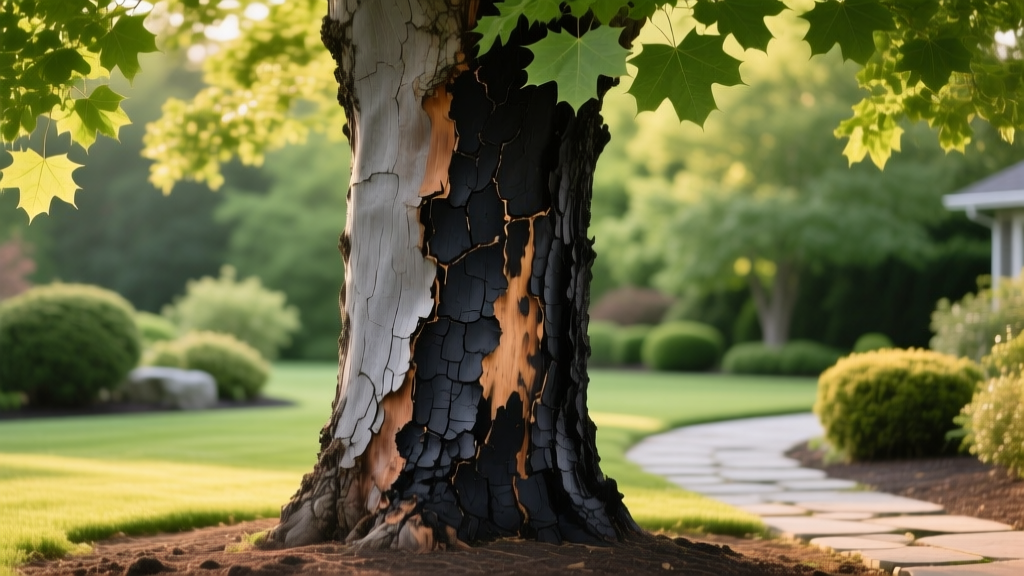
Black Bark on Maple Tree: 4 Causes and How to Fix It
The 4 Primary Causes of Black Bark on Maples
Finding black bark on a maple tree is a common source of panic for homeowners, but it is rarely a death sentence for the tree. Maples (particularly Red, Sugar, and Japanese maples) have relatively smooth bark in their youth, making any discoloration highly visible. The blackening is almost always a secondary symptom of an underlying biological or environmental stressor. Before reaching for a fungicide, you must correctly identify the root cause. Misdiagnosis leads to wasted money and continued tree decline.
Here are the four primary culprits behind blackened maple bark, ranked by frequency in residential landscapes:
- Gloomy Scale & Sooty Mold: The most common cause. Insects feed on sap and excrete honeydew, which grows into a black fungus.
- Frost Cracks (Southwest Injury): Sap bleeds from winter bark splits and oxidizes, turning black and crusty.
- Verticillium Wilt: Causes internal black streaking in the cambium layer, sometimes oozing through bark fissures.
- Phytophthora Canker: A water mold causing dark, sunken, bleeding lesions at the soil line.
The 10-Second Diagnostic Scrape Test
Take a plastic putty knife or your thumbnail and gently scrape the black surface. If the black layer flakes off like powdery ash or crust, revealing healthy, tan/green bark underneath, you are dealing with sooty mold (driven by scale insects or aphids). If the black color is embedded deep into the wood, or the bark is physically split and weeping a dark, sticky resin, you are dealing with frost cracks or a canker.
Deep Dive: Gloomy Scale and Sooty Mold
Gloomy scale (Melanaspis tenebricosa) is an armored scale insect that specifically targets maples. Unlike soft scales, armored scales do not excrete large amounts of honeydew themselves; however, the feeding damage they cause stresses the tree, often inviting aphids or soft scales that do produce honeydew. This sugary waste coats the bark and serves as a breeding ground for Capnodium fungi, resulting in sooty mold. While sooty mold does not directly infect the tree tissue, a thick layer blocks sunlight from reaching the bark and underlying lichen, disrupting the tree's micro-ecosystem and indicating a severe sap-sucking infestation that will eventually starve the branches.
Step-by-Step Treatment Protocol for Scale and Mold
Eradicating the sooty mold requires eliminating the insects producing the honeydew. Once the food source is gone, the black mold will dry up and flake off over a few weeks of rainfall.
- Step 1: Dormant Oil Application (Late Winter/Early Spring). Apply a horticultural oil (such as Bonide All Seasons Horticultural & Dormant Insecticidal Oil) before bud break. Mix at a 2% to 4% dilution rate (2.5 to 5 oz per gallon of water). The oil smothers the overwintering scale insects. Warning: Do not apply if temperatures are below 40°F or expected to drop below freezing within 24 hours, as this causes severe phytotoxicity.
- Step 2: Systemic Insecticide (Early Spring). For large maples where spraying the canopy is impossible, apply a soil drench containing Imidacloprid (e.g., Bayer BioAdvanced 12 Month Tree and Shrub Protect & Feed). Measure the trunk diameter at chest height (DBH) and apply 3 ounces of liquid concentrate per inch of circumference. The tree roots absorb the chemical and translocate it to the canopy, killing insects when they feed.
- Step 3: Manual Removal (Optional). For small Japanese maples, you can physically scrub the sooty mold off using a soft-bristled brush and a mild solution of insecticidal soap (1 tablespoon per gallon of water) to restore the bark's appearance immediately.
Frost Cracks and Sap Bleeding (Southwest Injury)
If the black bark is localized to the lower trunk—specifically on the southwest-facing side—and is accompanied by a vertical fissure, you are looking at a frost crack. During late winter, the afternoon sun heats the dark bark of a maple tree to 70°F or higher. When the sun drops behind a structure or the temperature plummets at night, the outer bark freezes and contracts much faster than the inner wood. This differential tension causes the bark to split longitudinally.
Maples are notorious 'bleeders'. When the bark splits, the tree pushes sap to the wound to seal it. This sap runs down the trunk, oxidizes in the air, and turns black and crusty. According to the University of Minnesota Extension, these cracks are rarely fatal on their own, but they create entry points for wood-decaying fungi.
How to Manage Frost Cracks
Do not paint the wound with pruning sealer or tar. These products trap moisture and anaerobic bacteria against the wood, accelerating rot. Instead, practice 'tracing' the wound. Use a sterilized carving knife to cut away the loose, jagged bark around the edges of the crack, creating a smooth, elongated oval shape. This allows the tree's cambium layer to roll over the wound (callus) efficiently. To prevent future southwest injury, wrap the lower trunk with a white, breathable tree wrap from November through March, or paint the lower trunk with a 50/50 mixture of white latex paint and water to reflect winter sunlight.
Treatment Matrix and Cost Breakdown
Choosing the right intervention depends on your tree's size, the severity of the infestation, and your budget. Below is a comparative matrix of the most effective treatments available in 2026.
| Treatment Method | Target Issue | Estimated Cost | Pros & Cons |
|---|---|---|---|
| Dormant Horticultural Oil | Gloomy Scale / Sooty Mold | $15 - $25 | Pros: Organic, no soil residue. Cons: Requires thorough coverage; weather-dependent. |
| Imidacloprid Soil Drench | Scale / Aphids / Borers | $35 - $50 | Pros: 12-month protection; easy for tall trees. Cons: Toxic to pollinators if tree is blooming; slow uptake. |
| Cambium Tracing (Knife) | Frost Cracks / Cankers | $0 (Labor only) | Pros: Promotes natural callusing. Cons: Requires careful technique to avoid further damage. |
| Trunk Painting (50/50 Latex) | Frost Crack Prevention | $10 - $15 | Pros: Highly effective thermal barrier. Cons: Aesthetically unpleasing to some homeowners. |
When to Call a Certified Arborist
While scale and frost cracks are manageable DIY projects, internal diseases like Verticillium wilt and Phytophthora root rot require professional intervention. If you notice the black bark is accompanied by sudden branch dieback on only one side of the canopy, or if the black lesions are oozing a foul-smelling, dark red/black liquid at the soil line, the tree's vascular system is compromised. A Certified Arborist can perform a cambial scratch test and laboratory culturing to confirm the pathogen. In severe cases of Phytophthora, trunk injections of phosphite-based fungicides (e.g., Agri-Fos) costing $250 to $600 per treatment may be the only way to halt the progression.
Expert Insight: The Danger of Over-Mulching
Many homeowners inadvertently cause Phytophthora cankers by piling mulch against the maple's trunk (creating a 'mulch volcano'). Maples require their root flare to be fully exposed to the air. Keep all mulch at least 3 inches away from the physical bark of the trunk to prevent moisture buildup and fungal rot that manifests as black, weeping bark at the base.
Frequently Asked Questions
Will sooty mold kill my maple tree?
No. Sooty mold is a surface fungus that feeds on insect excrement, not tree tissue. However, the scale insects causing the mold can severely weaken the tree over 2 to 3 years by draining its sap reserves, leading to branch dieback and making the tree susceptible to secondary borers.
Can I use neem oil instead of horticultural oil for scale?
Yes, cold-pressed neem oil (containing Azadirachtin) is effective, but it acts primarily as an insect growth regulator and antifeedant rather than a smothering agent. For heavy, established gloomy scale infestations, a petroleum-based dormant horticultural oil provides superior physical smothering of the armored shells.
Why is my maple tree bark turning black only on one side?
Localized blackening on the southwest side is the hallmark of frost cracking (southwest injury) and subsequent sap oxidation. If the blackening is on the shaded, north-facing side and feels spongy, it is more likely a moisture-driven fungal canker or lichen dieback.

