
Tree Care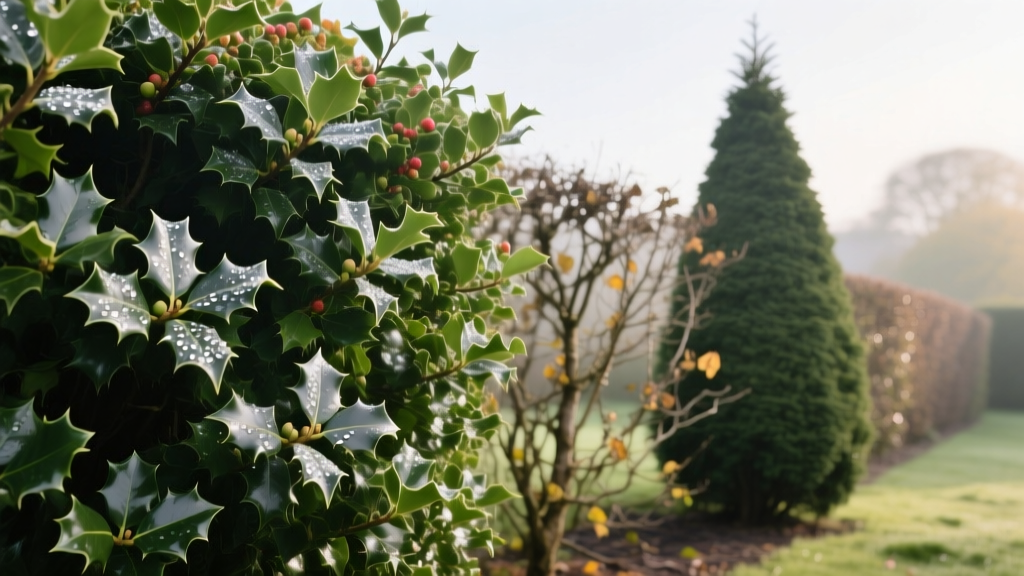
Diagnosing Failing Hedges: Best Tall Shrubs for Privacy Solutions
The Anatomy of a Failing Privacy Screen
A mature privacy hedge is a significant landscape investment, often costing between $3,000 and $8,000 for a standard 100-foot boundary. When that screen begins to thin, brown, or die back, homeowners frequently respond by over-fertilizing or aggressively shearing the exterior. These reactive measures fail because they ignore the underlying pathology. Diagnosing the exact cause of hedge decline is mandatory before selecting replacement tall shrubs for privacy. Most privacy screen failures trace back to three root causes: soil compaction from construction equipment, fungal pathogens introduced via infected nursery stock, and improper spacing that creates interior light deprivation.
Symptom Checker: Why Your Current Hedge is Thinning
Before purchasing new plant material, identify the failure mode of your existing screen. Planting disease-susceptible shrubs in the same compromised soil guarantees a repeat failure.
| Visual Symptom | Probable Diagnosis | Actionable Solution |
|---|---|---|
| Interior browning, bare inner branches, exterior green shell | Overcrowding and light deprivation (common in Arborvitae planted <3ft apart) | Remove every third plant to increase airflow. Replant gaps with staggered double-row layout. |
| Oozing resin on branches, localized dieback, dark cankers on bark | Seiridium Canker (devastating to Leyland Cypress and Arizona Cypress) | Remove infected shrubs entirely. Do not replant Cypress. Switch to disease-resistant holly or juniper cultivars. |
| Yellowing leaves, stunted spring flush, blackened root tips | Phytophthora root rot caused by heavy clay soil and poor drainage | Improve site grading. Plant on 6-inch mounded beds. Select Prunus laurocerasus 'Schipkaensis' which tolerates wetter soils. |
| Skeletal branch tips, webbing, premature needle drop in late summer | Bagworm infestation (Thyridopteryx ephemeraeformis) | Apply Bacillus thuringiensis (Bt) kurstaki in early June. Transition to bagworm-resistant cultivars like 'Green Giant'. |
Top Resilient Tall Shrubs for Privacy (2026 Cultivar Guide)
When replacing a failed screen, avoid legacy cultivars that have proven susceptible to regional pathogens. The following three cultivars represent the current industry standard for resilient, fast-growing privacy screens, based on nursery availability and disease resistance data.
1. Thuja 'Green Giant' (The Conifer Standard)
A hybrid of Thuja plicata and Thuja standishii, the 'Green Giant' outperforms the ubiquitous 'Smaragd' (Emerald Green) in both growth rate and pest resistance. It exhibits strong natural resistance to bagworms and spider mites.
- Mature Dimensions: 12–15 feet tall by 4–5 feet wide in 5 years; ultimately reaches 30 feet.
- Growth Rate: 24 to 36 inches per year under optimal irrigation.
- 2026 Nursery Pricing: $140–$180 for a 6-foot Balled and Burlapped (B&B) specimen.
- Site Requirements: Full sun (minimum 6 hours). Requires well-draining loam; fails in standing water. Hardiness Zones 5-8.
2. Ilex × 'Nellie R. Stevens' (The Broadleaf Fortress)
For landscapes plagued by deer browse or heavy shade where conifers fail, this Ilex cornuta x Ilex aquifolium hybrid is the optimal solution. Its dense, spiny foliage creates an impenetrable physical and visual barrier. According to the NC State Extension Plant Toolbox, it is highly tolerant of urban pollution and heat stress.
- Mature Dimensions: 15–20 feet tall by 10–15 feet wide.
- Growth Rate: 12 to 18 inches per year.
- 2026 Nursery Pricing: $180–$250 for a 7-foot B&B specimen.
- Site Requirements: Full sun to partial shade. Tolerates clay soils. Hardiness Zones 6-9. (Note: Partially self-fertile, but plant one 'Edward J. Stevens' male pollinator per 10 females for maximum berry production).
3. Prunus laurocerasus 'Schipkaensis' (The Shade-Tolerant Screen)
Commonly known as Skip Laurel, this cultivar solves the problem of privacy in heavily shaded understory environments. Unlike standard English Laurel, 'Schipkaensis' possesses high resistance to shot-hole disease (Wilsonomyces carpophilus) and withstands winter temperatures down to -10°F without leaf scorch.
- Mature Dimensions: 10–15 feet tall by 6–8 feet wide.
- Growth Rate: 18 to 24 inches per year.
- 2026 Nursery Pricing: $90–$130 for a 5-foot container-grown specimen.
- Site Requirements: Deep shade to partial sun. Highly adaptable to poor, dry soils once established. Hardiness Zones 5-8.
Installation Protocol: Avoiding the 'Trench of Death'
The most common installation error that kills privacy hedges within three years is the continuous trench method. Landscapers often use a mini-excavator to dig a single, continuous trench to speed up planting. This destroys the soil structure, creates a 'bathtub effect' where water pools and drowns roots, and encourages roots to circle girdling patterns.
⚠️ CRITICAL WARNING: Never plant privacy shrubs in a continuous trench. Always dig individual holes. The Morton Arboretum mandates that individual holes must be 2 to 3 times the width of the root ball to allow lateral root expansion into undisturbed soil.
The Staggered Double-Row Framework
To achieve immediate visual density without suffocating the plants, use a staggered double-row layout. This prevents the interior dieback documented in the Clemson University Home & Garden Information Center guidelines for conifer health.
- Calculate Spacing: For 'Green Giant' arborvitae, measure 4 feet between the center of each plant within the same row.
- Offset the Rows: Dig the second row 3 feet behind the first row. Offset the plants so each plant in the back row sits directly behind the gap between two plants in the front row.
- Verify the Root Flare: The root flare (where the trunk widens at the base) must sit 1 to 2 inches above the final grade line. Planting too deep is the leading cause of transplant mortality.
- Backfill and Mulch: Backfill with native soil. Apply 2 inches of hardwood mulch, keeping it 3 inches away from the trunk to prevent vole damage and collar rot.
Long-Term Maintenance to Prevent Recurrence
Once your tall shrubs for privacy are established, structural maintenance dictates their lifespan. Conifers like Arborvitae and Juniper do not possess latent buds on old wood. If you shear them back into the brown, dead interior zone, those branches will never regenerate.
Instead of shearing, use thinning cuts. Reach inside the canopy and remove entire branches back to a lateral branch or the main trunk. This opens the canopy to sunlight, encouraging interior growth and reducing the humidity that fosters fungal blights. Fertilize in early spring (April) using a slow-release 16-4-8 NPK fertilizer at a rate of 3 pounds per 1,000 square feet of root zone. Avoid high-nitrogen synthetic fertilizers in late summer, which force tender new growth that will be destroyed by winter frost.
Frequently Asked Questions
How close to a fence can I plant a privacy hedge?
Maintain a minimum distance of 3 feet between the center of the plant's trunk and the fence line. This allows room for trunk expansion, prevents the hedge from leaning away from the sun toward the yard, and provides physical access for fence repairs.
Can I plant tall privacy shrubs over a septic leach field?
No. Avoid planting deep-rooted or aggressive shrubs like Holly or Laurel over leach fields. The roots will seek out the moisture and nutrients in the leach lines, eventually cracking the PVC pipes. Restrict leach field planting to shallow-rooted turfgrass or native wildflowers.
How long until a staggered Green Giant screen provides full winter privacy?
When planted at 6 feet tall in a staggered double-row layout with 4-foot spacing, 'Green Giant' will knit together to form a solid, opaque visual barrier within 2.5 to 3 growing seasons, provided they receive 1 inch of water per week during the first two summers.

