
Tree Care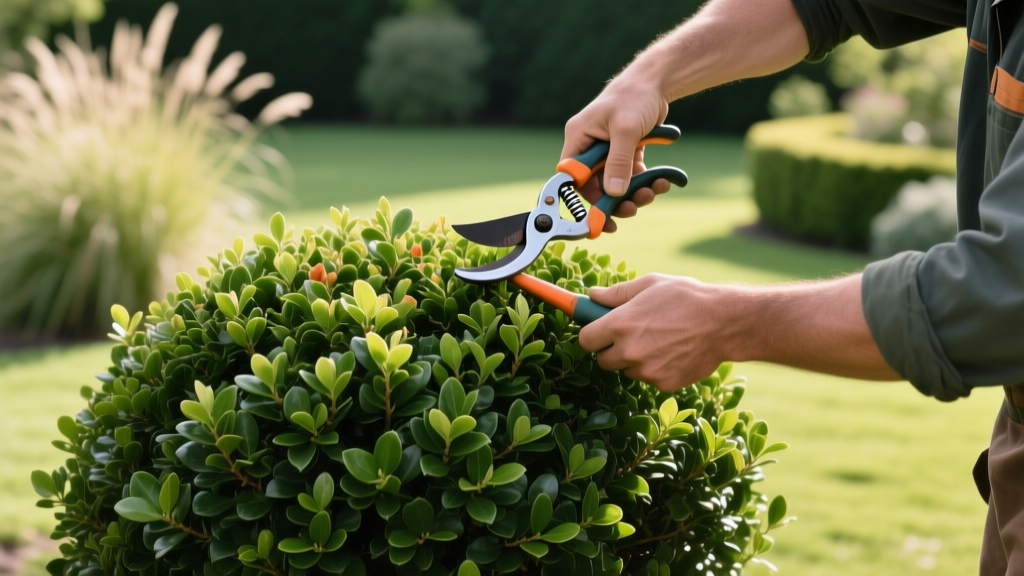
Diagnosing and Fixing Common Bush Trimming Mistakes for Healthy Shrubs
Bush trimming is often treated as a simple aesthetic chore, but improper technique fundamentally alters a shrub's vascular system, light penetration, and disease resistance. When homeowners rely exclusively on power hedge trimmers or ignore seasonal growth cycles, the result is interior dieback, rampant fungal infections, and a complete loss of seasonal blooms. Diagnosing these issues requires understanding the physiological response of woody plants to mechanical damage.
The Anatomy of a Bad Cut: Heading vs. Thinning
The most frequent error in bush trimming is the over-reliance on heading cuts (shearing) rather than thinning cuts. Understanding the difference is critical for long-term shrub health.
Heading Cuts (Shearing)
Shearing removes the terminal buds and outer foliage indiscriminately, typically using power tools like the Stihl HSA 56 or Milwaukee M18 hedge trimmers. This stimulates dense, lateral growth at the very tips of the branches. While it creates a tight, formal exterior, it completely blocks sunlight from reaching the interior canopy. Within two to three seasons, the interior branches defoliate and die, leaving a hollow, fragile shell that collapses under heavy snow loads.
Thinning Cuts (Selective Pruning)
Thinning removes entire branches back to their point of origin or to a lateral branch that is at least one-third the diameter of the removed branch. According to Penn State Extension, thinning maintains the plant's natural growth habit, opens the canopy to UV light, and improves air circulation, which drastically reduces the humidity that fosters powdery mildew and cercospora leaf spot.
The 1/3 Rule for Rejuvenation: Never remove more than one-third of a shrub's total live canopy in a single growing season. Exceeding this threshold triggers a panic response in the root system, forcing the plant to push out weak, vertical "water sprouts" that drain energy reserves and are highly susceptible to aphid infestations.
Diagnosing Post-Trim Dieback and Bare Patches
When a shrub exhibits browning, receding foliage, or localized dead zones shortly after bush trimming, the cause is rarely random. Use the diagnostic matrix below to identify the failure point and apply the correct remediation strategy.
| Symptom | Diagnosis | Corrective Action |
|---|---|---|
| Brown, crispy leaf margins immediately post-trim | Tissue tearing from dull anvil pruners or hedge trimmer blades crushing the vascular cambium. | Sharpen blades with a diamond file. Switch to high-quality bypass pruners (e.g., Felco 2) for all live wood under 1 inch in diameter. |
| Dead, hollow interior with a thin green outer shell | Chronic shearing blocking interior light; interior branches have starved and died back. | Perform structural thinning. Reach deep into the canopy and remove 20% of the oldest, thickest stems at the soil line to force basal break. |
| Blackened, sunken cankers below the pruning cut | Fire blight or Botryosphaeria dieback introduced via unsanitized tools or flush cuts. | Cut 6 to 12 inches below the visible canker into healthy, white wood. Sterilize tools between every single cut. |
| Failure to bloom on established spring-flowering shrubs | Trimming in late winter or early spring removed the previous year's wood where flower buds were set. | Wait for the next blooming cycle. Transition to trimming immediately after flowers fade in late spring. |
Tool Sanitation: Preventing Pathogen Transfer
Pathogens like Verticillium wilt and Phytophthora are easily transmitted through microscopic sap residue on pruning blades. A quick wipe with a dry rag is insufficient. Professional arborists rely on specific chemical protocols to neutralize these threats during bush trimming sessions.
- 70% Isopropyl Alcohol: The industry standard for rapid sterilization. Wipe the blades thoroughly and allow them to air dry for 30 seconds. It evaporates quickly and does not corrode high-carbon steel blades.
- 10% Bleach Solution (1 part bleach to 9 parts water): Highly effective against stubborn bacterial cankers, but highly corrosive. If you use bleach, you must rinse the blades with clean water afterward and apply a light coat of 3-in-One oil to prevent pitting and rust.
- Lysol Disinfectant Spray: A viable alternative that is less corrosive than bleach. Spray the cutting edges until wet, wait 60 seconds, and wipe dry.
Note: Never sanitize tools by dipping them into a bucket of solution. The sap will contaminate the entire bucket within minutes, turning your sterilization bath into a pathogen soup.
Species-Specific Trimming Matrix
Timing your bush trimming correctly dictates whether you preserve the plant's energy reserves or accidentally sever its reproductive cycle. The University of Minnesota Extension emphasizes that shrubs must be categorized by their bloom-wood origin before any cuts are made.
| Shrub Species | Blooms On | Optimal Trimming Window | Consequence of Incorrect Timing |
|---|---|---|---|
| Syringa vulgaris (Common Lilac) | Old Wood (Previous Season) | Within 2 weeks after spring flowers fade. | Removes next year's flower buds; results in a completely sterile, leaf-only shrub the following spring. |
| Hydrangea macrophylla (Bigleaf) | Old Wood | Late summer, immediately after flowering stops. | Destroys terminal flower buds; causes severe winter dieback if cut late in the fall. |
| Hydrangea paniculata (Panicle) | New Wood (Current Season) | Late winter to early spring (before bud break). | Minimal bloom loss, but late spring trimming delays flowering by 4 to 6 weeks. |
| Buxus sempervirens (Boxwood) | N/A (Foliage Shrub) | Early spring after the last hard frost. | Trimming in late fall stimulates tender new growth that will be killed by the first freeze, causing severe winter bronzing. |
Execution: Making the Perfect Cut
When performing structural thinning, the physical geometry of the cut determines how quickly the plant compartmentalizes the wound. Always locate an outward-facing lateral bud or branch. Position your bypass pruners or pruning saw about 1/4 inch above the bud, angling the blade at a 45-degree slope away from the bud.
"A flat cut pools water directly on the wound surface, accelerating wood rot. A steep 45-degree cut sheds rainwater away from the delicate cambium layer, allowing the plant to form a protective callus ridge over the wound within a single growing season." — University of Maryland Extension
Identifying the Branch Collar on Multi-Stem Shrubs
While trees have obvious branch collars, multi-stem shrubs like viburnum and forsythia have subtle collar ridges where a lateral branch meets the main cane. Never make a "flush cut" directly against the main cane. Cutting into the trunk tissue destroys the plant's natural chemical defense boundary (CODIT), allowing decay fungi to travel directly down into the root crown. Always leave the small, swollen ridge of the collar intact.
When to Abandon DIY and Hire a Certified Arborist
Not all bush trimming projects belong in the hands of a homeowner. You should hire an ISA Certified Arborist if you encounter any of the following scenarios:
- Severe Rejuvenation of Neglected Shrubs: If an overgrown yew or rhododendron requires cutting back to bare, 12-inch stumps (hard rejuvenation), an arborist can assess if the root system has the carbohydrate reserves to survive the shock.
- Proximity to Utility Lines: Any shrub or small tree requiring trimming within 10 feet of overhead power lines requires specialized insulated equipment and utility coordination.
- Suspected Systemic Disease: If you notice oozing sap, fungal conks at the base, or rapid, unexplained canopy dieback, trimming will only spread the infection. An arborist must take tissue samples for lab diagnosis before any tools touch the plant.
Proper bush trimming is an exercise in botanical restraint. By diagnosing the specific growth habits of your shrubs, maintaining razor-sharp and sanitized tools, and respecting the physiological boundaries of the branch collar, you transition from merely cutting wood to actively engineering a healthier, more resilient landscape.

