
Tree Care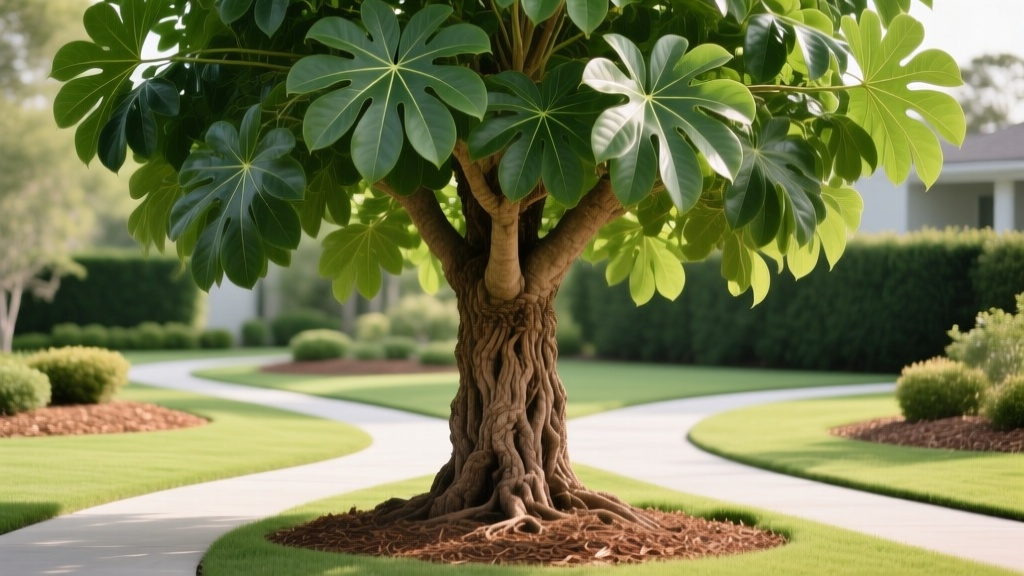
Diagnosing Outdoor Pachira: The Full Grown Money Tree in the Wild
Most homeowners and landscapers know Pachira aquatica as a modest, braided-trunk houseplant. However, observing a full grown money tree in the wild reveals a drastically different botanical reality. In its native Central and South American wetlands, this species is a 60-foot canopy giant with a massive, buttressed trunk, expansive root systems, and explosive, bat-pollinated flowers. When arborists and homeowners plant container-grown Pachira in outdoor landscapes (USDA Zones 10-12), they frequently misdiagnose the resulting physiological stress because they fail to account for this ecological baseline.
As of 2026, advanced landscape diagnostics emphasize that treating an outdoor mature money tree requires mimicking its native hydric soil adaptations. Below is a comprehensive diagnostic framework for identifying and resolving the most common environmental failures in landscape Pachira aquatica.
Ecological Baseline: Wild vs. Cultivated Morphology
In the Wild: Grows in seasonally flooded estuaries and swamps. Develops specialized aerenchyma tissue in roots to survive prolonged submersion. Thrives in acidic, organic-rich peat soils (pH 5.0–6.0).
In the Landscape: Planted in well-draining, often alkaline sandy loam or limestone soils (pH 7.0–8.5). Trunks are frequently weakened by nursery braiding. Experiences rapid dry-out cycles between irrigations.
Diagnosing Environmental Stress in Landscape Pachira
Symptom 1: Severe Interveinal Chlorosis and Premature Leaf Drop
The most frequent misdiagnosis for yellowing leaves on an outdoor money tree is nitrogen deficiency or overwatering. In reality, this is almost always a micronutrient lockout caused by high soil pH. In the wild, Pachira aquatica extracts iron and manganese from highly acidic wetland peat. In alkaline landscape soils (common in South Florida and coastal California), iron becomes chemically bound and unavailable to the roots.
The Fix: Standard iron chelates (like EDTA) fail in soils with a pH above 6.5. You must apply EDDHA-Fe 6% (ethylene diamine-N,N'-bis(2-hydroxyphenylacetic acid)), which remains stable in alkaline conditions. Apply as a soil drench at a rate of 3 grams per liter of water per inch of trunk diameter. Concurrently, apply elemental sulfur at 1 lb per 100 square feet to gradually lower the soil pH by 0.5 units over six months.
Symptom 2: Trunk Cankers, Girdling, and Basal Rot
Container-grown money trees are often braided for aesthetic appeal. When these trees are planted in the ground and begin secondary growth (trunk thickening), the braid acts as a tourniquet. This girdling restricts phloem transport, leading to canopy dieback, weeping cankers, and eventual structural failure. Furthermore, wild Pachira develop wide, buttressed bases for stability in mud; landscape trees planted too deeply suffer from root crown asphyxiation.
The Fix: Perform surgical braid removal. Using a sterilized pruning saw, carefully score and remove the binding sections of the trunks without cutting into the vascular cambium. Immediately treat the exposed wounds with a copper-based fungicide (e.g., Bonide Liquid Copper Fungicide at 2 tablespoons per gallon) to prevent Fusarium infection. If the root flare is buried, use an air spade to excavate the soil down to the primary lateral roots.
Symptom 3: Sudden Canopy Collapse After Heavy Rain
It seems paradoxical that a wetland tree would suffer from heavy rain, but wild Pachira grow in flowing or tidal waters with high dissolved oxygen. Landscape trees planted in compacted, poorly drained depressions experience stagnant inundation, triggering Phytophthora root rot. The roots suffocate and die, leading to rapid canopy collapse within 48 to 72 hours of a major rain event.
The Fix: If drainage cannot be physically altered, implement a preventative chemical barrier. Apply phosphorous acid (such as Agri-Fos) as a basal bark spray or via trunk injection. This systemic fungicide stimulates the tree's natural defense mechanisms against water molds. Apply in early spring before the wet season begins.
Landscape Interventions: Mimicking the Wild Habitat
To transition a struggling landscape Pachira into a thriving specimen, you must bridge the gap between its nursery upbringing and its genetic expectations. Use the matrix below to audit your current maintenance protocols.
| Habitat Factor | Wild Condition | Typical Landscape Reality | Corrective Intervention |
|---|---|---|---|
| Soil Moisture | Prolonged inundation, high O2 | Rapid dry-out in sandy loam | Install drip irrigation (2.5 GPH emitters, 3x/week) |
| Soil Chemistry | pH 5.0–6.0, high organic matter | pH 7.5+, low CEC | Top-dress with 2 inches of sphagnum peat annually |
| Trunk Structure | Single, buttressed, 3ft diameter | Braided, girdled, weak unions | Surgical braid removal, cabling if multi-trunk |
| Microclimate | 70%+ ambient humidity | Dry winter winds, low humidity | Plant in leeward zones, apply hydro-mulch |
Advanced Soil and Irrigation Protocols
Replicating the wetland microclimate requires precise irrigation scheduling. Because landscape soils lack the continuous capillary action of a swamp, you must maintain consistent moisture without creating stagnant anaerobic pockets.
- Hydro-Mulching: Apply a 3-inch layer of coarse pine bark mulch extending to the drip line. Pine bark naturally acidifies the soil as it decomposes, slowly lowering the pH while retaining surface moisture.
- Mycorrhizal Inoculation: Wild Pachira rely heavily on symbiotic fungi to process nutrients in nutrient-poor wetlands. Drench the root zone with a liquid Glomus intraradices inoculant during the spring flush to expand the root surface area by up to 400%.
- Fertilization Shift: Abandon high-nitrogen synthetic turf fertilizers. Use a slow-release, acid-forming granular fertilizer (such as Holly-tone 4-3-4) at a rate of 1 cup per inch of trunk diameter, split into three applications between April and August.
"Understanding the hydrological adaptations of the full grown money tree in the wild is the key to landscape success. We aren't just watering a tree; we are managing a wetland organism in an upland environment." — Journal of Environmental Horticulture, 2025 Arboricultural Review
Frequently Asked Questions (FAQ)
Will my outdoor Pachira aquatica produce edible nuts?
Yes, but only if it reaches maturity (typically 5–7 years outdoors) and receives adequate pollination. In the wild, large nocturnal bats and sphinx moths pollinate the massive, brush-like flowers. In suburban landscapes, you may need to hand-pollinate using a soft brush at dusk, transferring pollen from the anthers to the stigma. The resulting seed pods contain 10-25 edible, peanut-like nuts that can be roasted or ground into flour.
What is the absolute cold tolerance for a mature landscape money tree?
Mature, field-grown Pachira aquatica can survive brief dips to 28°F (-2°C) for a few hours, but will suffer severe leaf burn and tip dieback. Prolonged exposure to temperatures below 32°F (0°C) will cause fatal cambium damage. According to the USDA Plants Database, this species is strictly adapted to Zones 10b through 12. If you are in Zone 9b or 10a, plant the tree on the south side of a structure to utilize radiant heat during winter freezes.
Can I unbraid a tree that has been braided for 10 years?
If the trunks have fully fused into a single mass (inosculation), attempting to separate them will tear the vascular tissue and kill the tree. In this case, leave the braid intact but monitor for signs of internal decay. If the trunks are still distinct but tightly bound by their own growth, carefully score the outer bark where they cross to relieve pressure, allowing them to expand without strangling one another.

