
Tree Care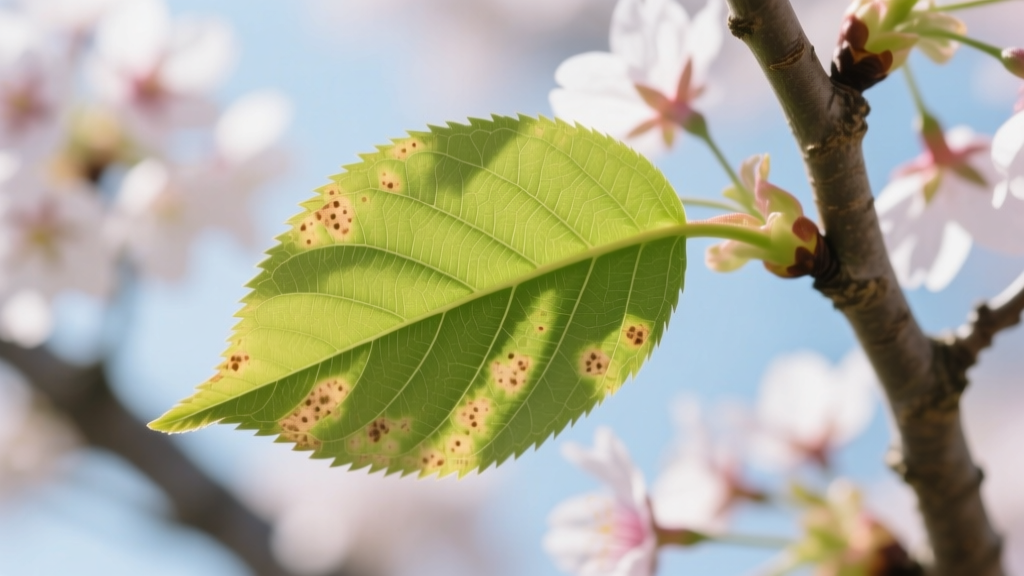
Diagnosing and Treating Diseases on the Leaves of Cherry Blossom Trees
The Anatomy of Healthy vs. Unhealthy Cherry Foliage
Ornamental cherry trees (Prunus serrulata, Prunus subhirtella, and Prunus yedoensis) are prized for their spring blooms, but their foliage is highly susceptible to environmental stress and pathogens. When inspecting the leaves of cherry blossom tree cultivars like 'Kanzan' or 'Yoshino', healthy foliage should be deep green, matte to slightly glossy, and free of necrotic margins. Unhealthy leaves often present with interveinal chlorosis, shot-hole lesions, or premature abscission. Because cherry trees store energy for the following year's bloom in their leaves during late summer, foliar diseases that cause early defoliation directly reduce next spring's flower density.
Top Fungal Pathogens Attacking Cherry Leaves
Fungal infections thrive in the humid microclimates often found in densely planted residential landscapes. Accurate diagnosis requires examining the specific lesion patterns on the leaf surface.
Cherry Leaf Spot (Blumeriella jaapii)
This is the most devastating foliar disease for cherry trees. According to Penn State Extension, the fungus overwinters in fallen leaf litter. In spring, spores infect new leaves, presenting as small (1-3mm) purple-to-reddish spots. As the disease progresses, the centers of the spots die and fall out, creating a "shot-hole" appearance. Severely infected leaves turn yellow and drop by mid-summer.
- Chemical Control: Apply Myclobutanil (e.g., Spectracide Immunox) at a rate of 1.5 fluid ounces per gallon of water. Begin applications at petal fall and repeat every 10 to 14 days until mid-June.
- Cultural Control: Rake and destroy all fallen leaves in autumn. Do not compost infected material, as home compost piles rarely reach the 140°F required to kill Blumeriella spores.
Powdery Mildew (Podosphaera clandestina)
Powdery mildew manifests as white, powdery mycelial mats on young leaves and shoots. It thrives in high humidity and poor air circulation, unlike most fungi that require free moisture on the leaf surface.
- Treatment: Apply a 2% horticultural neem oil solution or Potassium bicarbonate (e.g., GreenCure) at 1 tablespoon per gallon. Spray in the early evening to prevent phytotoxicity from sun exposure.
⚠️ Warning: Copper Fungicide Phytotoxicity
Many gardeners default to copper-based fungicides (like Bordeaux mixture) for tree diseases. However, cherry trees are highly sensitive to copper. Applying copper sprays to the leaves of cherry blossom trees, especially during cool, wet weather, will cause severe leaf burn, marginal necrosis, and premature defoliation. Stick to synthetic systemic fungicides or sulfur-based organic options.
Pest-Induced Leaf Damage: Insects to Watch
Insect feeding alters leaf chemistry and structure, often serving as a vector for secondary bacterial infections.
Black Cherry Aphid (Myzus cerasi)
These large, metallic-black aphids colonize the undersides of new leaf growth, causing leaves to curl, pucker, and stunt. They excrete honeydew, which rapidly breeds black sooty mold (Capnodium), blocking photosynthesis.
- Systemic Fix: For trees over 10 feet tall where foliar spraying is impractical, use an Imidacloprid soil drench (e.g., BioAdvanced 12-Month Tree & Shrub Protect & Feed). Apply at a rate of 1 fluid ounce per inch of trunk diameter (measured at 4.5 feet above ground). Water it into the root zone in early spring before bud break.
- Contact Fix: Spray a 2.5% insecticidal soap solution directly on the leaf undersides, repeating every 5 days for three cycles.
Eastern Tent Caterpillar (Malacosoma americanum)
These larvae build unsightly silken tents in the crotches of branches and skeletonize adjacent leaves.
- Mechanical Removal: Prune out tented branches in the early morning when caterpillars are clustered inside the web.
- Biological Control: Spray Bacillus thuringiensis var. kurstaki (Btk) (e.g., Thuricide) at 1.5 oz per gallon directly onto the foliage surrounding the tents. The caterpillars must ingest the treated leaves for the bacteria to disrupt their gut lining.
Nutrient Deficiencies Manifesting in the Leaves
Cherry trees require a soil pH between 6.0 and 6.8. When soil pH drifts above 7.0 (alkaline), essential micronutrients become chemically locked and unavailable to the roots, manifesting as distinct visual symptoms on the leaves.
| Symptom on Leaves | Deficiency | Soil Amendment | Application Rate |
|---|---|---|---|
| Interveinal chlorosis on new leaves | Iron (Fe) | Fe-EDDHA Chelated Iron | 1-2 oz per 100 sq ft, watered in |
| Uniform pale green/yellowing | Nitrogen (N) | Ammonium Sulfate (21-0-0) | 1 cup per inch of trunk diameter |
| Interveinal chlorosis on older leaves | Magnesium (Mg) | Magnesium Sulfate (Epsom Salt) | Foliar spray: 1 tbsp per gallon |
| Marginal browning and scorched tips | Potassium (K) | Sulfate of Potash (0-0-50) | 1/2 cup per 100 sq ft in early spring |
Expert Insight: If your cherry tree suffers from chronic iron chlorosis despite applying Fe-EDDHA, test your soil for excess phosphorus. High phosphorus levels bind with iron in the soil, rendering chelated treatments ineffective. Reduce phosphorus-heavy bloom boosters in your landscape beds.
Step-by-Step Seasonal Foliage Maintenance Protocol
Preventing foliar diseases requires a strict annual sanitation and pruning schedule. Follow this timeline to protect the leaves of your cherry blossom tree year-round.
- Late Winter (Dormant Pruning): Prune out dead, diseased, or crossing branches to open the canopy and increase airflow. This reduces the humidity that drives fungal spore germination. Critical Step: Sterilize your bypass pruners between every single cut using 70% isopropyl alcohol. According to University of Minnesota Extension, failing to sterilize tools is the primary way gardeners spread bacterial canker (Pseudomonas syringae) through a tree's vascular system.
- Early Spring (Pre-Bloom): Apply a dormant horticultural oil spray (at a 2% to 4% dilution rate) to smother overwintering scale insects and aphid eggs on the bark and branch crotches before the leaf buds break.
- Mid-Spring (Petal Fall): Initiate your fungicide spray program (Myclobutanil or Chlorothalonil) the moment the flower petals drop and the new green leaf tissue is exposed.
- Summer (Monitoring): Inspect the undersides of leaves weekly for aphid colonies or spider mite stippling. Avoid overhead irrigation; water only at the base of the trunk to keep the foliage completely dry.
- Autumn (Sanitation): As noted by the Royal Horticultural Society (RHS), removing fallen leaves is non-negotiable for cherry trees. Rake the entire drip line and dispose of the debris in municipal green waste bins to break the overwintering cycle of cherry leaf spot and brown rot pathogens.
Frequently Asked Questions
Why are the leaves on my newly planted cherry tree wilting and dropping in summer?
Newly planted cherry trees have restricted root systems and cannot uptake enough water to support full foliar transpiration during summer heat. This is transplant shock. Apply a 2-inch layer of arborist wood chips over the root zone (keeping it 3 inches away from the trunk bark) to retain soil moisture, and deep-water the root ball twice a week with 10 gallons of water per inch of trunk caliper.
Can I use vinegar to treat fungal spots on cherry leaves?
No. Household vinegar (5% acetic acid) is a non-selective contact herbicide. Spraying it on the leaves of a cherry blossom tree will destroy the leaf cuticle, causing rapid desiccation and tissue death, worsening the tree's overall health without effectively eradicating the internal fungal mycelium.

