Tree Care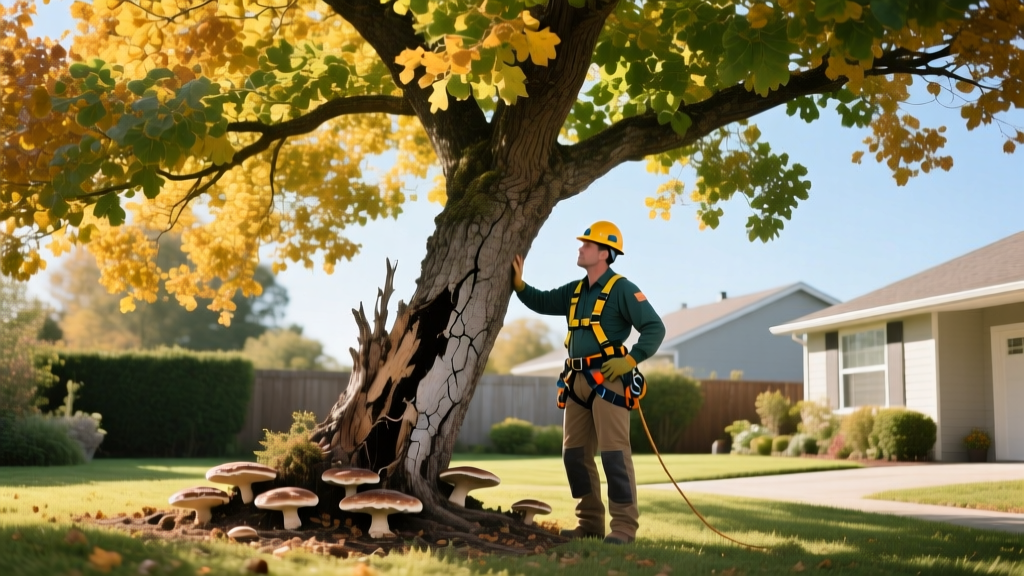
Diagnosing Tree Hazards: When to Hire a Tree Cutting Business
The Homeowner’s Dilemma: Pruning vs. Complete Removal
When a mature shade tree develops a sudden lean or drops a heavy limb, the immediate instinct is to call the first available tree cutting business. However, misdiagnosing a tree's structural integrity leads to either unnecessary removal (costing thousands and destroying property value) or catastrophic failure during the next microburst. Proper diagnosis requires understanding the biomechanics of tree failure and knowing exactly how to vet the professionals you hire. In 2026, with extreme weather events increasing in frequency, distinguishing between a tree that needs cabling, crown reduction, or complete extraction is a critical homeowner skill.
4 Critical Tree Hazard Indicators
Before contacting a tree cutting business, conduct a visual assessment of the tree's structural and biological health. Look for these specific failure predictors:
- Fungal Fruiting Bodies (Conks): The presence of Ganoderma applanatum (Artist's conk) or Armillaria (honey fungus) at the root flare or on the lower trunk indicates advanced internal decay. If a conk is present, the tree has likely lost 30% to 50% of its structural strength in that zone.
- Included Bark in V-Crotches: When two main stems grow at a narrow V-angle, bark gets trapped inside the union. This "included bark" acts as a wedge, preventing strong wood formation. Under wind load, these co-dominant stems are highly prone to splitting.
- Root Plate Heaving: Look at the soil on the side opposite to the tree's lean. If the soil is cracking and lifting in a mushroom shape, the root plate is actively failing. This is an imminent hazard requiring emergency intervention.
- Cavities and Cankers: A cavity on the trunk isn't always a death sentence, but if the remaining sound wood shell is less than 30% of the trunk's diameter, the risk of buckling under snow or wind loads increases exponentially.
⚠️ WARNING: The "Door-Knocker" Epidemic
Following severe weather, unlicensed operators often canvass neighborhoods. If a tree cutting business knocks on your door claiming your tree is an "imminent danger" without using a resistograph or sonic tomograph to measure internal decay, do not hire them. Legitimate arborists rely on diagnostic data, not fear tactics.
Following severe weather, unlicensed operators often canvass neighborhoods. If a tree cutting business knocks on your door claiming your tree is an "imminent danger" without using a resistograph or sonic tomograph to measure internal decay, do not hire them. Legitimate arborists rely on diagnostic data, not fear tactics.
Vetting a Tree Cutting Business: The 5-Point Compliance Matrix
Finding a qualified operator separates a safe, efficient extraction from a property-damaging disaster. The International Society of Arboriculture (ISA) maintains a registry of certified professionals. When evaluating a tree cutting business, demand proof of the following five criteria:
| Compliance Metric | What to Ask For | Why It Matters (Risk Mitigation) |
|---|---|---|
| ISA Certification | Valid ISA Certified Arborist ID number. | Ensures the lead climber/consultant understands tree biology and ANSI A300 pruning standards. |
| TRAQ Credential | Tree Risk Assessment Qualification badge. | Proves the assessor is trained in standardized, peer-reviewed hazard evaluation methodologies. |
| General Liability | Certificate of Insurance (COI) for $1M+ minimum. | Protects your home and property if a crane drops a 2,000 lb log on your roof or neighbor's fence. |
| Workers' Comp | Active Workers' Compensation policy. | If an uninsured worker is injured on your property, you can be held liable for their medical bills. |
| ANSI Z133 Compliance | Written statement of ANSI Z133 safety adherence. | The industry safety standard for electrical hazards, rigging, and chainsaw operations in arboriculture. |
Never accept a photocopied insurance document. Call the insurance broker listed on the Certificate of Insurance (COI) to verify the policy is active and has not been canceled. The ISA Guide to Hiring an Arborist explicitly warns against paying large deposits upfront; a reputable tree cutting business will only require payment upon satisfactory completion of the work.
2026 Pricing Benchmarks for Tree Cutting Services
Tree removal costs are highly variable, dictated by species, height, lean, target zones (what the tree will fall on), and equipment access. According to industry data tracked by the Tree Care Industry Association (TCIA), inflation and fuel costs have adjusted baseline pricing. Use this matrix to benchmark the quotes you receive:
| Tree Size & Scenario | Estimated Cost Range (2026) | Equipment & Labor Variables |
|---|---|---|
| Small (Under 30 ft) Open drop zone, e.g., Birch, Dogwood |
$350 – $800 | 2-person crew, standard chainsaws, brush chipper. 2-4 hours. |
| Medium (30–60 ft) Restricted drop zone, e.g., Maple, Ash |
$900 – $2,200 | 3-person crew, sectional rigging, climbing spurs, chipper. 4-8 hours. |
| Large (60–100 ft+) Over structures, e.g., Mature Oak, Pine |
$2,500 – $5,500+ | 4+ person crew, negative rigging blocks, port-a-wrap friction devices. 1-2 days. |
| Crane-Assisted Removal Zero-drop zone, tight urban access |
Add $1,200 – $2,500/day | Mobile crane rental, certified crane operator, rigging signalperson. |
| Stump Grinding 12 inches below grade |
$4 – $7 per inch of diameter | Vermeer or Rayco stump grinder, root flare excavation. |
Red Flags in Pricing
If a quote is 40% lower than the local average, the tree cutting business is likely cutting corners on insurance, lacking proper rigging gear, or planning to dump the wood debris illegally. Conversely, if a company quotes $8,000 for a 50-foot tree in an open yard without a crane requirement, you are being price-gouged. Always secure three itemized bids.
Step-by-Step: Managing the Job Day
Once you have diagnosed the hazard and hired a qualified tree cutting business, your role shifts to site management. Follow this protocol on the day of extraction:
- Verify Utility Locates (811): Ensure the company has called 811 to mark underground gas, water, and fiber-optic lines before bringing heavy equipment like chippers or cranes onto your lawn.
- Establish the Drop Zone: Walk the property with the lead arborist. Agree on the exact "felling zone" or rigging drop zone. Move all vehicles, patio furniture, and sensitive landscaping out of a radius equal to 1.5 times the tree's height.
- Protect the Turf and Hardscape: Require the crew to lay down track mats (like AlturnaMAT) if they are driving a 10,000-lb chipper truck over your irrigated lawn or paver driveway to prevent subgrade compaction and cracking.
- Define the Cleanup Specs: "Haul away" means different things to different people. Specify in the contract whether you want the wood cut into 18-inch firewood rounds left on-site, or if every branch down to 1/2 inch is to be chipped and removed. Specify stump grinding depth (standard is 6-8 inches below grade; request 12 inches if you plan to replant in the exact same spot).
Post-Removal Soil Remediation
After a large tree is removed, the soil microbiome is disrupted. The decaying root system will temporarily tie up soil nitrogen. If you plan to lay sod or plant a new specimen in the same area, amend the soil with a high-nitrogen fertilizer and fresh topsoil to compensate for the carbon-heavy decomposing wood chips left behind by the grinder.