
Tree Care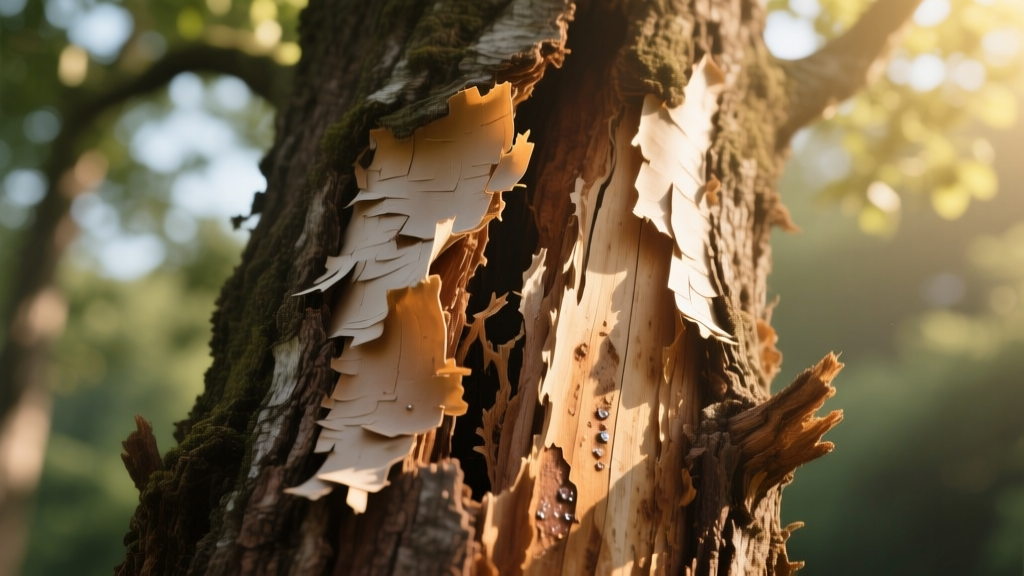
Diagnosing Trees That the Bark Peels: Natural vs. Rot
The Diagnostic Reality of Peeling Bark
When homeowners notice trees that the bark peels away from the trunk, panic often sets in. However, bark sloughing is a symptom, not a singular disease. In arboriculture, we divide this phenomenon into two distinct categories: exfoliation (a natural, healthy growth process) and sloughing (a pathological response to stress, pests, or cambial death). Misdiagnosing the cause can lead to unnecessary tree removal costs averaging $1,200 to $2,500, or worse, ignoring a fatal infestation that threatens surrounding landscape.
This diagnostic framework provides the exact measurements, species profiles, and treatment protocols required to determine if your peeling tree is thriving or dying.
Category 1: Natural Exfoliating Species
Many ornamental and shade trees naturally shed their outer bark layers as the trunk expands. This process, known as exfoliation, prevents the buildup of moss, lichens, and boring insects. If your tree matches the botanical profile below and the inner bark (phloem) is firm, moist, and brightly colored, the peeling is entirely normal.
| Common Name | Botanical Name | Peeling Season | Inner Bark Appearance |
|---|---|---|---|
| American Sycamore | Platanus occidentalis | Late Spring / Early Summer | Pale green, bone white, mottled |
| Crape Myrtle | Lagerstroemia indica | Mid-Summer | Smooth, pinkish-tan to cinnamon |
| Paper Birch | Betula papyrifera | Year-round (peaks in autumn) | Stark white, papery horizontal strips |
| Lacebark Elm | Ulmus parvifolia | Late Summer | Mottled green, gray, and orange puzzle-pieces |
Category 2: Abiotic Environmental Stressors
If your tree is not a natural exfoliator, environmental extremes are the most common culprit for bark detachment. The cambium layer (the living tissue just beneath the bark) dies when subjected to rapid temperature fluctuations or severe moisture deficits, causing the outer bark to lose its anchor and peel.
Sunscald and Frost Cracking
Sunscald primarily affects thin-barked species like maple, ash, and cherry planted in exposed southern or southwestern exposures. During winter, daytime solar radiation heats the bark to 40°F–50°F above ambient air temperature, stimulating cellular activity. When the sun sets or is blocked by a cloud, temperatures can plummet 30°F or more within minutes. This rapid freezing ruptures the xylem and phloem cells.
- Diagnosis: Vertical splitting or peeling restricted exclusively to the south/southwest-facing side of the trunk.
- Solution: Apply a white, polypropylene tree wrap in late November. Overlap the wrap by one-third and secure it with natural jute twine. Crucial: Remove the wrap by April 1st. Leaving wrap on year-round traps moisture, invites fungal pathogens, and girdles the trunk as it grows.
Arborist Insight: Never use black plastic tubing or dark-colored wraps for winter protection. Dark colors absorb solar radiation, exacerbating the exact temperature swings you are trying to prevent.
Mulch Volcanoes and Basal Rot
Piling mulch against the root flare (the 'mulch volcano') keeps the basal bark perpetually moist. This suffocates the phloem and invites Phytophthora root and collar rot. The bark at the soil line will turn black, spongy, and peel away easily when scratched with a trowel.
Category 3: Pathological Sloughing (Diseases & Pests)
When peeling bark is accompanied by canopy dieback, sawdust-like frass, or sapwood staining, you are dealing with a biotic pathogen or insect infestation. According to the Morton Arboretum, canker diseases and wood-boring insects are the primary drivers of pathological bark sloughing in mature landscape trees.
Hypoxylon Canker (Hypoxylon coccineum)
Hypoxylon is an opportunistic secondary pathogen that attacks oak, aspen, and hickory trees suffering from severe drought stress or root damage. The fungus colonizes the sapwood, causing the bark to slough off in large sheets, revealing a crusty, gray-to-black fungal mat underneath.
- Diagnostic Test: Scrape the exposed sapwood. If it is dry, crumbly, and stained black or brown, the tissue is dead. The UMass Extension notes that once the fungal fruiting bodies are visible, the structural integrity of the trunk is severely compromised.
- Action Plan: There is no chemical cure for Hypoxylon. If the canker affects more than 30% of the trunk's circumference or is located on the main stem, the tree must be removed by an ISA Certified Arborist to prevent catastrophic failure during wind events.
Wood-Boring Insects (Emerald Ash Borer & Pine Beetles)
Boring insects tunnel through the cambium, severing the tree's vascular system. As the tree dies, the bark loses its moisture tension and peels.
- Emerald Ash Borer (EAB): Look for 'woodpecker flecking' (patches where birds have ripped off the outer bark to eat larvae) and distinct 1/8-inch D-shaped exit holes.
- Treatment: If the canopy is less than 30% thinned, systemic trunk injections of Emamectin benzoate (e.g., TREE-äge) are highly effective. Expect to pay $15 to $25 per inch of DBH (Diameter at Breast Height). Soil drenches using Imidacloprid ($10–$20 per tree) are only effective for trees under 15 inches DBH.
The 4-Step Diagnostic Decision Matrix
Use this field-tested framework to determine your next steps when encountering trees that the bark peels.
Step 1: Verify the Species
Check the botanical profile. If it is a Sycamore, Birch, or Crape Myrtle, and the inner layer is firm and brightly colored, no action is required.
Step 2: Check the Compass
Is the peeling exclusively on the South/Southwest side? You are likely dealing with historical sunscald. Protect the tree with proper mulching (2-3 inches deep, kept 3 inches away from the trunk) and wrap it next winter.
Step 3: Inspect the Sapwood
Use a sterilized pocket knife to gently probe the wood beneath the peeled bark.
Green and moist: The tree is alive and compartmentalizing a minor wound.
Brown, dry, and crumbly: The cambium is dead. Proceed to Step 4.
Step 4: Look for Biotic Signatures
Search for D-shaped holes, sawdust frass at the base, or black fungal mats. If present, consult an arborist immediately for systemic treatments or removal.
When to Hire an ISA Certified Arborist
Homeowners can manage minor sunscald and identify natural shedders, but pathological peeling requires professional intervention. An on-site diagnostic visit from an ISA Certified Arborist typically costs between $150 and $300. This fee is a necessary investment; misdiagnosing a structural defect caused by internal decay can result in property damage or personal injury.
According to Penn State Extension, trees with extensive bark sloughing often have advanced internal decay that is not visible from the exterior. An arborist will use a resistograph or sonic tomography to measure the remaining wall thickness of solid wood. If the solid wood wall is less than 1 inch for every 6 inches of trunk radius, the tree is a hazard and must be removed. Always verify your professional's credentials via the International Society of Arboriculture (ISA) database before authorizing any chemical injections or removal contracts.

