
Tree Care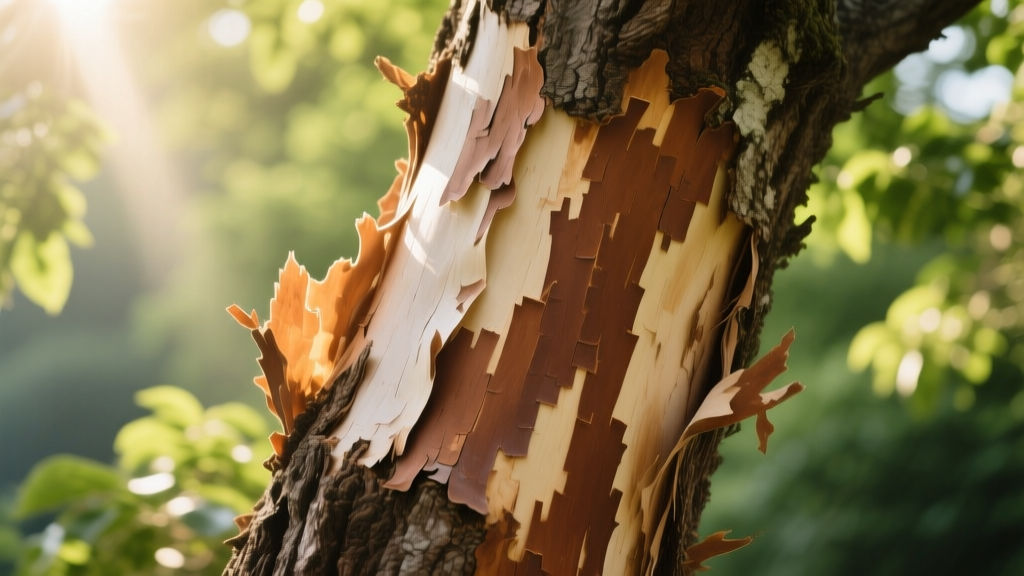
Trees With Peeling Bark: Normal Growth or Disease?
The Bark Diagnostic Matrix: Natural Shedding vs. Disease
Seeing large strips of bark falling off a yard tree triggers immediate alarm for most homeowners. However, in the arboriculture industry, bark peeling (exfoliation) is a standard biological process for several common species. The critical skill for a beginner is distinguishing between natural growth cycles and catastrophic structural failure caused by pathogens or environmental stress.
Use the diagnostic matrix below to quickly cross-reference your tree species and the visual characteristics of the peeling bark.
| Tree Species | Bark Behavior | Visual Cue | Verdict |
|---|---|---|---|
| American Sycamore | Annual shedding | Mottled green, white, and tan patches; large plates falling off | Normal (Healthy) |
| Crape Myrtle | Seasonal exfoliation | Smooth, polished-looking inner bark in cinnamon or gray tones | Normal (Healthy) |
| Red Maple / Pine | Traumatic splitting | Vertical fissures on the south-facing trunk; loose, jagged edges | Abnormal (Frost Crack) |
| Ash / Elm / Oak | Pest/Fungal exit | Bark scaling off in small flakes; sawdust-like frass at the base | Abnormal (Borers/Canker) |
Why Some Trees Naturally Lose Their Bark
For species like the American Sycamore (Platanus occidentalis), Silver Maple (Acer saccharinum), and Crape Myrtle (Lagerstroemia), shedding bark is an evolutionary adaptation. As the tree's trunk diameter expands during the spring and summer growing season, the rigid outer bark cannot stretch. Instead of cracking, the outer layer dies and sloughs off to reveal the newer, flexible inner bark.
According to the University of Minnesota Extension, this exfoliation process also serves as a vital defense mechanism. By shedding the outer layer, these trees actively drop overwintering pests, lichens, and fungal spores that attach to the rough exterior, effectively 'cleaning' themselves annually.
- What to look for: The inner bark revealed underneath should look smooth, healthy, and intact. There should be no oozing sap, foul odors, or powdery residue.
- Action required: None. Do not attempt to pull off semi-attached bark, as this can tear the living phloem tissue beneath. Let it drop naturally.
The 3 Fatal Causes of Abnormal Peeling
If your tree is not a known exfoliating species, peeling bark is a primary symptom of severe distress. The three most common culprits in residential landscapes are winter injury, wood-boring insects, and fungal cankers.
1. Southwest Winter Injury (Frost Cracking)
Frost cracking occurs almost exclusively on the south or southwest-facing side of a tree trunk. During winter, the low-angle sun heats the dark bark to temperatures exceeding 100°F, stimulating cellular activity. When the sun sets, temperatures can plummet to 15°F within hours. This extreme thermal shock causes the outer bark to contract faster than the inner wood, resulting in a violent vertical split that peels away from the trunk.
Warning: Frost cracks are open wounds. While the tree will attempt to seal the crack with callus wood over several years, the exposed heartwood is highly susceptible to wood-decaying fungi. Never paint or seal the crack with tar; this traps moisture and accelerates rot.
2. Wood-Boring Insects
Bark beetles and metallic wood-boring beetles target stressed trees. The USDA Forest Service notes that species like the Southern Pine Beetle (Dendroctonus frontalis) and the Emerald Ash Borer (Agrilus planipennis) tunnel through the cambium layer, severing the tree's vascular system. As the galleries expand, the bark loses its moisture supply, dies, and flakes off in small, brittle patches.
- Diagnostic Clue: Look for 'frass'—a fine, sawdust-like material accumulating in the bark crevices or at the tree's root flare. Emerald Ash Borers leave distinct D-shaped exit holes (about 1/8 inch wide) beneath the flaking bark.
3. Hypoxylon Canker and Fungal Decay
Hypoxylon canker is an opportunistic fungus that attacks oaks and other hardwoods suffering from drought stress or root damage. The fungus kills the cambium layer in localized patches. As the infected bark dies, it peels away in thin sheets, revealing a black, crusty fungal stroma underneath. Once a tree exhibits extensive Hypoxylon peeling, the structural integrity of the trunk is compromised, and removal is usually the only safe option.
The 60-Second Cambium Scratch Test
When bark is peeling and you cannot identify the cause, perform a cambium scratch test to determine if the underlying tissue is still alive. This test dictates your next steps.
- Sanitize your tool: Wipe a sharp pocket knife or pruning shears with 70% isopropyl alcohol to prevent cross-contaminating the tree with pathogens.
- Select the test site: Choose a branch or trunk section immediately adjacent to the peeling bark.
- Make the scratch: Gently scrape away the very top layer of the outer bark. You only need to penetrate about 1/16th of an inch.
- Evaluate the color:
- Green and moist: The cambium layer is alive. The tree is actively transporting water and nutrients. The peeling may be superficial or localized.
- Brown and dry: The tissue is dead. If this brown tissue extends continuously around the circumference of the trunk (girdling), the tree is dead and must be scheduled for removal.
Treatment Costs and When to Call an Arborist
Beginners often attempt to save dying trees with improper fertilization or over-watering, which only accelerates root rot. Use this cost and action framework to make financially sound decisions.
Preventative Care (DIY)
If you have young, thin-barked trees (like Red Maple or Honeylocust) prone to frost cracking, apply a commercial tree wrap in late November.
- Material Cost: $15 to $30 for a roll of polypropylene tree wrap.
- Application Rule: Wrap from the base up to the first major scaffold branch. Remove it in early April. Leaving wrap on year-round girdles the trunk and harbors moisture-loving fungi.
Active Pest Treatment (Professional)
If you spot D-shaped exit holes or heavy frass beneath peeling bark on an Ash or Elm, DIY sprays will not reach the larvae tunneling deep inside the wood.
- Professional Trunk Injection: Certified arborists use emamectin benzoate or azadirachtin injections directly into the xylem. Expect to pay $15 to $25 per inch of trunk diameter (measured at 4.5 feet high). A 20-inch tree will cost $300 to $500 per treatment, required every 1-2 years.
Tree Removal (The Final Resort)
'If peeling bark is accompanied by a lean, fungal conks (shelf mushrooms) at the base, or a failed scratch test on the main trunk, the tree is a hazard. Do not wait for a storm to bring it down.' — ISA Certified Arborist Standard Practice.
- Arborist Consultation: $75 to $150 for an on-site risk assessment.
- Removal Costs: $800 to $2,500 for standard residential trees (up to 60 feet), depending on proximity to power lines and structures. Always verify the company carries active liability insurance and workers' compensation before signing a contract.

