
Tree Care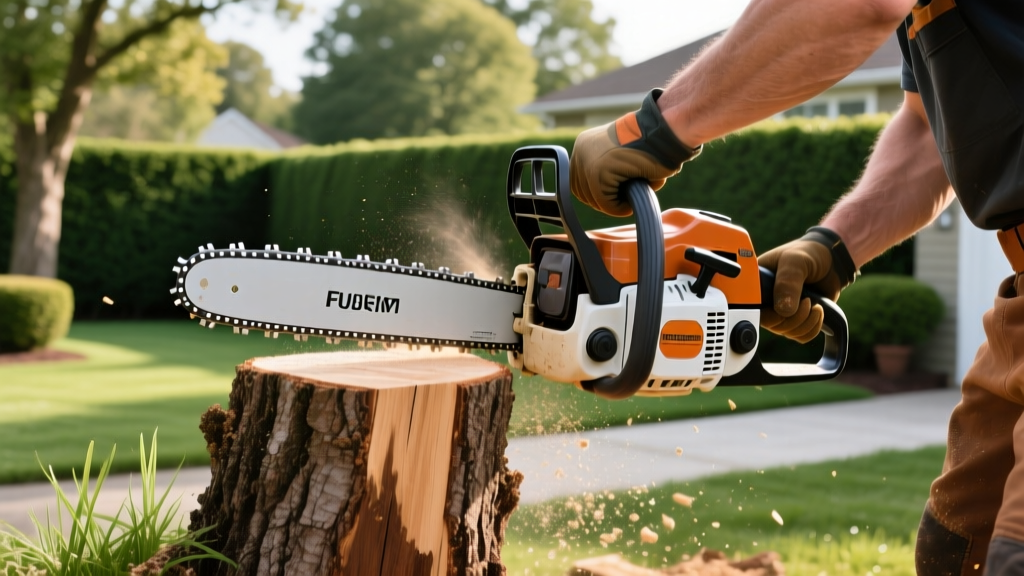
Choosing the Right Tool to Cut Trees: A Diagnostic Guide
The Branch Thickness Diagnostic Matrix
Selecting the correct tool to cut trees is not a matter of preference; it is a strict function of branch diameter, wood density, and cut geometry. Using an undersized tool crushes the cambium layer, inviting fungal pathogens like Armillaria root rot, while an oversized tool removes excessive bark and creates hazardous kickback scenarios. The International Society of Arboriculture (ISA) mandates that pruning cuts must be clean and precise to facilitate proper compartmentalization (CODIT).
To diagnose the exact equipment required for your specific tree care problem, measure the branch diameter at the intended cut line and cross-reference the matrix below.
| Branch Diameter | Primary Tool Category | Recommended 2026 Model | Estimated Cost | Cut Geometry |
|---|---|---|---|---|
| Under 0.75" | Bypass Hand Pruner | Felco 2 Classic | $60 - $70 | 45° angle, 1/4" above bud |
| 0.75" to 2.0" | Compound Bypass Lopper | Fiskars 32" PowerGear2 | $50 - $60 | Perpendicular to branch axis |
| 2.0" to 5.0" | Curved Pruning Saw | Silky Gomboy 240 (Large Teeth) | $45 - $55 | 3-cut method to prevent tearing |
| 5.0" to 12.0" | Battery/Gas Chainsaw (14"-16") | Milwaukee M18 FUEL 16" | $400 (Bare Tool) | Directional notch and back cut |
| Over 12.0" | Professional Felling Saw | Stihl MS 261 C-M | $650 - $700 | Requires hinge wood calculation |
Diagnosing Reach and Canopy Height Problems
When the target branch is situated higher than 8 feet, the problem shifts from cutting power to leverage and balance. Overextending with a standard hand saw forces the user into an unstable posture, drastically increasing the risk of falling debris strikes or loss of tool control.
Gas vs. Battery Pole Saws: The Power-to-Weight Tradeoff
For branches between 2 and 6 inches in diameter located 10 to 14 feet overhead, a pole saw is the mandatory solution. However, diagnosing whether to use gas or battery power depends on your specific usage pattern.
- Battery Pole Saws (e.g., Stihl HTA 50, ~$480): Ideal for residential users cutting fewer than 15 branches per session. The 36-volt lithium-ion system eliminates the gyroscopic pull of a gas engine, reducing user fatigue by approximately 30% during overhead extension. The limitation is runtime; expect 45 minutes of active cutting per AP 300 S battery.
- Gas Pole Saws (e.g., Husqvarna 120iTK4-P equivalent gas models): Required for commercial clearance or cutting dense, resinous woods like Southern Yellow Pine. Gas models deliver higher chain speed (up to 45 ft/s), preventing the bar from bogging down in fibrous wood, but they add 3 to 5 pounds of engine weight at the distal end of the pole.
Troubleshooting Common Cutting Failures
Even with the correct tool to cut trees, operators frequently encounter mechanical and biological failures. Below is a diagnostic flowchart for the three most common cutting errors.
⚠️ WARNING: Kickback Zones
Never use the upper quadrant of the chainsaw bar nose (the kickback zone) to initiate a cut. According to OSHA tree care hazard guidelines, kickback is the leading cause of chainsaw-related lacerations. Always engage the chain brake when starting and carrying the saw.
Never use the upper quadrant of the chainsaw bar nose (the kickback zone) to initiate a cut. According to OSHA tree care hazard guidelines, kickback is the leading cause of chainsaw-related lacerations. Always engage the chain brake when starting and carrying the saw.
Failure 1: Bark Tearing on the Underside of the Branch
Diagnosis: The weight of the branch exceeded the structural integrity of the remaining wood fibers before the cut was completed, causing the branch to snap and strip the bark down the trunk.
Solution: Implement the ISA-standard three-cut method.
- Undercut: Cut 1/3 of the way through the bottom of the branch, 12 inches away from the trunk.
- Top Cut: Cut from the top down, 2 inches further out than the undercut, allowing the branch to fall cleanly.
- Collar Cut: Remove the remaining stub just outside the branch bark ridge and branch collar to allow proper wound sealing.
Failure 2: Loppers Crushing the Cambium Layer
Diagnosis: You are either using anvil-style loppers on live, green wood, or your bypass blades are misaligned. Anvil pruners feature a single straight blade that crushes tissue against a flat block, which is only acceptable for deadwood removal.
Solution: Switch to bypass loppers for all live wood. If your bypass loppers are crushing, check the pivot bolt. Tighten it until the blades have zero lateral play but still glide smoothly. If the blades are dull, sharpen only the beveled edge using a diamond file; never file the flat side.
Failure 3: Chainsaw Bar Pinching in the Cut
Diagnosis: The tree or branch is under compression stress. As the cut opens or closes, the wood clamps down on the guide bar, stalling the engine.
Solution: Diagnose the stress load before cutting. If the branch is supported at both ends (sagging in the middle), the top is under compression and the bottom is under tension. Cut 1/3 from the top, then finish from the bottom. Always keep a high-density polyethylene felling wedge (e.g., Oregon 15" wedge, ~$12) and a wooden mallet on hand to tap into the kerf and relieve compression pressure.
When the Problem Exceeds Your Toolkit
Homeowners often attempt to fell entire trees using 14-inch electric chainsaws, a practice that leads to catastrophic property damage and fatal injuries. The University of Florida IFAS Extension emphasizes that tree removal requires complex physics calculations regarding lean, wind load, and hinge wood thickness.
Call a certified arborist immediately if:
- The trunk diameter exceeds the usable bar length of your chainsaw minus 4 inches.
- The tree exhibits a lean greater than 15 degrees toward a structure or utility line.
- You observe conks (fungal fruiting bodies) at the base, indicating internal decay that compromises hinge wood predictability.
- The drop zone is obstructed, requiring technical rigging, cranes, or sectional dismantling.
Diagnosing the limits of your own equipment and expertise is the most critical step in tree care. Investing $400 in a premium battery chainsaw is highly cost-effective for maintaining a healthy canopy, but attempting to fell a 60-foot compromised oak with that same tool is a diagnostic failure with severe consequences.

