
Tree Care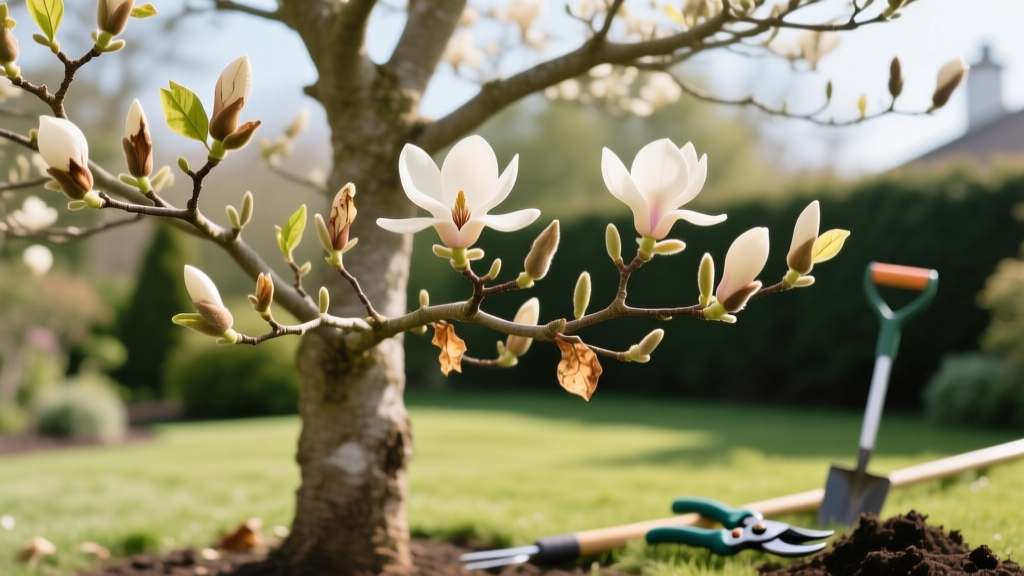
Bloom Failure Diagnosis: A List of Flowering Trees with Pictures
When homeowners search for a list of flowering trees with pictures, they are rarely just browsing for landscaping inspiration. More often than not, they are trying to identify a struggling specimen in their yard that has failed to produce its expected spring display. Ornamental trees like dogwoods, magnolias, and redbuds are highly susceptible to environmental stressors, fungal pathogens, and improper pruning techniques that disrupt the blooming cycle.
Rather than offering a generic visual catalog, this guide approaches flowering trees through the lens of problem diagnosis and solutions. By matching visual symptoms to specific species, you can accurately diagnose bloom failures and implement targeted recovery protocols.
The Bloom Failure Diagnostic Framework
Before attempting to treat a non-blooming tree, you must isolate the failure point. Flower bud initiation for most spring-blooming deciduous trees occurs in late summer and early fall of the previous year. Therefore, a lack of blooms in 2026 is usually the result of stress that occurred between July and October of 2025, or a late-spring frost event that killed dormant buds.
Warning: The Phosphorus Lockout Trap
A common mistake is blindly applying high-phosphorus 'bloom booster' fertilizers (e.g., 10-30-10 NPK) to a non-blooming tree. If your soil pH is above 7.0 or below 5.5, phosphorus binds to calcium or iron, becoming completely unavailable to the roots. Always conduct a university-extension soil test ($20-$30) before applying synthetic fertilizers.
Diagnostic List of Flowering Trees with Pictures
The following matrix cross-references popular ornamental species with their most frequent bloom-inhibiting pathogens and environmental triggers. Use this as a quick-reference troubleshooting tool.
| Tree Species | Visual ID Cues | Primary Failure Mode | Targeted Solution |
|---|---|---|---|
| Flowering Dogwood (Cornus florida) |
Opposite leaves, alligator-bark texture, showy white/pink bracts. | Dogwood Anthracnose (Discula destructiva) causing leaf blight and bud death. | Apply chlorothalonil fungicide at bud break; improve air circulation; switch to Cornus kousa for future plantings. |
| Saucer Magnolia (Magnolia × soulangeana) |
Large, fuzzy silver bud scales, thick leathery alternate leaves. | Late spring frost necrosis on early-opening blooms; Magnolia scale. | Site in sheltered microclimates; apply 2-4% horticultural oil in late winter to smother scale crawlers. |
| Eastern Redbud (Cercis canadensis) |
Heart-shaped leaves, magenta pea-like flowers blooming directly on the trunk (cauliflory). | Botryosphaeria canker girdling branches, halting nutrient flow to buds. | Prune 6-8 inches below the canker margin during dry weather; sterilize tools with 70% isopropyl alcohol. |
| Crape Myrtle (Lagerstroemia indica) |
Smooth, peeling mottled bark, panicles of crinkled summer flowers. | Botryosphaeria canker girdling branches, halting nutrient flow to buds. | Cease 'crape murder' (topping); apply systemic dinotefuran drench for severe aphid/crapemyrtle bark scale issues. |
Deep Dive: Flowering Dogwood Pathology
The native flowering dogwood is notoriously finicky outside its preferred understory habitat. When planted in full, unfiltered afternoon sun, the tree experiences severe transpiration stress, which compromises its immune response to Discula destructiva, the fungus responsible for dogwood anthracnose. According to Clemson University Extension, anthracnose first appears as tan spots with purple margins on the leaves, eventually spreading to the twigs and killing the floral buds before they can open.
Solution Protocol: If your dogwood is failing to bloom and showing marginal leaf browning, implement a strict fungicide rotation. Begin spraying a copper-based fungicide or chlorothalonil exactly at bud break (when the green tissue is just emerging from the bud scales), and repeat every 10 to 14 days during wet spring weather. Mulch the root zone with 3 inches of shredded hardwood to retain soil moisture and keep the shallow feeder roots cool.
Deep Dive: Saucer Magnolia Frost Damage
Saucer magnolias are notorious for blooming too early. In many temperate zones, a warm spell in late February or early March triggers the tree to drop its protective silver bud scales, exposing the delicate floral tissues. A subsequent hard freeze (temperatures dropping below 28°F for more than four hours) will turn the emerging blooms into black, mushy husks.
Solution Protocol: You cannot change the weather, but you can alter the tree's microclimate and genetics. For existing trees, avoid applying high-nitrogen fertilizers in late summer, which delays dormancy and makes the tree more susceptible to winter injury. If you are replacing a frost-prone magnolia, select later-blooming cultivars like 'Jane' or 'Ann' from the Little Girl series, which typically bloom 2 to 3 weeks later than the standard Saucer magnolia, safely avoiding early spring cold snaps.
Soil and Site Diagnostics: The Hidden Culprits
If your tree is disease-free, structurally sound, and protected from frost, the failure to bloom is almost certainly rooted in soil chemistry. Flowering requires massive energy expenditures, and specific nutrient thresholds must be met.
- Excess Nitrogen: Lawns are frequently treated with high-nitrogen fertilizers (e.g., 30-0-4). When ornamental trees absorb this runoff, they shift into vegetative growth mode, producing lush, dark green canopies at the direct expense of flower bud initiation. Fix: Stop lawn fertilization within the tree's drip line.
- Soil Compaction: Heavy clay soils restrict oxygen to the mycorrhizal fungi that facilitate nutrient uptake. Fix: Use an air-spade to vertically mulch the root zone, drilling 2-inch wide holes 12 inches deep and backfilling them with compost and expanded shale.
- pH Imbalance: Eastern redbuds and dogwoods prefer slightly acidic soil (pH 5.5 to 6.5). If your soil pH exceeds 7.2, iron chlorosis sets in, weakening the tree and aborting buds. Fix: Apply elemental sulfur at a rate of 1.5 lbs per 100 square feet to lower pH by roughly 0.5 units over six months.
Step-by-Step Recovery Protocol for Non-Blooming Trees
Follow this sequential diagnostic workflow to restore your ornamental tree's blooming capacity over a 12-to-18-month period.
- Month 1: Soil Testing. Extract 6-inch soil cores from four points around the tree's drip line. Mix them and send the sample to a university agronomy lab. Do not rely on cheap, color-changing home test kits, which lack the precision needed to measure micronutrient lockout.
- Month 2: Canopy Inspection. Use a 10x jeweler's loupe to inspect the undersides of leaves and the bark crevices. Look for magnolia scale (small, waxy brown bumps) or eriiophyid mites. If pests are present, apply a systemic insecticide like imidacloprid as a soil drench immediately after flowering (if any occurs) to avoid harming pollinators.
- Month 3: Structural Pruning. Remove crossing branches and water sprouts that shade the interior canopy. Flowering trees like crape myrtles and redbuds require sunlight penetration to the inner scaffolding to set buds on older wood.
- Month 6: Targeted Amendment. Based on your soil test, apply the exact ratio of potassium and phosphorus required. Potassium (K) is critical for flower development and cold hardiness. Look for a fertilizer with a sulfate of potash base rather than muriate of potash to avoid chloride toxicity.
Frequently Asked Questions
Why did my tree produce a massive amount of seed pods instead of flowers this year?
This is known as 'mast seeding' or a stress response. When a tree experiences severe drought or environmental trauma, it will sometimes abort its floral display and divert all remaining energy into producing seeds to ensure genetic survival. Ensure the tree receives 1 to 1.5 inches of water per week during the critical late-summer bud-initiation phase.
Can I use Epsom salts to force my magnolia to bloom?
No. Epsom salt (magnesium sulfate) only helps if your soil is specifically deficient in magnesium, which is rare in most residential landscapes. Applying excess magnesium can actually compete with calcium uptake, leading to blossom end rot in nearby garden plants and disrupting the cation exchange capacity of your soil. Stick to comprehensive soil testing as recommended by the Penn State Extension before applying isolated micronutrients.
How long does it take for a newly planted flowering tree to bloom?
Balled-and-burlap (B&B) specimens typically take 1 to 2 years to re-establish their root systems and resume blooming. Container-grown trees may bloom the first spring if they were not root-bound in the nursery. Bare-root stock can take up to 3 years to produce a significant floral display.

