
Tree Care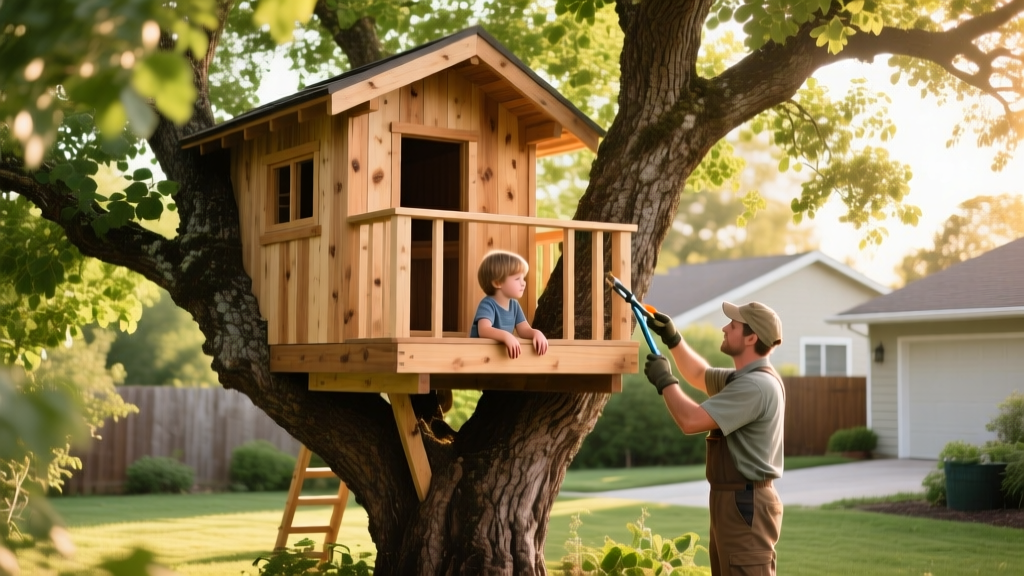
Safe DIY Tree House Builds: Organic Tree Health Guide
The Biological Reality of Treehouse Construction
Building a diy tree house is a rewarding project, but it fundamentally alters the micro-environment and structural integrity of the host tree. From an organic tree care perspective, the goal is to work with the tree's natural defense mechanisms rather than suppressing them with synthetic chemicals. When you drive nails into a trunk or compact the soil around the root flare, you introduce pathways for fungal pathogens and anaerobic bacteria. Modern arboriculture has moved away from toxic wood preservatives and petroleum-based wound sealants, favoring biological compartmentalization and mechanical load distribution. This guide details the exact materials, measurements, and organic methodologies required to construct a treehouse that preserves the long-term health of your canopy without relying on chemical interventions.
Selecting Species with High CODIT Ratings
Not all trees handle the physical trauma of construction equally. The Compartmentalization of Decay in Trees (CODIT) model explains how trees "seal" off damaged tissue to prevent the spread of rot. When planning your build, select species with strong CODIT ratings that can naturally wall off the wounds created by attachment hardware. Trees with weak compartmentalization will require aggressive, often chemical-dependent interventions to stave off heart rot.
| Tree Species | CODIT Rating | Wood Density & Load Capacity | Susceptibility to Borer Pests |
|---|---|---|---|
| White Oak (Quercus alba) | Excellent | High (Ideal for heavy loads) | Low (Natural tyloses block decay) |
| Red Maple (Acer rubrum) | Poor | Medium (Requires frequent inspection) | High (Prone to flatheaded borers) |
| Douglas Fir (Pseudotsuga menziesii) | Good | High (Excellent structural stability) | Low (Resinous sap deters insects) |
| Eastern White Pine (Pinus strobus) | Moderate | Low-Medium (Brittle branches) | Moderate (White pine weevil risk) |
Non-Invasive Attachments: Ditching the Nails and Chemical Sealants
The most critical mistake in diy tree house construction is using standard lag bolts or nails combined with toxic pruning paints. Nails create multiple, closely spaced wounds that merge into massive necrotic zones. Instead, use Treehouse Attachment Bolts (TABs). A standard Garnier Limb TAB features a 1.25-inch diameter 304-grade stainless steel shaft with a custom-machined collar. You drill a single 2-inch hole through the branch, insert the TAB, and the tree's cambium eventually grows over the collar, sealing the wound naturally from the inside out.
While TABs are an investment—typically costing between $95 and $125 per unit depending on the shaft length—they eliminate the need for chemical fungicides to treat rot around the hardware. The 304 stainless steel composition prevents galvanic corrosion, which can otherwise leach toxic heavy metals into the tree's vascular system.
Why Synthetic Wound Dressings Fail
Historically, builders painted over drill holes and saw cuts with asphalt-based pruning sealants. According to the University of Minnesota Extension, these synthetic dressings actually trap moisture and anaerobic bacteria against the exposed wood, accelerating decay rather than preventing it. Trees do not "heal" like human skin; they seal. By leaving a clean, sharp cut or drill hole exposed to air, you allow the tree's natural CODIT process to form a callus ridge. If you must treat a fresh cut to deter wood-boring insects during the build, use an organic kaolin clay slurry or a diluted neem oil spray rather than petroleum sealants.
Organic Root Zone Preservation During Construction
The weight of a treehouse, combined with the foot traffic of construction, severely compacts the soil in the Critical Root Zone (CRZ). Compaction crushes soil macropores, suffocating the fine feeder roots responsible for water and nutrient uptake. Without chemical soil surfactants or synthetic root stimulants, you must rely on mechanical and organic soil management.
Calculating Your Critical Root Zone (CRZ)
Measure the trunk's Diameter at Breast Height (DBH) in inches at 4.5 feet above the ground. Multiply the DBH by 1.5 to get the minimum radius in feet for your protected zone. For example, a tree with a 20-inch DBH requires a strictly protected, no-traffic circle with a 30-foot radius from the trunk.
To protect this zone organically during the build:
- Air Spading: If soil compaction has already occurred, rent a pneumatic air spade to fracture the soil without cutting roots, then backfill with a 50/50 mix of native soil and coarse compost.
- Organic Mulching: Apply a 3-inch layer of undyed, ramial chipped wood (RCW) or arborist wood chips over the CRZ. This regulates soil temperature, retains moisture, and feeds the mycorrhizal fungal network essential for nutrient exchange.
- Load Distribution: Lay down temporary 3/4-inch plywood tracks over the mulch to distribute the weight of wheelbarrows and ladders, preventing point-load compaction.
Non-Toxic Lumber Treatments for the Structure
Pressure-treated lumber (often treated with Alkaline Copper Quaternary or ACQ) leaches copper and other biocides into the soil and tree bark, disrupting the local microbiome and potentially causing phytotoxicity at the attachment points. For an organic, chemical-free build, select naturally rot-resistant woods like Western Red Cedar, Redwood, or Black Locust.
If you are using untreated pine or fir to save on material costs, you must preserve the wood organically to prevent it from rotting against the living bark. Create a traditional 50/50 mixture of raw linseed oil and pine tar. The linseed oil penetrates the wood fibers to repel water, while the pine tar provides a breathable, naturally fungicidal barrier that deters carpenter ants and wood-decaying fungi without harming the host tree. Apply this mixture annually to any lumber that directly contacts the tree's bark.
Post-Build Biological Monitoring Checklist
Even with the most careful organic techniques, a treehouse introduces chronic stress. The International Society of Arboriculture (ISA) recommends annual inspections to monitor the tree's biological response to the added weight and hardware. Use this checklist every spring after bud break:
- Canopy Dieback: Look for "staghorn" dead branches in the upper canopy, which indicate root suffocation or vascular girdling.
- Bark Inclusions: Check the TAB collars. If the bark is growing over the hardware unevenly, gently excise the overlapping tissue with a sterilized pruning saw to prevent moisture trapping.
- Fungal Fruiting Bodies: Inspect the root flare and the base of the trunk for conks, brackets, or mushrooms (such as Armillaria mellea or Ganoderma). These are late-stage indicators of internal heart rot.
- Branch Deflection: Measure the sag of the supporting branches under load. If a branch deflects more than 1 inch per 10 feet of length when the treehouse is occupied, install dynamic cable systems to redistribute the mechanical stress.
By prioritizing biological resilience, precise mechanical hardware, and organic soil stewardship, your diy tree house will remain a safe, thriving ecosystem for both the children who play in it and the tree that supports it. For further reading on maintaining tree vigor under structural stress, consult the Arbor Day Foundation's tree health resources.

