
Tree Care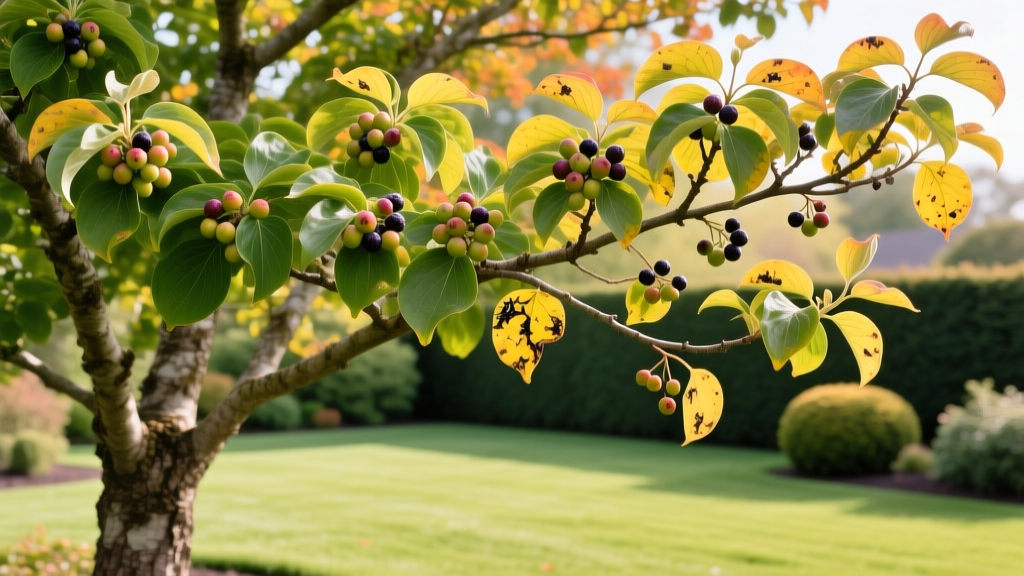
Dogwood Berries Not Forming? 5 Causes and Proven Solutions
Dogwood trees (Cornus spp.) are prized for their spring bracts, but the autumn display of dogwood berries is equally vital for local ecology and aesthetic appeal. When a mature dogwood fails to produce berries, or drops them prematurely in late summer, it signals an underlying physiological or environmental stressor. Diagnosing the exact failure point in the tree's reproductive cycle requires understanding the specific soil, pruning, and climatic requirements of Cornus species.
Diagnostic Matrix: Why Your Dogwood Berries Are Missing
Before applying fertilizers or altering your pruning schedule, identify the specific symptom your tree is exhibiting. Use this diagnostic matrix to pinpoint the root cause.
| Symptom | Probable Cause | Immediate Action Required |
|---|---|---|
| Tree blooms heavily in spring, but no berries form by autumn. | Pollinator failure or late spring frost damaging central florets. | Monitor spring temperatures; plant pollinator-friendly understory shrubs. |
| Berries form green but shrivel and drop in July/August. | Drought stress or Dogwood Anthracnose (Discula destructiva). | Apply 2 inches of water weekly; prune infected twigs; apply fungicide. |
| Tree produces lush green leaves but zero flowers or berries. | Excess nitrogen from lawn fertilizer; improper winter pruning. | Switch to 4-3-4 acid-loving fertilizer; cease winter pruning. |
| Berries form but remain hard and pale orange instead of bright red. | Soil pH above 7.0 locking out manganese and iron. | Test soil; apply elemental sulfur to lower pH to 5.5–6.5 range. |
The Anatomy of the Failure: Bracts vs. True Flowers
A common misconception among homeowners is that the large, showy white or pink 'petals' of a flowering dogwood are the actual flowers. They are not. Those are bracts (modified leaves). The true flowers are the tiny, green-yellow cluster in the very center of the bracts. Dogwood berries are drupes that develop exclusively from these central true flowers. If a late spring frost (temperatures dropping below 28°F) occurs after the bracts open but before the central florets are pollinated, the reproductive tissue is killed. The tree will drop the bracts and produce zero berries that year. There is no chemical fix for frost damage; the only solution is selecting late-blooming cultivars like Cornus kousa, which blooms 2-3 weeks after Cornus florida and avoids most late frosts.
Nutrient and pH Imbalances Halting Fruit Production
Dogwoods are understory trees that evolved in acidic, organically rich forest soils. They require a soil pH between 5.5 and 6.5. When soil pH climbs above 7.0, essential micronutrients become chemically locked in the soil. While this primarily manifests as interveinal chlorosis (yellowing leaves with green veins), severe nutrient deprivation forces the tree to abort energy-intensive processes like fruiting to survive.
The Nitrogen Trap
If your dogwood is planted in a lawn zone that receives regular synthetic turf fertilizers (typically high-nitrogen formulas like 32-0-4), the tree will absorb excess nitrogen. This triggers aggressive vegetative growth—resulting in a dense canopy of dark green leaves—at the direct expense of flower bud initiation and berry development. According to the Clemson University Home & Garden Information Center, dogwoods should never be fertilized with high-nitrogen lawn products.
⚠️ Warning: Lawn Fertilizer Runoff
If your dogwood's root flare is within 15 feet of a fertilized lawn, switch to a specialized acid-loving fertilizer. Use Espoma Holly-tone (4-3-4) or Jobe's Organics Azalea, Camellia & Rhododendron Fertilizer (4-5-4). Apply at a rate of 1 cup per inch of trunk diameter, scattering it evenly from the drip line inward, stopping 4 inches away from the trunk bark to prevent rot.
Pruning Mistakes That Remove Next Year's Berries
Dogwoods set their flower buds (which eventually become berries) in late summer and early fall for the following year's display. If you prune your dogwood in late fall, winter, or early spring, you are physically cutting off the next generation of berries. The University of Minnesota Extension advises that spring-blooming trees must be pruned immediately after they finish flowering. For dogwoods, this means pruning in late May or early June. Limit pruning strictly to the removal of dead wood, crossing branches, or water sprouts. Never shear a dogwood or top it, as this destroys the natural branching architecture required for even berry distribution.
Premature Berry Drop: Pests and Pathogens
If your tree successfully sets green berries in early summer but they shrivel and drop by August, environmental stress or pathogens are the likely culprits.
- Dogwood Anthracnose (Discula destructiva): This fungal disease causes tan leaf blotches with purple margins and severe twig dieback. As the canopy defoliates in mid-summer, the tree loses the photosynthetic capacity required to ripen fruit. Treat with a systemic fungicide containing propiconazole applied as a soil drench in early spring before bud break.
- Dogwood Borer (Synanthedon scitula): The larvae of this moth bore into the trunk and main scaffold branches, girdling the vascular tissue. This chokes off water and carbohydrate flow to the developing berries, causing them to abort. Look for sawdust-like frass near the root flare. Prevent borers by applying a permethrin-based trunk spray in May and June, and avoid damaging the trunk bark with string trimmers.
- Summer Drought Stress: Dogwoods have shallow, fibrous root systems. During July and August, they require 1 to 2 inches of water per week. Without it, the tree will initiate a survival response, dropping its fruit load to conserve water for the main trunk and primary roots.
Managing the Harvest: Toxicity and Cleanup Solutions
When dogwood berries do successfully ripen in October, they present a secondary set of challenges for homeowners: mess and toxicity concerns.
Are Dogwood Berries Poisonous?
The answer depends entirely on the species. It is critical to identify which dogwood you have before allowing pets or children to interact with the fallen fruit.
| Species | Berry Appearance | Toxicity Profile |
|---|---|---|
| Cornus florida (Flowering Dogwood) | Glossy, bright red, clustered in groups of 3-4. | Mildly Toxic. Contains calcium oxalate crystals. Ingestion by dogs or humans causes oral irritation, vomiting, and diarrhea. Highly attractive to birds (safe for avian digestion). |
| Cornus kousa (Kousa Dogwood) | Pinkish-red, bumpy, spherical, resembles a lychee or raspberry. | Edible. The inner flesh is sweet and safe for human consumption (tastes similar to a mango/persimmon cross). Rind is bitter and should be discarded. |
For authoritative botanical profiles and safety data, the NC State Extension Plant Database provides detailed breakdowns of Cornus species characteristics and wildlife interactions.
Efficient Cleanup Strategies
Fallen Cornus florida berries can stain concrete driveways and create a slippery, rotting mess on patios. Raking them from gravel or mulch beds is nearly impossible.
The Solution: Use a tow-behind or push lawn sweeper (such as the Agri-Fab 45-0543 44-Inch Lawn Sweeper) equipped with a high-velocity brush that lifts the small, round drupes out of the turf and mulch without damaging the grass roots. For hardscapes, a cordless outdoor vacuum like the Worx WG410 LeafJet in vacuum mode effectively sucks up the berries into a reusable mesh bag, preventing the red pigment from being ground into the concrete pores by foot traffic.
Pro Tip for Mess Reduction: If your dogwood is planted directly over a high-traffic patio and the berry drop is unacceptable, consider applying a 2-inch layer of dark hardwood mulch beneath the canopy in late September. The dark mulch masks the fallen red berries visually, and the berries will decompose naturally into the soil food web by early spring, eliminating the need for manual cleanup.

