
Tree Care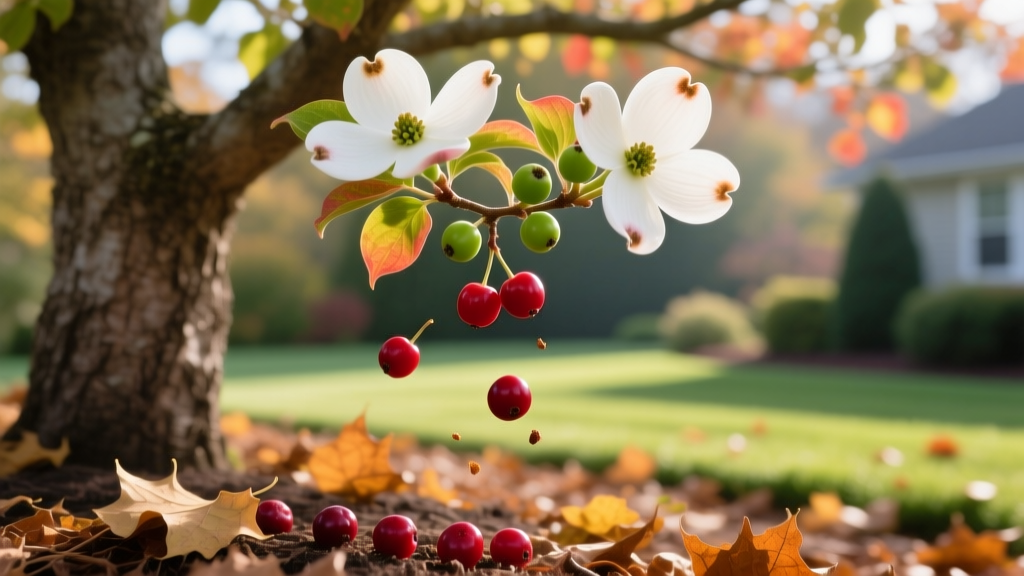
Troubleshooting Dogwood Tree Berries: Why They Drop or Fail to Form
Flowering dogwoods (Cornus florida) and Kousa dogwoods (Cornus kousa) are prized for their spring bracts, but their late-summer clusters of bright red drupes—commonly called dogwood tree berries—are equally vital to their ornamental value and local wildlife ecosystems. When these berries drop prematurely in mid-summer, shrivel on the branch, or fail to form entirely, it is rarely a cosmetic coincidence. It is a physiological distress signal.
Diagnosing fruit loss in dogwoods requires distinguishing between natural senescence and pathological abortive drop. This guide provides a clinical framework for identifying the exact cause of your dogwood tree berry issues and outlines precise, actionable treatments using current arboricultural standards.
The Diagnostic Framework: Why Dogwood Berries Fail
Before applying any treatments, you must categorize the failure mode. Dogwood berry issues generally fall into three distinct diagnostic buckets:
- Premature Abscission (Dropping Early): Berries form in June but fall to the ground green or partially colored between July and August.
- Failure to Form or Shriveling: Flower pollination occurs, but the fruiting spurs produce no drupes, or the drupes desiccate while still attached to the twig.
- Hardscape Staining (The Mess Factor): Berries form and drop normally in October, but the anthocyanin pigments severely stain concrete, stamped asphalt, or wooden decks.
Arborist Insight: Dogwoods have shallow, highly fibrous root systems that compete directly with turfgrass. If your dogwood is planted in a heavily fertilized, irrigated lawn, excess nitrogen will force the tree to prioritize vegetative leaf growth over reproductive berry production.
Problem 1: Premature Berry Drop (Summer Abscission)
If your dogwood tree berries are carpeting the lawn in July or August, the tree is actively aborting its fruit to preserve its vascular system. This is almost always triggered by one of two stressors: subterranean drought or cambial disruption by borers.
Cause A: Dogwood Borer (Synanthedon scitula)
The dogwood borer is a clearwing moth whose larvae tunnel into the trunk and major scaffold branches. By severing the phloem and xylem tissues, the larvae choke off the water and carbohydrate supply to the distal branches, causing the tree to drop its berries to conserve energy.
- Identification: Look for coarse, sawdust-like frass (excrement) and reddish-brown sap weeping from small holes at the trunk base or branch unions.
- Solution: Apply a systemic insecticide drench containing Imidacloprid (1.47% concentration). Products like Bayer Advanced 12 Month Tree & Shrub (approximately $22 for a 32oz bottle in 2026) are highly effective.
- Application Rate: Mix 1.5 ounces of concentrate per inch of trunk circumference. Apply as a soil drench in early April, before the adult moths emerge to lay eggs. The roots will translocate the chemical into the canopy, killing larvae before they can disrupt berry development.
Cause B: Deficit Irrigation and Drought Stress
Dogwoods require consistent soil moisture to swell and ripen drupes. When soil moisture drops below 20% capacity during the June-August fruiting window, the tree produces ethylene gas at the fruit pedicel (stem), triggering an abscission layer that drops the berry.
- Solution: Implement deep-root watering. A mature dogwood requires 10 gallons of water per inch of trunk diameter per week during the summer. Use a soaker hose coiled under the drip line, running it for 3-4 hours twice a week rather than using high-volume sprinklers that only wet the topsoil and promote shallow rooting.
Problem 2: Berries Failing to Form or Shriveling
When berries never materialize or turn into hard, brown husks on the branch, the issue is typically fungal or entomological interference at the micro-level of the fruiting spur.
Cause A: Powdery Mildew and Anthracnose
Fungal pathogens like Erysiphe pulchra (Powdery Mildew) and Discula destructiva (Anthracnose) coat developing fruit clusters in mycelium or cause necrotic twig dieback. This halts photosynthesis in the immediate vicinity of the berry cluster, starving the drupes of the sugars required to mature.
According to Clemson University's Home & Garden Information Center, managing these diseases requires a dual approach of canopy airflow and targeted fungicides. Prune out dead, crossing branches in late winter to increase UV penetration, which naturally inhibits fungal spore germination.
Fungicide Selection Matrix for Dogwood Fruit Protection
| Active Ingredient | Target Pathogen | Application Timing | Cost Estimate (2026) | Systemic Action |
|---|---|---|---|---|
| Propiconazole (14.3%) | Powdery Mildew, Anthracnose | At bud break & 14 days post-bloom | $28 - $35 / pint | Yes (Locally systemic) |
| Chlorothalonil | Anthracnose, Leaf Spot | Pre-bloom and early fruit set | $18 - $24 / quart | No (Contact only) |
| Myclobutanil (1.5%) | Powdery Mildew | When white mycelium is first visible | $15 - $20 / 16oz | Yes (Systemic) |
Cause B: Dogwood Club Gall Midge (Resseliella cornicula)
This tiny fly lays eggs in the terminal shoots in late spring. The larvae induce the formation of a distinct, 1-to-2-inch club-shaped swelling (gall) on the twig. If this gall forms on a fruiting spur, the vascular flow to the dogwood tree berries is severed, and they will shrivel and die.
- Solution: Insecticides cannot penetrate the protective gall tissue. The NC State Extension recommends mechanical removal. Prune the affected twig 3 to 4 inches below the gall in late summer before the larvae exit. Destroy the pruned material in sealed bags; do not compost it.
Problem 3: The Mess Factor and Hardscape Staining
Even a perfectly healthy dogwood will drop hundreds of berries in late October. The deep red anthocyanin pigments in the drupes act as a potent natural dye, permanently staining porous concrete, pavers, and wooden decking if left to decompose.
"Once anthocyanin pigments oxidize and bind with the calcium hydroxide in concrete, surface scrubbing is entirely ineffective. The stain becomes chemically locked into the pore structure." — Journal of Landscape Maintenance Standards
The Pre-Drop Sealing Protocol
To protect your hardscaping, you must alter the surface tension of the concrete before the berries fall. Do not use acrylic surface sealers, which create a slippery, plastic-like film that becomes a severe slip hazard when covered in wet, crushed berries.
The Solution: Apply a penetrating Silane-Siloxane water repellent (e.g., Foundation Armor SX5000 or equivalent, averaging $55-$65 per gallon in 2026).
- How it works: Siloxanes penetrate up to 1/4 inch into the concrete pores and react with free lime to form a hydrophobic resin matrix beneath the surface. This leaves the surface texture completely unchanged (no slip hazard) but prevents the berry juice from penetrating the pore structure.
- Application: Power wash the patio and allow 48 hours of drying time. Apply the sealer using a low-pressure pump sprayer in two wet-on-wet coats in mid-September, a full month before the anticipated October berry drop. When the berries fall, simply sweep them up or rinse with a garden hose; the pigment will not transfer.
Soil Chemistry: The Hidden Berry Blocker
If your tree is free of pests, adequately watered, and disease-free, yet still produces sparse or undersized berries, your soil chemistry is likely the limiting factor. Berry production is highly energy-intensive and requires specific nutrient ratios.
Soil Testing Targets for Optimal Fruiting:
• pH: 5.5 to 6.5. If pH exceeds 7.0, the tree cannot absorb iron or manganese, leading to chlorosis and poor fruit set. Apply elemental sulfur at 1 lb per 100 sq ft to lower pH by 0.5 points.
• Phosphorus (P): Essential for flower and fruit development. If a soil test shows low P, apply a granular 0-46-0 superphosphate at a rate of 1 lb per 100 sq ft in early spring.
• Potassium (K): Regulates water pressure inside the developing drupe, preventing mid-summer shriveling.
• pH: 5.5 to 6.5. If pH exceeds 7.0, the tree cannot absorb iron or manganese, leading to chlorosis and poor fruit set. Apply elemental sulfur at 1 lb per 100 sq ft to lower pH by 0.5 points.
• Phosphorus (P): Essential for flower and fruit development. If a soil test shows low P, apply a granular 0-46-0 superphosphate at a rate of 1 lb per 100 sq ft in early spring.
• Potassium (K): Regulates water pressure inside the developing drupe, preventing mid-summer shriveling.
Summary Action Plan for the Current Season
Managing dogwood tree berries requires a proactive, multi-season approach rather than reactive treatments once the fruit is already on the ground. Follow this timeline to ensure a vibrant, healthy berry display:
- April: Apply Imidacloprid soil drench for borer prevention. Conduct soil tests and amend pH if necessary.
- May (Post-Bloom): Apply the first round of Propiconazole if powdery mildew was an issue the previous year.
- June - August: Maintain strict deep-watering schedules (10 gallons per inch of trunk diameter weekly). Inspect twigs for club galls and prune immediately.
- September: Clean and seal hardscapes with a penetrating siloxane sealer to prevent October staining.
- October: Allow berries to mature fully for wildlife consumption, or sweep sealed patios to maintain a clean landscape aesthetic.
By addressing the specific vascular, fungal, and environmental stressors outlined above, you can transition your dogwood from a struggling specimen to a reliable producer of brilliant autumn drupes. For further reading on long-term dogwood cultivar selection and disease resistance, consult the University of Missouri Extension's comprehensive dogwood guide.

