
Tree Care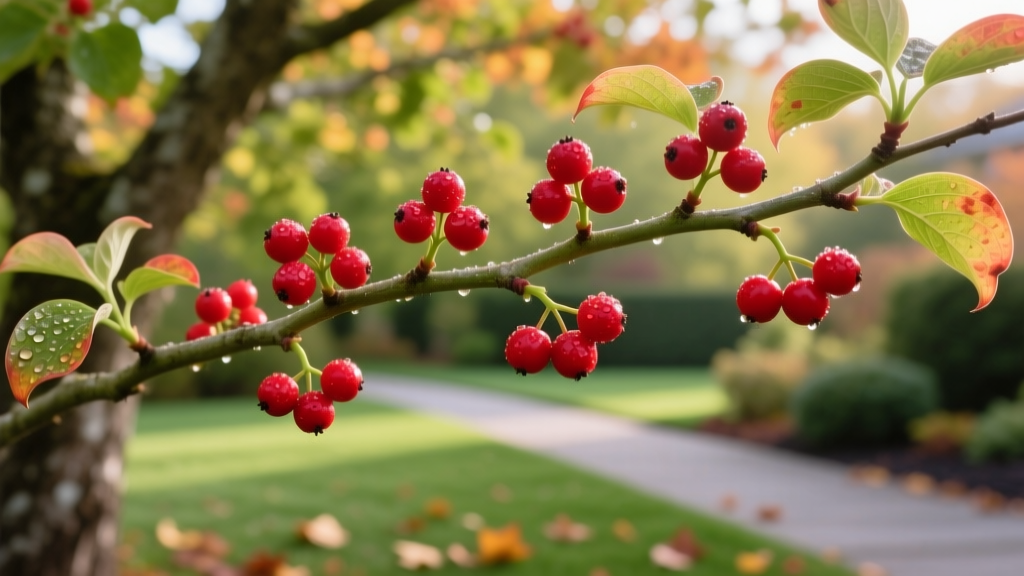
Is Dogwood Tree Fruit Edible? A Beginner's Identification Guide
The Botanical Truth About Dogwood Tree Fruit
Homeowners often refer to the bright red or pink clusters that appear on dogwood trees in autumn as berries. Botanically, however, dogwood tree fruit are drupes—fleshy fruits with a hard stone enclosing a single seed, similar to cherries or peaches. While they are a vital high-fat food source for over 36 species of migratory birds, their suitability for human consumption and their impact on your landscape depend entirely on the specific dogwood species planted in your yard.
For beginners navigating yard maintenance, understanding your tree's fruiting habits is critical. Some species drop slippery, staining drupes that ruin hardscapes, while others produce sweet, edible harvests. Misidentifying your tree can lead to unnecessary removal, missed culinary opportunities, or accidental ingestion of mildly toxic fruits.
⚠️ Quick Safety Warning: The fruit of the native Flowering Dogwood (Cornus florida) is not considered highly poisonous, but it contains compounds that cause severe gastrointestinal distress, vomiting, and diarrhea if ingested by humans or dogs. Never consume unidentified landscape fruit.
Species Comparison Matrix: What’s Growing in Your Yard?
Identifying your tree is the first step in managing its fruit. The three most common landscape dogwoods have vastly different fruit profiles. According to the Clemson Cooperative Extension, proper species identification dictates your autumn cleanup and pruning strategy.
| Species | Fruit Appearance | Human Edibility | Landscape Mess Factor |
|---|---|---|---|
| Flowering Dogwood (Cornus florida) |
Glossy, bright red, pea-sized drupes in tight clusters. | Toxic / Inedible. Bitter and causes GI upset. | High. Drops early, stains concrete, and becomes slippery. |
| Kousa Dogwood (Cornus kousa) |
Bumpy, raspberry-like, pink/red spheres (1 inch wide). | Edible. Sweet, mango-like flavor (discard gritty skin). | Moderate. Falls later in autumn, less staining but still messy. |
| Cornelian Cherry (Cornus mas) |
Oblong, cherry-red drupes resembling small olives. | Edible. Tart; excellent for jams, syrups, and preserves. | Low to Moderate. Often consumed by birds before hitting the ground. |
As noted by the NC State Extension Plant Toolbox, the Kousa dogwood is uniquely valuable for homeowners seeking dual-purpose ornamental and edible landscaping. The fruit ripens in late September to October and can be harvested when it yields slightly to gentle pressure and turns a deep, dusty pink.
Troubleshooting: Why Your Dogwood Skipped Fruit Production
A common complaint among beginner gardeners is a mature-looking dogwood that produces spectacular spring blooms but fails to set fruit in the autumn. Fruit failure is rarely a disease issue; it is almost always environmental or cultural.
1. Late Spring Frost Damage
Dogwoods bloom early. If a hard freeze (below 28°F) occurs after the bracts have opened but before pollination is complete, the microscopic ovary at the center of the flower will freeze and die. The tree will drop the damaged flowers, resulting in a zero-fruit autumn. There is no chemical fix for this; planting late-blooming cultivars like the Kousa dogwood (which blooms 2-3 weeks after the native Florida dogwood) is the best preventative strategy in frost-prone zones.
2. Light and Canopy Density
While dogwoods are marketed as understory trees, they require a minimum of 4 to 6 hours of direct or dappled sunlight to produce the energy necessary for fruit set. Trees planted in deep, heavy shade will survive and may even bloom sparsely, but they will abort fruit development to conserve carbohydrates.
3. Nutrient Imbalances and Soil pH
Dogwoods are highly sensitive to soil chemistry. They require an acidic soil pH between 5.5 and 6.5. If your soil pH creeps above 7.0, the tree cannot absorb iron and manganese, leading to chlorosis (yellowing leaves) and poor fruit set.
- Action Step: Test your soil using a local extension office kit. If pH is too high, apply elemental sulfur at a rate of 1 pound per 100 square feet to lower it by roughly 0.5 points.
- Fertilizer Specifics: Avoid high-nitrogen lawn fertilizers (like 24-0-6) near the root zone. Excess nitrogen promotes leafy growth at the expense of flowers and fruit. Use a slow-release, acidic fertilizer like Espoma Tree-tone (6-3-2 NPK) in early March, applying 3 pounds per inch of trunk diameter measured at chest height.
Managing the Autumn Drop: Hardscape Protection and Cleanup
If you have a Cornus florida planted near a driveway, patio, or pool deck, the autumn fruit drop is a significant maintenance headache. The red drupes contain anthocyanin pigments that act as a potent natural dye. When crushed underfoot or driven over, they leave rust-colored stains that penetrate porous concrete and natural stone.
Strategic Canopy Elevation
The most effective long-term solution is structural pruning to elevate the canopy. By removing the lowest scaffold branches, you direct the fruit drop into adjacent mulch beds rather than onto hardscapes.
- Wait until late winter (February) when the tree is fully dormant. Pruning in spring or summer invites the dogwood borer, a devastating pest that targets fresh wounds.
- Identify branches intersecting below the 6-foot mark.
- Make a clean cut just outside the branch collar (the swollen area where the branch meets the trunk). Never leave a stub, and never use wound sealant or pruning paint, which traps moisture and accelerates rot.
Stain Removal Protocol
If fruit stains your concrete, act within 48 hours. Do not use a high-pressure washer immediately, as the extreme PSI can drive the pigment deeper into the concrete pores. Instead, apply a solution of oxygen bleach (sodium percarbonate) mixed at 1 cup per gallon of warm water. Let it dwell for 15 minutes, scrub with a stiff-bristle deck brush, and rinse with a garden hose. If pressure washing is required, use a 40-degree white tip and keep the PSI under 1,500 to prevent etching the concrete surface.
Frequently Asked Questions
Are dogwood drupes toxic to dogs and cats?
While not lethal, the fruit of the native Flowering Dogwood is a known gastrointestinal irritant for canines. Ingestion typically results in vomiting, diarrhea, and lethargy. If your dog frequently forages under the tree, rake the lawn weekly during the October drop period or apply a 3-inch layer of pine bark mulch to obscure the fallen fruit.
How do I process Kousa dogwood fruit for eating?
Kousa fruit has a tough, gritty outer skin that is unpleasant to eat. The best method is to wash the fruit, slice it in half, and scoop out the soft, sweet, orange-tinted flesh with a spoon, discarding the skin and the hard internal seeds. The flesh can be eaten raw, blended into smoothies, or reduced into a tropical-flavored jam.
Why do the fruits on my tree look shriveled and black?
Shriveled, blackened fruit that remains attached to the tree is usually a sign of inadequate pollination or a sudden summer drought. Dogwoods have shallow root systems; without 1 to 1.5 inches of water per week during July and August, the tree will abort its fruit crop to preserve moisture for its vital cambium layers. Install a soaker hose around the drip line and water deeply once a week during dry spells.

