
Tree Care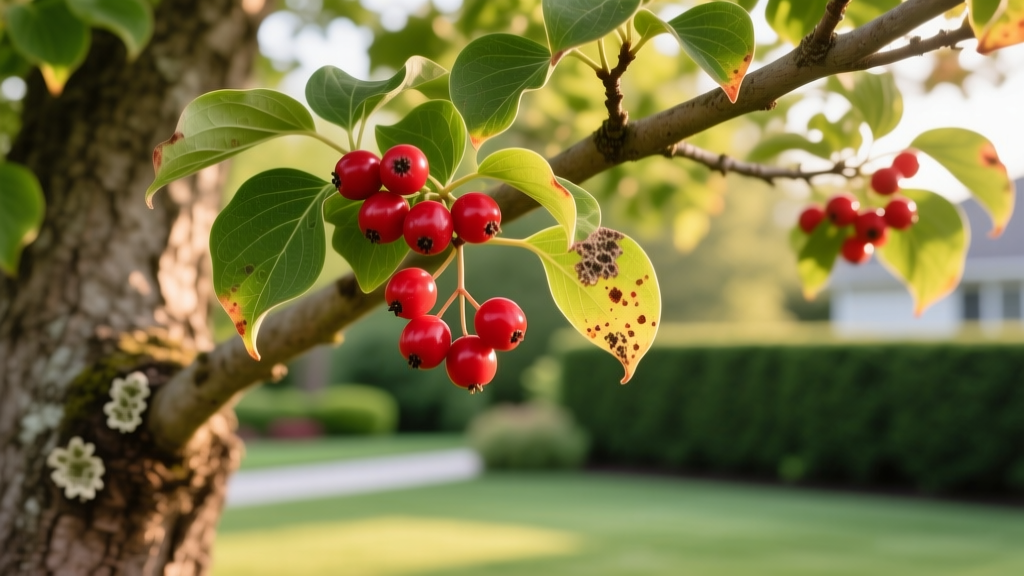
Dogwood With Berries: Diagnosing Early Drop and Fruit Diseases
Understanding the Fruiting Cycle of Dogwoods
While most homeowners plant dogwoods for their spectacular spring bracts, the late-summer and autumn fruiting stage is equally critical for the tree's biological cycle and local wildlife ecology. When a dogwood with berries begins to exhibit abnormalities—such as premature fruit drop, necrotic spotting, or failure to ripen—it is rarely an isolated issue. The berries (botanically classified as drupes) are highly sensitive indicators of the tree's overall vascular health, soil conditions, and pathogen exposure.
Before diagnosing a problem, establish your baseline species. The native flowering dogwood (Cornus florida) produces tight clusters of small, bright red drupes that ripen in early fall. In contrast, the Kousa dogwood (Cornus kousa) produces larger, compound pinkish-red drupes that resemble raspberries and ripen slightly later. Misidentifying the species often leads to incorrect assumptions about ripening timelines and normal color progression.
Symptom-to-Cause Diagnostic Matrix
Use the following diagnostic matrix to quickly identify the underlying stressor affecting your dogwood's fruit production. Match the visual symptoms on the berries and surrounding foliage to pinpoint the exact pathology or environmental deficit.
| Visual Symptom on Berries / Tree | Probable Cause | Immediate Diagnostic Action |
|---|---|---|
| Berries shrivel and drop while still green or pale pink | Severe drought stress or vascular girdling | Use a soil probe to check moisture at 6 inches; inspect lower trunk for borer frass |
| Tan, sunken spots with purple margins on fruit and leaves | Dogwood Anthracnose (Discula destructiva) | Examine lower canopy first; send leaf/fruit sample to local extension lab |
| Berries fail to ripen; canopy shows flagging (wilting branches) | Dogwood Borer (Synanthedon scitula) | Peel back loose bark near the soil line to look for sawdust-like frass and tunnels |
| Berries are undersized, hard, and drop prematurely | Soil pH imbalance (Alkalinity) or Phosphorus deficiency | Conduct a soil test; dogwoods require a pH of 5.5 to 6.5 for nutrient uptake |
| White, powdery coating on fruit stems (pedicels) and leaves | Powdery Mildew (Erysiphe pulchra) | Check for poor air circulation and excessive shade; treat with horticultural oil |
Deep Dive: Dogwood Anthracnose and Fruit Rot
Dogwood anthracnose, caused by the fungus Discula destructiva, is the most devastating foliar and fruit disease affecting Cornus florida. While often recognized by its leaf blight symptoms, the pathogen aggressively attacks the pedicels (the small stems attaching the berry to the branch). When the pedicels become necrotic, the tree cuts off nutrient flow to the fruit, resulting in a massive, premature drop of unripe berries.
Targeted Fungicide Protocols
If you confirm anthracnose, curative action must be swift. According to Penn State Extension, protective fungicides must be applied before the fungus sporulates heavily.
- Active Ingredients: Look for products containing chlorothalonil (e.g., Bonide Fung-onil, typically $15–$22 per pint) or propiconazole (e.g., Bayer Advanced Disease Control).
- Application Timing: Begin spraying at bud break in early spring. Continue applications every 10 to 14 days until the leaves are fully expanded and the summer canopy is established.
- Canopy Penetration: Anthracnose thrives in the cool, damp microclimate of the lower, inner canopy. Use a pump sprayer with a fine mist nozzle to ensure complete coverage of the underside of the leaves and the fruiting clusters.
⚠️ Critical Cleanup Protocol
The anthracnose fungus overwinters in fallen leaves, mummified berries, and dead twigs. Raking and destroying all fallen fruit and foliage by late November is non-negotiable. Do not compost infected dogwood material; the fungal spores can survive standard backyard composting temperatures and will reinfect the tree the following spring.
Vascular Disruption: The Dogwood Borer Threat
If your dogwood with berries is dropping fruit and simultaneously showing signs of branch dieback, suspect the dogwood borer (Synanthedon scitula). This clearwing moth lays eggs in bark crevices, and the resulting larvae tunnel into the phloem and cambium layers. Because the phloem is responsible for transporting carbohydrates from the leaves to the roots—and distributing water and minerals upward—severe borer damage literally starves the developing berries.
Identification and Eradication
Inspect the lower 24 inches of the trunk and the root flare. Look for small exit holes and accumulations of reddish-brown, sawdust-like frass. The University of Maryland Extension recommends treating the trunk with a permethrin-based insecticide (such as Martin's Permethrin 10%, costing roughly $25–$35 per quart) during the adult flight period, which typically peaks in May and June depending on your hardiness zone. Apply the spray directly to the trunk and major scaffold branches, avoiding the canopy to protect pollinators.
Abiotic Stressors: Hydration and Soil Chemistry
Dogwoods possess notoriously shallow, fibrous root systems that are highly susceptible to summer drought. When soil moisture drops below critical thresholds, the tree initiates a survival mechanism: it aborts its fruit to conserve water and carbohydrates for the main trunk and primary roots.
Precision Watering and Mulching
Overhead watering promotes fungal diseases on the berries and foliage. Instead, install a drip irrigation ring at the dripline of the tree. During the fruit development phase (July through September), the tree requires exactly 1.5 to 2 inches of water per week. Use a digital soil moisture meter (a $15 investment that pays for itself) to verify that the top 6 inches of soil remain consistently moist but not waterlogged.
Apply a 2- to 3-inch layer of aged pine bark mulch in a 3-foot radius around the trunk to retain moisture and regulate soil temperature. Crucial: Keep the mulch at least 3 inches away from the actual trunk bark to prevent rot and deter rodent damage, which can mimic borer symptoms.
Seasonal Treatment and Maintenance Calendar
Follow this structured timeline to ensure your dogwood produces healthy, vibrant berries year after year.
- Early Spring (March - April): Prune out any dead, diseased, or crossing branches to improve air circulation. Apply a slow-release, acid-forming fertilizer (like Espoma Holly-tone) if a soil test indicates low pH or nutrient deficiency.
- Bud Break (April - May): Initiate the first fungicide spray for anthracnose prevention. Monitor the trunk for early signs of borer activity.
- Early Summer (June): Apply permethrin trunk spray for borer prevention. Ensure drip irrigation is active and delivering 1.5 inches of water weekly.
- Fruit Set (July - August): Monitor berry clusters for powdery mildew or spotting. Maintain strict mulch depth and weed control around the root zone.
- Late Fall (November): Rake and dispose of all fallen leaves and dropped berries. Wrap young tree trunks with hardware cloth to prevent winter rodent girdling.
Frequently Asked Questions
Are the berries on my dogwood toxic to dogs?
The berries of both Cornus florida and Cornus kousa are generally considered non-toxic to dogs and cats. However, ingestion of large quantities of the drupes (and their hard internal seeds) can cause mild gastrointestinal upset, including vomiting or diarrhea, simply due to the physical irritation of the digestive tract. If your dog consumes a massive amount of fallen berries, monitor them for lethargy or stomach distress.
Why are birds ignoring my dogwood berries?
Birds, particularly migrating species like cedar waxwings and robins, rely on dogwood drupes for high-fat energy. If birds are ignoring your tree's berries, the fruit may lack sufficient lipid content due to poor soil nutrition, or the berries may be heavily infected with anthracnose, altering their taste and texture. Ensuring proper soil fertility and disease management will make the fruit more attractive to local wildlife.

