
Tree Care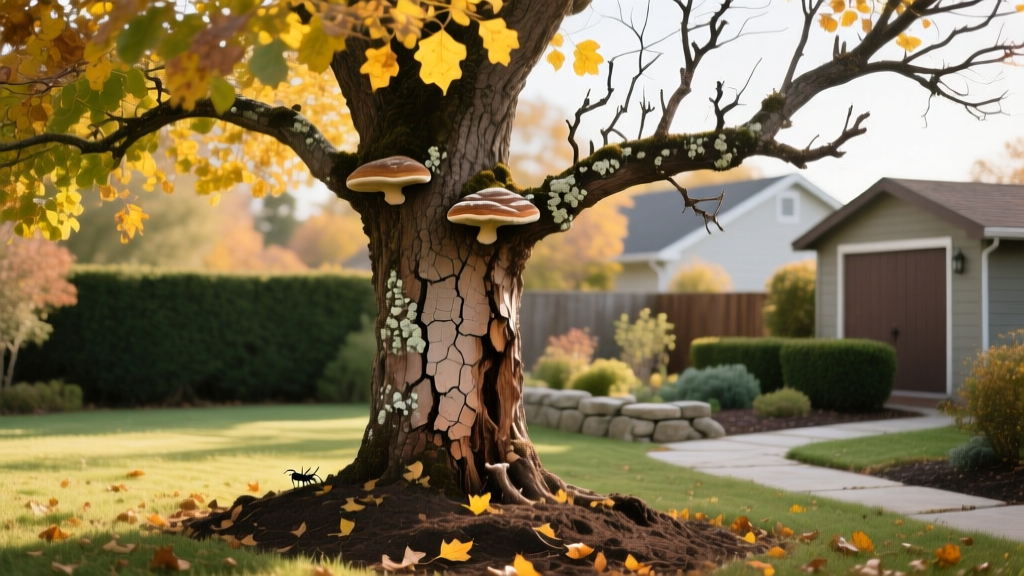
How Do You Know If a Tree Is Dying? 7 Symptoms & Rescue Fixes
When homeowners ask how do you know if a tree is dying, they are often reacting to late-summer leaf scorch, minor pest damage, or premature autumn coloration. However, true tree decline is rarely an overnight event. It is a systematic failure of the vascular system—specifically the xylem and phloem—that unfolds over months or years. Distinguishing between temporary environmental stress and fatal structural decline requires a methodical approach.
According to the Arbor Day Foundation, early intervention can save a declining tree, but only if the underlying cause is correctly identified. Misdiagnosing a dormant tree as dead, or treating a fatal root rot issue with surface fertilizer, wastes time and money. This guide provides a professional-grade diagnostic framework and actionable rescue protocols to evaluate and save your yard trees.
The 60-Second Scratch Test
Before conducting a full inspection, perform a cambium scratch test. Using a sterilized pocket knife or pruning shear, gently scrape away a thin sliver of the outer bark on a young twig and the main trunk.
- Green and moist: The cambium layer is active; the tree is alive and transporting nutrients.
- Brown and dry: The tissue is dead. If this is consistent across multiple branches and the trunk, the tree is in severe decline or dead.
The 3-Zone Diagnostic Framework
Certified arborists do not just look at the leaves. They evaluate the tree in three distinct zones to pinpoint the exact point of failure.
Zone 1: Canopy & Foliage Symptoms
The canopy is the tree's solar panel, and its condition reflects the health of the root system. Look for these specific indicators:
- Crown Dieback: Branches dying from the top down or the tips inward. This typically indicates root suffocation or vascular wilt diseases like Dutch Elm Disease.
- Epicormic Sprouting: Also known as 'water sprouts,' these are clusters of weak, fast-growing shoots emerging directly from the trunk or large limbs. This is a desperate survival response when the upper canopy is failing to produce enough energy.
- Microphyllia: Leaves that are significantly smaller than normal, pale green, or chlorotic (yellowing between the veins). This points to severe nutrient lockout or iron chlorosis in high-pH soils.
Zone 2: Trunk & Bark Indicators
The trunk houses the vascular highways. Damage here restricts the flow of water and carbohydrates.
- D-Shaped Exit Holes: Measuring roughly 1/8 inch across, these are the hallmark of the Emerald Ash Borer (EAB). If found on an ash tree, the tree is likely beyond saving without immediate, expensive systemic insecticide injections.
- Fungal Conks: Shelf-like mushrooms growing on the bark, such as Ganoderma applanatum (Artist's Conk). These indicate advanced internal heart rot. The structural integrity of the tree is compromised.
- Vertical Cracking & Bark Sloughing: While frost cracks can heal, deep vertical splits accompanied by loose, falling bark expose the tree to secondary pathogens and carpenter ants.
Zone 3: Root Collar & Soil Base
As Penn State Extension notes, up to 80% of urban tree problems originate in the soil and root zone. The root collar (where the trunk meets the soil) is the most critical area to inspect.
- The 'Telephone Pole' Effect: A healthy tree should have a visible root flare at the base, resembling an hourglass. If the trunk goes straight into the ground like a telephone pole, the tree is planted too deep or buried under mulch, leading to stem girdling roots and bark decay.
- Mushrooms at the Base: Clusters of honey-colored mushrooms (Armillaria mellea) at the soil line indicate aggressive root rot.
- Soil Compaction & Heaving: Hard, baked soil prevents oxygen from reaching the fine feeder roots, causing hypoxia and root death.
Decision Matrix: Save It or Remove It?
Not every dying tree can or should be saved. Use this matrix to determine the most economically and ecologically sound action.
| Symptom Profile | Canopy Loss | Trunk Integrity | Recommended Action |
|---|---|---|---|
| Minor leaf scorch, dry soil, no trunk damage | < 20% | Solid, intact bark | Save: Deep root watering & vertical mulching |
| Top-down dieback, girdling roots visible | 20% - 40% | Intact but buried flare | Save: AirSpade root collar excavation |
| Epicormic sprouting, D-shaped holes (EAB) | 40% - 60% | Bark sloughing off | Remove: Treatment cost exceeds tree value |
| Fungal conks on trunk, soil heaving | > 50% | Hollow sounding, conks | Remove Immediately: High risk of structural failure |
Proven Rescue Fixes for Declining Trees
If your tree falls into the 'Save' category, generic fertilizer will not fix the problem. You must address the specific physiological bottleneck.
Fix 1: Vertical Mulching for Compacted Soil
When soil is compacted, feeder roots suffocate. Vertical mulching creates columns of oxygen and organic matter directly in the root zone.
- Rent a 2-inch diameter soil auger (available at most equipment rental yards for ~$50/day).
- Drill holes 18 inches deep, starting 3 feet from the trunk and extending to the drip line (the outer edge of the canopy).
- Space the holes in a grid pattern, roughly 2 feet apart.
- Fill the holes with a mix of expanded shale, coarse sand, and premium compost. This permanently improves soil porosity and drainage.
Fix 2: Phosphite Injections for Root Rot
If your tree is suffering from Phytophthora root rot (common in poorly drained clay soils), standard fungicides will not work. You need a systemic phosphite treatment.
- Product: Agri-Fos (mono-potassium phosphite) or a generic 4.5% phosphorous acid equivalent.
- Application: For DIY trunk sprays, mix 1 to 2 ounces per gallon of water and spray the lower 4 feet of the trunk until runoff. For severe cases, hire an arborist for direct trunk micro-injections.
- Cost: ~$45 per quart for DIY; $150–$300 for professional injection.
Fix 3: Root Collar Excavation via AirSpade
If the root flare is buried, the tree is slowly strangling itself. Manual digging with a shovel will sever critical roots.
'Always hire an ISA Certified Arborist for root collar excavation. They use an AirSpade—a tool that blows compressed air at supersonic speeds to safely fracture compacted soil and expose girdling roots without damaging the delicate bark tissue.' — USDA Forest Service Urban Forestry Guidelines.
Expect to pay between $400 and $800 for a professional AirSpade excavation and root pruning service. While expensive, it is significantly cheaper than the $1,500+ cost of removing a mature, dead tree that falls on your roof.
Frequently Asked Questions
Can a dead tree come back to life?
No. Once the cambium layer is entirely brown and dry, and the buds are brittle and snap easily, the tree is dead. However, a tree that has lost its leaves due to severe drought or transplant shock may appear dead but is actually dormant. Always rely on the scratch test and wait until the following spring to confirm if new buds emerge.
Should I water a dying tree every day?
Absolutely not. Overwatering is a leading cause of tree decline. Soggy soil displaces oxygen, promoting root rot. Instead, use a soaker hose to deliver a slow, deep watering once a week. Aim for 10 gallons of water per inch of trunk diameter, applied at the drip line, not directly against the trunk.
How much does an arborist consultation cost?
An on-site diagnostic consultation with an ISA Certified Arborist typically costs between $100 and $250. Many reputable tree care companies will waive this fee if you proceed with the recommended treatment or removal services, but an independent consulting arborist (who does not perform the physical work) will charge a flat diagnostic fee to provide an unbiased assessment.

