Tree Care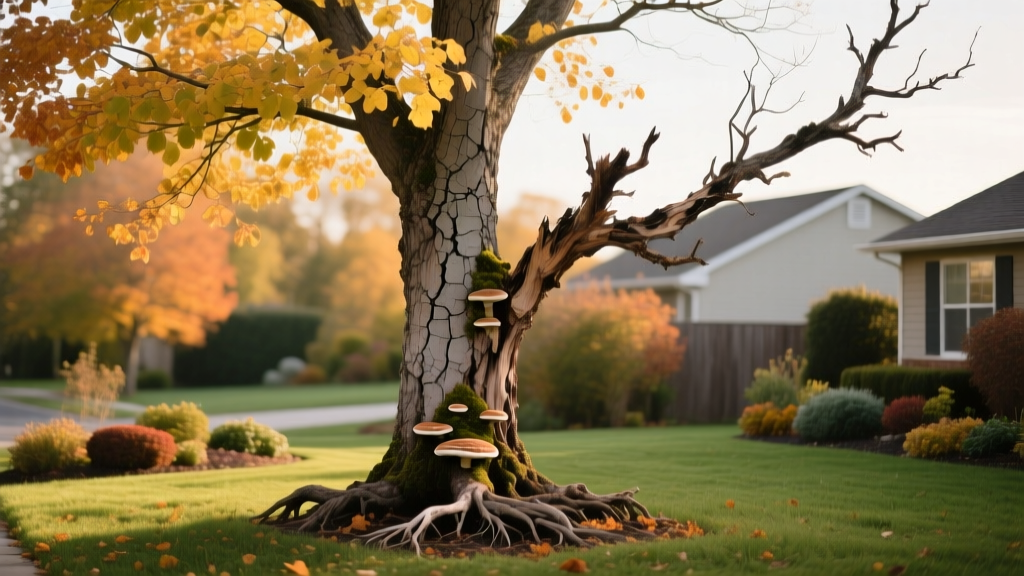
Identify Signs a Tree Is Dying: Diagnosis and Rescue Fixes
The Reality of Tree Decline: Act Before It Is Too Late
Trees rarely die overnight. By the time visible signs a tree is dying manifest in the canopy, the underlying biological failure has often been progressing for months or even years. Vascular diseases, root asphyxiation, and boring insects systematically dismantle a tree's ability to transport water and nutrients. Diagnosing the exact point of failure requires moving beyond surface-level observations and understanding the physiological mechanics of tree decline. This guide provides a clinical framework for diagnosing tree distress and outlines specific, cost-effective rescue interventions before structural failure becomes inevitable.
⚠️ The 50% Rule for Tree Removal
Before investing in expensive treatments, apply the 50% rule endorsed by the USDA Forest Service. If more than 50% of the root system is compromised (evidenced by severe heaving or fungal conks) or if over 50% of the canopy is dead, the tree is past the point of rescue. At this stage, the structural integrity of the wood is compromised, and immediate removal by a certified arborist is the only safe option to prevent property damage.
Before investing in expensive treatments, apply the 50% rule endorsed by the USDA Forest Service. If more than 50% of the root system is compromised (evidenced by severe heaving or fungal conks) or if over 50% of the canopy is dead, the tree is past the point of rescue. At this stage, the structural integrity of the wood is compromised, and immediate removal by a certified arborist is the only safe option to prevent property damage.
Canopy and Foliage Diagnostics
The canopy is the most visible indicator of tree health, but symptoms here are often secondary to root or trunk issues. Differentiate between seasonal stress and systemic failure using these specific markers.
Crown Dieback and Epicormic Sprouting
Dieback begins at the outermost tips of the upper branches and progresses inward. This indicates a failure in the xylem tissue to push water to the highest extremities. If you notice 'water sprouts' or epicormic shoots (clusters of small, weakly attached leaves) erupting directly from the trunk or large lower branches, the tree is in survival mode. It is attempting to generate new photosynthetic tissue because the primary canopy is failing. This is a common sign of severe root girdling or advanced Verticillium wilt.
Off-Season Discoloration and Microphyllia
Leaves that are significantly smaller than normal (microphyllia) or exhibit premature autumn coloration in mid-summer indicate a severe carbohydrate deficit. The tree is aborting its foliage early to conserve energy. Look for marginal leaf scorch (browning at the edges), which specifically points to moisture stress, either from drought or a compromised root system unable to uptake available soil moisture.
Trunk and Bark: The Vascular Highway
The trunk houses the phloem (inner bark, moving sugars down) and xylem (outer wood, moving water up). Damage here is often fatal. According to diagnostic protocols from the University of Minnesota Extension, bark anomalies are primary indicators of vascular pathogens and boring insects.
The Cambium Scratch Test
To determine if a seemingly dead branch or trunk section is still alive, perform a scratch test. Use a sterilized pocket knife to gently scrape away a thin layer of the outer bark on a twig or branch less than 1 inch in diameter.
- Green and Moist: The cambium layer is active; the tissue is alive.
- Yellowish or Pale Green: The tree is stressed and dormant, but viable.
- Brown and Brittle: The cambium is dead. If this extends to the main trunk, the tree cannot be saved.
Bark Symptom Matrix
| Bark Symptom | Probable Cause / Pathogen | Urgency Level |
|---|---|---|
| D-shaped exit holes (1/8 inch) | Emerald Ash Borer (EAB) | Critical |
| Dark, weeping cankers with sour odor | Bacterial Wetwood (Slime Flux) | Moderate |
| Penny-sized holes with red/brown frass | Southern Pine Beetle / Bark Beetles | Critical |
| Vertical cracks with missing bark plates | Frost cracking or internal decay | Moderate to High |
Root Zone Indicators: The Hidden Failure Point
Over 80% of a tree's structural and absorptive root mass resides in the top 12 to 18 inches of soil. Compaction, grade changes, and fungal pathogens in this zone are the leading causes of urban tree mortality.
Fungal Conks and Basal Rot
The presence of mushrooms or shelf-like fungal conks (such as Ganoderma or Armillaria) growing directly from the root flare or lower trunk is an absolute indicator of advanced internal heart rot. The fungus is fruiting only after it has consumed a significant portion of the structural lignin. There is no chemical cure for basal rot; the tree must be evaluated for removal due to fall risk.
Soil Heaving and Root Girdling
If the soil at the base of the tree is heaving upward, or if the trunk goes straight into the ground like a telephone pole without a visible root flare, the tree likely suffers from girdling roots or deep planting. Girdling roots strangle the phloem, slowly choking the tree over 5 to 10 years.
💡 Pro Tip: The AirSpade Solution
Do not use steel shovels to investigate root flares, as cutting live roots invites pathogens. Professional arborists use an AirSpade—a pneumatic tool that uses compressed air at 1,200 PSI to excavate soil without damaging delicate root bark. This is the only safe method to expose and sever girdling roots.
Do not use steel shovels to investigate root flares, as cutting live roots invites pathogens. Professional arborists use an AirSpade—a pneumatic tool that uses compressed air at 1,200 PSI to excavate soil without damaging delicate root bark. This is the only safe method to expose and sever girdling roots.
Actionable Rescue Fixes and 2026 Treatment Costs
If your tree passes the 50% rule and the cambium is still viable, implement these targeted rescue fixes. Costs below reflect current 2026 national averages for professional arborist services, calculated based on Diameter at Breast Height (DBH).
| Intervention | Target Problem | Estimated Cost | Success Rate |
|---|---|---|---|
| Root Collar Excavation (AirSpade) | Girdling roots, deep planting | $350 - $650 per tree | High (if caught early) |
| Trunk Injection (Emamectin benzoate) | Emerald Ash Borer (EAB) | $15 - $25 per inch DBH | 95%+ (2-year protection) |
| Systemic Fungicide (Propiconazole) | Oak Wilt, Dutch Elm Disease | $18 - $30 per inch DBH | Moderate (preventative best) |
| Deep Root Aeration & Fertilization | Soil compaction, nutrient deficit | $8 - $14 per inch DBH | High for abiotic stress |
Step-by-Step: Executing a Deep Root Treatment
If soil compaction is suffocating your tree, surface fertilization is useless. Nutrients must be delivered directly to the absorptive root zone.
- Step 1: Map the critical root zone (CRZ), which extends 1 to 1.5 feet outward from the trunk for every inch of DBH.
- Step 2: Using a soil probe or high-pressure liquid injection wand, penetrate the soil to a depth of 6 to 10 inches. Do not go deeper, as oxygen levels drop significantly below 12 inches.
- Step 3: Inject a liquid suspension containing a balanced NPK ratio (e.g., 16-4-8) mixed with humic acids to improve soil cation exchange capacity (CEC).
- Step 4: Apply a 2-to-3-inch layer of coarse arborist wood chips over the CRZ to retain moisture and regulate soil temperature, keeping the mulch strictly 3 inches away from the trunk bark to prevent rot.
Frequently Asked Questions
Can a tree with completely brown leaves recover if I water it heavily?
No. If the leaves are entirely brown and brittle, the vascular tissue connecting them to the branch has already severed. Heavy watering at this stage will only waterlog the soil, deplete remaining oxygen in the root zone, and accelerate root rot. Perform the cambium scratch test on the twigs; if the inner bark is brown, that section of the tree is dead.
How long does it take for a systemic insecticide to save an ash tree from EAB?
Trunk-injected Emamectin benzoate typically takes 14 to 21 days to fully translocate through the xylem to the canopy. It must be applied in early spring (May) before the adult beetles emerge and begin feeding on the leaf margins. If the canopy is already more than 30% thinned, chemical rescue is generally not recommended.
Is it safe to prune dead branches off a dying tree myself?
Deadwood removal (crown cleaning) reduces the weight on compromised limbs and removes habitats for secondary pests. However, if the tree is showing signs of structural failure or the dead branches are larger than 4 inches in diameter, the risk of dropping heavy, brittle wood on yourself or your property is severe. Always hire an ISA Certified Arborist for deadwooding on mature, declining trees.