
Tree Care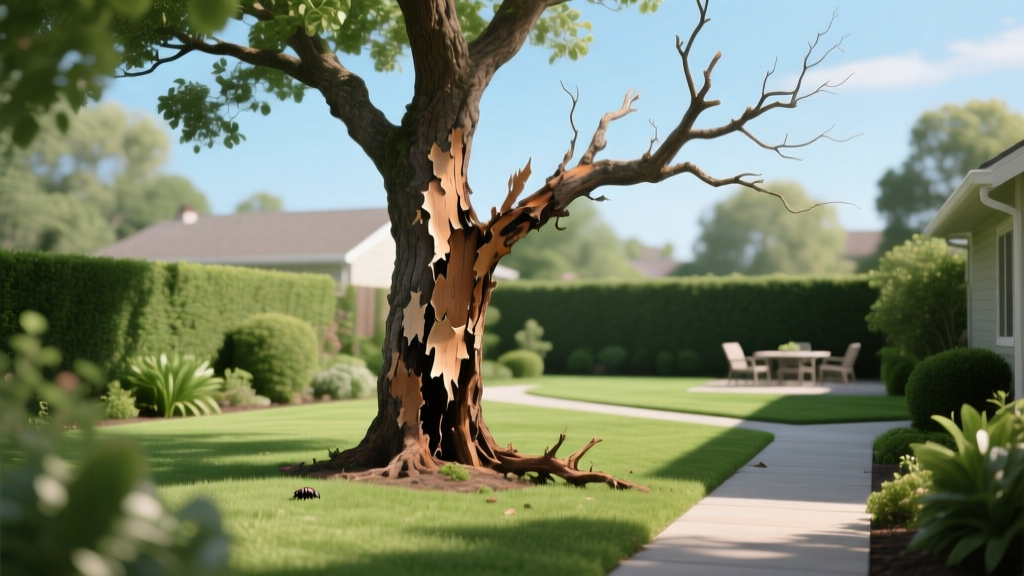
Emergency Tree Removal Worley Crossroads: Pest Damage Playbook
The Pest-to-Collapse Pipeline in Worley Crossroads
When a tree dies naturally over a decade, it loses structural integrity slowly. When a tree is attacked by aggressive wood-boring insects or root-rot pathogens, it can become a severe hazard in a single season. In the Worley Crossroads area, the intersection of humid microclimates, mature timber, and invasive flora creates a perfect storm for rapid structural degradation. Homeowners often misinterpret the early signs of pest damage as mere cosmetic issues, only to face a catastrophic failure during high-wind events.
Emergency tree removal in Worley Crossroads is rarely just about clearing a fallen trunk; it is a complex extraction operation dictated by the specific biology of the pest that killed the tree. Understanding this pest-to-collapse pipeline is the first step in our removal playbook.
WARNING: The Hidden Weight of Invasive Vines
Invasive weeds like Kudzu, English Ivy, and Wintercreeper do not just choke the root zone. When they scale a pest-weakened tree, they add hundreds of pounds of dead weight and create a massive 'wind-sail' effect. A tree that has lost 30% of its internal vascular tissue to borers can easily snap at the trunk when burdened by a wet, vine-heavy canopy.
Primary Threat Vectors Requiring Immediate Extraction
- Emerald Ash Borer (EAB): This invasive beetle severs the nutrient and water pathways (cambium) of ash trees. As the tree starves, the wood rapidly desiccates, becoming incredibly brittle. Climbing an EAB-killed ash is lethal; branches can snap under an arborist's weight without warning. According to USDA APHIS Emerald Ash Borer guidelines, once canopy dieback exceeds 30%, the tree is a structural liability and must be removed via crane or bucket truck.
- Southern Pine Beetle (SPB): SPB colonies girdle loblolly and shortleaf pines, introducing blue-stain fungi that block water transport. The U.S. Forest Service Southern Pine Beetle data indicates that heavily infested pines can experience sudden root-plate failure, uprooting entirely during moderate thunderstorms.
- Armillaria Root Rot (Oak Root Fungus): Often exacerbated by drought stress and competing invasive weeds, Armillaria mellea decays the structural anchor roots. The tree may look green in the crown while the base is entirely hollowed out, leading to sudden, unpredictable uprooting.
Decision Matrix: Treat vs. Emergency Removal
Not every pest-damaged tree requires a chainsaw. However, delaying removal when a tree crosses the structural threshold exponentially increases the cost and danger of the extraction. Use this matrix to determine if your tree requires immediate emergency removal or if targeted chemical intervention is viable.
| Pest / Pathogen | Time to Structural Failure | Treatment Viability | Emergency Removal Trigger |
|---|---|---|---|
| Emerald Ash Borer | 12 - 24 Months | High (if <30% dieback) | Canopy dieback >30%, bark peeling, D-shaped exit holes |
| Southern Pine Beetle | 2 - 6 Months | Low (preventative only) | Red/brown crowns, popcorn-shaped pitch tubes, sawdust at base |
| Armillaria Root Rot | 1 - 5 Years | None (management only) | Mushroom clusters at base, soil heaving, leaning trunk |
| Invasive Vine Load | Immediate (during wind) | Moderate (vine cutting) | Vines cover >50% of canopy on a previously stressed tree |
Step-by-Step Emergency Extraction Protocol
Extracting a pest-compromised tree is fundamentally different from removing a healthy one. The wood is unpredictable, the rigging points are weak, and the risk of spreading the infestation to neighboring properties is high. Professional arborists follow a strict playbook to mitigate these risks.
Phase 1: Aerial Assessment and Rigging Strategy
Because EAB-infested ash and SPB-killed pine lose their tensile strength, traditional spike-climbing is strictly prohibited. The arborist must utilize a bucket truck or a mobile crane (typically a 40-ton capacity crane for residential Worley Crossroads lots). Rigging lines are set using friction-reducing pulleys to prevent shock-loading the brittle trunk, which could cause the tree to shatter mid-cut.
Phase 2: Sectional Dismantling and Containment
As highlighted by NC State Extension EAB control protocols, moving infested firewood is a primary vector for spreading invasive borers. Therefore, the extraction process includes immediate on-site containment:
- Chipping Specifications: All brush and branches under 4 inches in diameter are fed through a commercial drum chipper calibrated to a maximum 1-inch screen. This specific measurement ensures that any EAB or SPB larvae residing in the cambium are mechanically destroyed.
- Tarping and Solarization: Larger logs that cannot be chipped are immediately loaded onto a flatbed truck and secured under heavy-duty, UV-resistant tarps. If the wood is to be kept for firewood, it must be solarized (covered in clear plastic in direct sunlight) for a minimum of 6 weeks to reach the 140°F internal temperature required to kill deep-boring larvae.
- Stump Grinding and Root Zone Treatment: The stump is ground 12 inches below grade. For Armillaria-infected sites, the remaining wood chips are removed entirely rather than left in the soil, as the fungus can survive on buried wood debris for decades.
2026 Cost Breakdown for Emergency Extraction
Emergency tree removal commands a premium due to the immediate mobilization of heavy equipment and the heightened risk profile. Below is the current pricing matrix for the Worley Crossroads region, reflecting 2026 equipment and labor rates.
| Service Component | Standard Healthy Tree | Pest-Compromised Emergency | Cost Driver |
|---|---|---|---|
| Base Extraction (up to 60ft) | $850 - $1,400 | $1,800 - $2,800 | Bucket truck / Crane mobilization |
| Heavy Crane Assist (60ft+) | $1,500 - $2,500 | $3,200 - $4,800 | 40-ton crane hourly rate & rigging |
| Pest Containment Surcharge | $0 | $250 - $600 | Fine-mesh chipping, log tarping, transport |
| Deep Stump Grinding (12in+) | $150 - $300 | $350 - $550 | Debris removal to prevent fungal spread |
Post-Removal Soil and Weed Remediation
The removal of the tree is only half the playbook. Trees weakened by pests are often surrounded by aggressive, opportunistic weeds that capitalized on the dying canopy's increased sunlight penetration. If left untreated, these weeds will decimate any new plantings and harbor secondary pests.
Targeted Herbicide Application
Before replanting, the root zone must be cleared of invasive vines like English Ivy and Kudzu. A foliar application of Triclopyr (ester formulation) at a 2% solution rate is highly effective against broadleaf vines without leaving long-term soil residuals that would harm future trees. For severe brush encroachment, Imazapyr can be used as a spot treatment, but it requires a 6-month waiting period before replanting susceptible species due to its soil activity.
Soil Inoculation and Replanting
Pest-damaged trees leave behind soil depleted of specific nutrients and potentially laden with pathogenic fungi. To remediate the site:
- Remove all remaining wood chips from the Armillaria or SPB extraction site.
- Amend the soil with a 3-inch layer of composted pine bark, which naturally suppresses certain soil-borne pathogens through competitive exclusion.
- Inoculate the replanting zone with Trichoderma harzianum, a beneficial fungus that colonizes root systems and protects new plantings from root-rot pathogens.
- Select resistant species. If EAB destroyed your ash, replant with native alternatives like the Swamp White Oak or Lacebark Elm, which are immune to the borer and provide excellent canopy structure.
Pro Tip: Document the Extraction
Always request a detailed pest-damage report and photographic evidence from your arborist after an emergency removal. Many homeowner's insurance policies in the Worley Crossroads area will cover the cost of emergency crane extraction if the tree fell on a structure, but they may also cover preventative removal if a certified arborist documents imminent failure caused by a recognized invasive pest like the Southern Pine Beetle.

