
Tree Care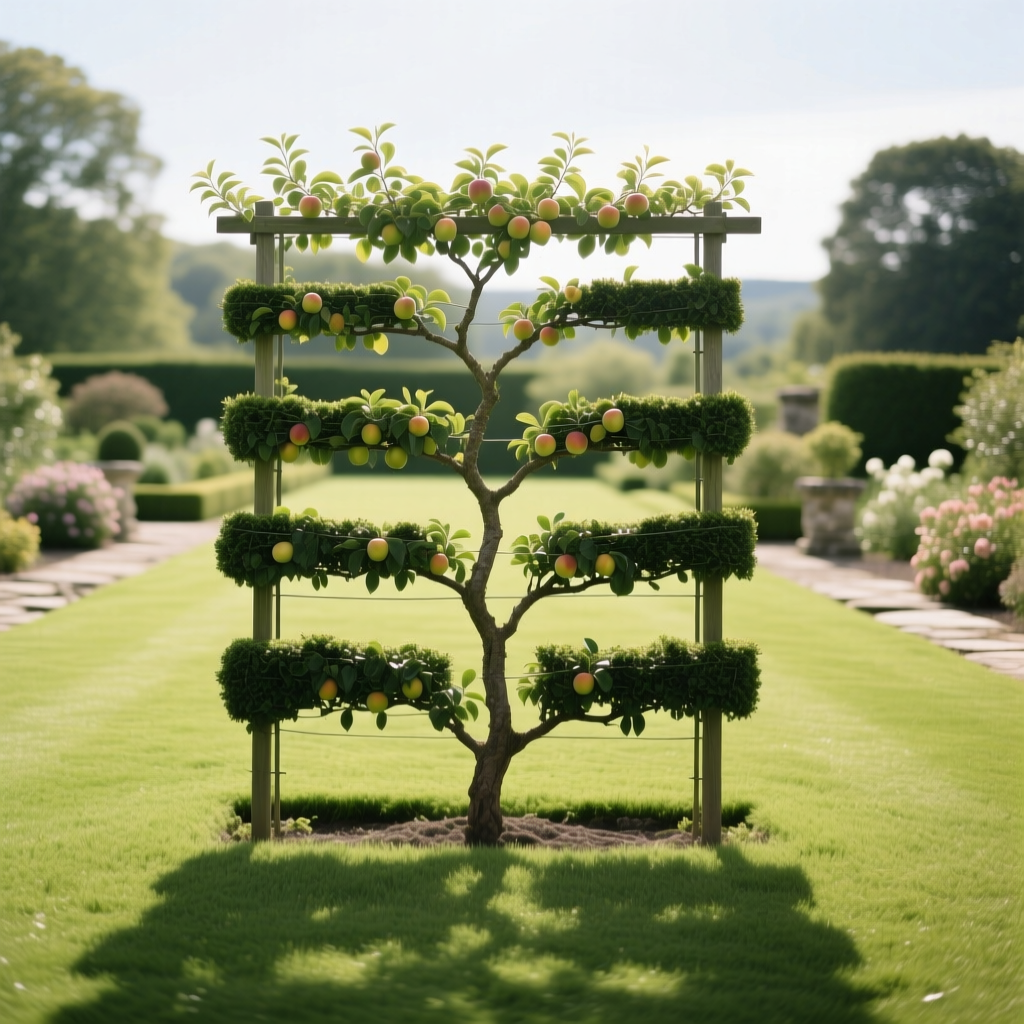
Mastering Espalier Training Techniques for Fruit & Ornamental Trees
Sarah ChenPublished
The ancient art of espalier is a horticultural practice that beautifully merges botanical science with landscape architecture. By carefully pruning and tying branches to a flat plane, gardeners can transform standard fruit and ornamental trees into stunning, two-dimensional living sculptures. Whether you are looking to maximize fruit production in a small urban courtyard, create a living fence along a property line, or simply add a touch of classical elegance to your garden, mastering espalier training techniques is a highly rewarding endeavor.
Historically utilized by European monks to grow fruit in cold climates by training trees against sun-warmed stone walls, espalier has evolved into a premier landscaping technique. Today, it is celebrated not only for its space-saving benefits but also for the improved air circulation and sunlight exposure it provides, which often leads to healthier trees and superior fruit quality. In this comprehensive guide, we will explore the best trees for espalier, essential training designs, precise pruning methods, and the seasonal care required to maintain these botanical masterpieces. For more general advice on maintaining your landscape, be sure to explore our extensive tree care guides and landscaping ideas.
Selecting the Best Trees for Espalier
Not every tree species is naturally suited for the rigorous demands of espalier training. The ideal candidates possess flexible branches, a willingness to produce lateral growth, and the ability to withstand heavy pruning. When selecting trees, you must also consider whether your primary goal is fruit production or ornamental beauty.
Top Fruit Trees for Espalier
Fruit trees are the most traditional choice for espalier, as the technique was originally perfected to enhance fruit ripening in marginal climates. Apples and pears are widely considered the gold standard due to their pliable branches and long-lived spur systems. When choosing apples or pears, pay close attention to the rootstock. Dwarfing rootstocks (such as M9 for apples or Quince C for pears) are highly recommended because they naturally restrict the tree's overall vigor, making it much easier to maintain the desired flat shape without constant, aggressive pruning.
- Apples & Pears: Excellent for horizontal cordons and fan shapes. They produce fruit on long-lived spurs, making them forgiving for beginners.
- Citrus: Lemons, oranges, and kumquats thrive when espaliered against warm, south-facing walls in milder climates. They offer evergreen foliage and fragrant blossoms.
- Figs & Peaches: While slightly more challenging due to their vigorous growth and different fruiting habits, they can be trained into beautiful fan shapes in warmer regions.
Top Ornamental Trees for Espalier
If your goal is purely aesthetic, ornamental trees provide breathtaking seasonal displays of flowers, foliage, and bark. Evergreen ornamentals are particularly useful for creating year-round privacy screens or living walls.
- Camellias: With their glossy evergreen leaves and spectacular winter or spring blooms, camellias are exceptional for fan or informal espalier designs.
- Magnolias: Star and saucer magnolias can be trained against walls, offering a spectacular spring floral display, though their brittle wood requires gentle, patient handling.
- Japanese Maples: Selected weeping or upright cultivars can be espaliered to highlight their intricate branching and brilliant autumn foliage.
Essential Espalier Training Techniques & Designs
Before planting, you must decide on a design and construct a robust support system. Trees trained against walls or fences still require a dedicated trellis to prevent moisture buildup against the structure and to allow for proper air circulation.
Building the Trellis Framework
A sturdy trellis is the backbone of any successful espalier. Avoid relying solely on nails driven into a wooden fence, as these can damage the tree and restrict sap flow. Instead, use galvanized steel wire (12 to 14 gauge) stretched horizontally between sturdy posts or wall anchors. Install the first wire approximately 15 to 18 inches above the ground, with subsequent tiers spaced 12 to 18 inches apart. Use turnbuckles to keep the wires taut, and employ wooden spacers to hold the wire 2 to 4 inches away from the wall or fence. This gap is critical for preventing fungal diseases and allowing room for the branches to thicken over time.
Classic Espalier Patterns
- Horizontal Cordon: The most common and practical design for fruit production. A central vertical trunk is established, and lateral branches are trained horizontally along the wires. This can be a single-tier, double-tier, or multi-tier cordon.
- Fan: Ideal for stone fruits (like peaches and plums) or ornamentals that do not produce well on strict horizontal spurs. The trunk is kept very short, and multiple main branches radiate outward and upward in a fan shape.
- Candelabra: A highly formal, ornamental design where horizontal branches are turned upward at right angles at regular intervals, resembling the branches of a candelabra.
- Belgian Fence (V-Trellis): Multiple trees are planted in a row, and their branches are crossed and grafted or tied together to form a continuous, interwoven diamond or V-pattern lattice.
Pruning & Maintenance Requirements
Pruning is the most critical and ongoing aspect of espalier training. It requires an understanding of apical dominance—the tendency of a tree to direct its growth hormones to the highest, most vertical bud. By manipulating branch angles and strategically removing buds, you can force the tree to grow exactly where you want it.
Initial Training & Tying
When you first plant a young tree (often called a "whip"), you will cut it back to the desired height of the first tier to encourage lateral branching. Once the lateral shoots emerge, select the strongest, most well-placed branches and gently tie them to the trellis wires. Always use soft, flexible tying materials such as broad velcro plant tape, soft cotton twine, or specialized rubber ties. Never use thin wire or nylon string, as these will quickly girdle and cut into the expanding bark, severely damaging the tree's vascular system. As the branch grows, you must periodically loosen and replace the ties to accommodate the thickening wood.
Summer vs. Winter Pruning
To maintain the crisp, defined lines of an espalier, you must utilize both summer and winter pruning techniques. For a deeper understanding of seasonal cuts, review our pruning basics guide.
- Summer Pruning: This is primarily about controlling vigor and maintaining the silhouette. Throughout the growing season, cut back new, unwanted vertical shoots (water sprouts) to two or three leaves. This restricts excessive leafy growth, allows sunlight to reach the developing fruit or inner wood, and encourages the formation of fruiting spurs for the following year.
- Winter Pruning: Conducted while the tree is fully dormant, winter pruning focuses on the structural framework. This is the time to extend the horizontal leaders by cutting them back by about a third to a strong, outward-facing bud, which will drive the next season's lateral growth. It is also the time to remove any dead, diseased, or crossing branches.
Watering, Feeding, & Soil Care
Because espaliered trees are often planted in confined spaces, near foundations, or under the eaves of roofs, they may not receive adequate natural rainfall. Furthermore, the restricted root zone of a dwarfing rootstock requires meticulous soil management to ensure the tree remains healthy and productive.
Irrigation Strategies
Consistent moisture is vital, especially during the first three years of establishment and during the fruit-setting period. Drip irrigation is the most efficient method for espaliered trees. Run a drip line along the base of the trellis, ensuring the emitters are placed evenly to moisten the entire root zone. Avoid overhead watering, as wetting the foliage—especially when the leaves are pressed against a wall—creates a prime environment for fungal pathogens.
Nutrition & Mulching
Especially for fruiting cordons, a balanced nutrient profile is essential. Apply a slow-release, balanced organic fertilizer in early spring just as the buds begin to swell. Avoid high-nitrogen fertilizers in late summer, as this will promote soft, sappy late-season growth that is highly susceptible to winter frost damage and pest infestations. To retain moisture and regulate soil temperature, apply a 2-to-3-inch layer of organic mulch around the base of the tree, keeping it a few inches away from the trunk to prevent rot. For more tips on maintaining optimal soil biology, check out our resources on soil health and amendment.
Disease & Pest Management
While the open structure of an espalier generally promotes excellent airflow and reduces disease pressure compared to a dense, unpruned canopy, the proximity to walls and the stress of heavy pruning can invite specific issues. Proactive monitoring is your best defense.
Common Fungal & Bacterial Issues
Powdery mildew and sooty mold are frequent visitors to espaliered trees, particularly in humid climates or where air circulation is restricted by a solid fence. Ensure your trellis spacers are providing adequate clearance from the wall. If fungal issues arise, treat them early with organic fungicides like neem oil or potassium bicarbonate. Fire blight, a devastating bacterial disease common in apples and pears, can spread rapidly through an espalier's connected framework. If you notice branches with a "shepherd's crook" wilting appearance or oozing cankers, prune the infected wood immediately, cutting at least 12 inches below the visible damage, and sterilize your tools with rubbing alcohol between every single cut.
Pest Control
Aphids, scale insects, and spider mites often target the tender new growth at the tips of espaliered branches. Because the tree is flat and accessible, physical removal is often easier than on standard trees. A strong blast of water from a hose can dislodge aphids, while horticultural oils applied during the dormant season will smother overwintering scale and mite eggs. Encourage beneficial insects like ladybugs and lacewings by planting a diverse border of flowering perennials near the base of your espalier.
Seasonal Care Tips for Espaliered Trees
Maintaining an espalier is a year-round commitment. By breaking down your chores into a seasonal calendar, you can keep your trees looking immaculate and performing at their peak.
- Spring: As the tree breaks dormancy, inspect all ties and loosen any that have become too tight. Apply your spring fertilizer and fresh mulch. Monitor for early pest emergence and treat aphids as soon as they appear on the new, soft shoots. Thin fruit clusters on apples and pears to one or two fruits per spur to ensure the remaining fruit grows large and to prevent the branches from breaking under excess weight.
- Summer: This is the season for vigilance. Pinch back or prune unwanted vertical water sprouts every few weeks to maintain the flat profile and let sunlight penetrate the canopy. Ensure consistent watering during dry spells, particularly while the fruit is swelling.
- Autumn: Harvest your fruit and clean up any fallen debris to eliminate overwintering sites for pests and diseases. Reduce watering as the tree begins to prepare for dormancy. Avoid any pruning during early autumn, as this can stimulate new growth that will be killed by the first frost.
- Winter: Once the leaves have dropped and the tree is fully dormant, perform your structural pruning. Extend the leaders, refine the spur systems, and make any major corrective cuts. Clean and oil your pruning tools, and check the tension on your trellis turnbuckles, tightening them if the wires have sagged under the weight of the season's growth.
Frequently Asked Questions
How long does it take to establish an espalier tree?
Creating a fully mature, multi-tiered espalier is an exercise in patience. While you can achieve a basic, single-tier horizontal cordon in two to three years, a complex, three-tier cordon or a dense Belgian fence typically takes five to seven years of dedicated training, tying, and pruning to reach its full, intended dimensions. The process cannot be rushed; forcing a branch to bend too quickly will result in snapped wood or stressed tissue.
Can I espalier an existing mature tree?
While it is technically possible to train an older tree, it is highly discouraged for beginners. Mature trees have thick, rigid branches that lack the flexibility required for sharp angles, and their established root systems will push out vigorous, unruly growth that constantly fights the training. It is vastly superior to start with a young, unbranched "whip" or a one-year-old tree, which is highly pliable and easily adapts to the trellis framework from the very beginning.
What is the best wire to use for espalier trellises?
Galvanized steel wire or stainless steel wire is the best choice for espalier trellises. A 12-gauge or 14-gauge thickness provides the necessary strength to support the weight of heavy fruit loads and snow without sagging. Avoid using copper wire, which can be toxic to some plant tissues, or thin nylon strings, which degrade in UV light and can easily slice into the bark of growing branches.
Do espaliered fruit trees produce less fruit?
An espaliered tree will naturally produce less total volume of fruit compared to a massive, freestanding standard tree simply because it has less overall physical mass and canopy space. However, when measured by yield per square foot of garden space, espalier is incredibly efficient. Furthermore, because every leaf and fruit is exposed to optimal sunlight and airflow, the quality, size, and sweetness of the fruit produced on an espalier are often vastly superior to those grown in the shaded interior of a traditional tree.
How far from a wall should I plant an espalier tree?
You should plant the trunk of your espalier tree approximately 6 to 12 inches away from the wall or fence. This distance is crucial for several reasons: it allows the root flare to remain clear of the foundation, provides access for weeding and mulching, and ensures there is enough physical space for the branches to thicken over the years without being crushed against the hard surface. The trellis wires themselves should be spaced an additional 2 to 4 inches away from the wall using wooden or metal standoffs.

