
Tree Care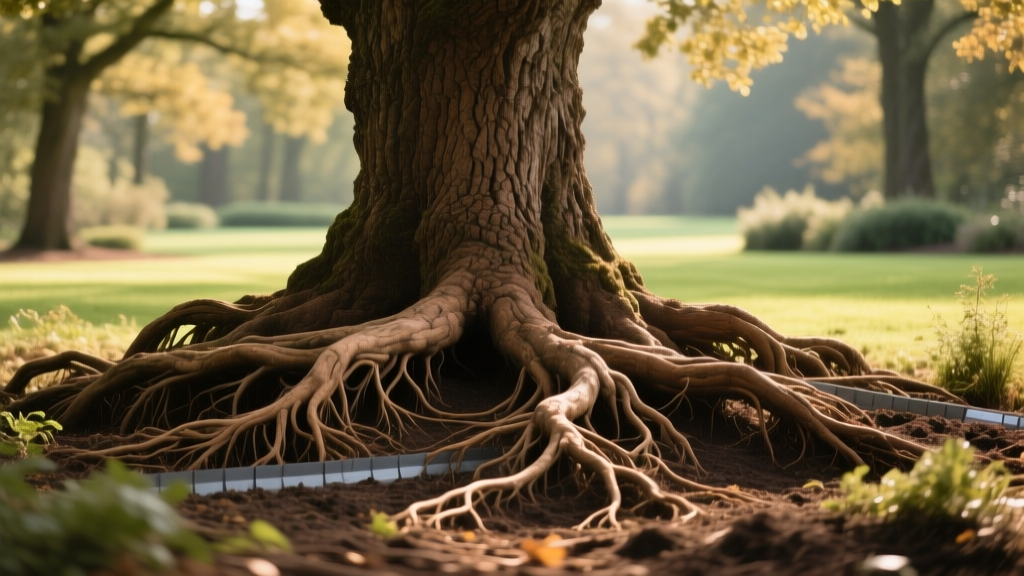
Expedition 33 Tree Roots: Diagnosis and Barrier Fixes
The Hidden Threat: Diagnosing Deep Root Structural Damage
When homeowners and urban foresters discuss expedition 33 tree roots, they are referring to the aggressive, deep-diving lateral root systems of large-caliper species—and the specialized 33-inch deep barrier protocols required to manage them. Standard 18-inch or 24-inch root barriers frequently fail against mature oaks, hickories, and sweetgums because their structural roots plunge deeper into the soil profile to bypass shallow obstructions. Diagnosing this subterranean damage before it compromises your foundation or hardscaping requires a systematic approach.
Symptom Checker: Is Your Tree the Culprit?
- Hardscape Heaving: Concrete sidewalks or driveways lifting more than 1.5 inches, typically occurring 8 to 15 feet from the trunk.
- Foundation Settling: Diagonal drywall cracks near exterior walls facing large trees, caused by roots extracting moisture from expansive clay soils.
- Girdling at the Root Flare: Roots wrapping around the main trunk base, choking the cambium layer and causing asymmetric canopy dieback.
- Surface Root Proliferation: Thick roots (over 2 inches in diameter) breaking the topsoil, indicating severe subsoil compaction or poor drainage forcing roots upward.
According to the International Society of Arboriculture (ISA), severing structural roots larger than 2 inches in diameter can compromise a tree's stability and lead to catastrophic failure during high winds. This is why diagnosing the exact root architecture using non-destructive methods is critical before any trenching begins.
Why Standard Barriers Fail: The Case for 33-Inch Depth
The primary failure mode of traditional root management is depth miscalculation. When a root encounters a shallow 18-inch barrier, it simply grows beneath it, eventually surfacing on the other side and causing the exact damage the barrier was meant to prevent. The Expedition 33 protocol utilizes high-density polyethylene (HDPE) panels driven 33 inches into the soil, a depth proven to intercept the deep lateral roots of most problematic North American shade trees.
| Barrier Depth | Material | Target Species | Failure Rate in Clay Soils |
|---|---|---|---|
| 18 Inches | Standard HDPE | Shrubs, small ornamentals | 85% (High) |
| 24 Inches | Reinforced HDPE | Maples, Elms, Birches | 40% (Moderate) |
| 33 Inches (Expedition) | Heavy-Duty HDPE | Oaks, Hickories, Sweetgums | Less than 5% (Low) |
| 48+ Inches | Concrete / Steel | Ficus, Bamboo (Running) | 1% (Very Low) |
Expedition 33 Tree Roots: Step-by-Step Installation Protocol
Managing expedition 33 tree roots requires precision excavation. Using mechanical excavators blindly will sever critical anchor roots. The modern arboricultural standard mandates the use of pneumatic excavation tools to safely expose and prune roots before placing the barrier.
- Utility Clearance and Mapping: Call 811 to mark public utilities. Use ground-penetrating radar (GPR) or an air spade to map the primary structural roots within the trenching zone.
- Pneumatic Excavation: Use an air spade operating at 90-120 PSI to blast away soil. This exposes the roots without tearing the bark or damaging the cambium layer of the roots you intend to keep.
- Precision Root Pruning: Using a sterilized, sharp pruning saw, make clean cuts on roots exceeding 2 inches in diameter. Never tear or rip roots with heavy machinery. Apply a copper-based root pruning sealant to the cut ends to inhibit immediate regrowth and prevent pathogen entry.
- Trenching to 33 Inches: Dig a continuous trench exactly 33 inches deep and 4 to 6 inches wide. Ensure the trench bottom is level using a laser level.
- Barrier Placement and Joining: Insert the 33-inch HDPE panels. Overlap joints by at least 6 inches and secure them with stainless steel zip ties or manufacturer-approved aluminum joiner strips. The top edge of the barrier must protrude 1 to 2 inches above the final grade to prevent roots from growing over the top.
- Backfilling with Drainage Media: Do not backfill with the native clay soil. Use a 3/4-inch clear crushed gravel mix for the first 12 inches behind the barrier to promote drainage and discourage root accumulation against the panel.
Critical Edge Cases: High Water Tables and Expansive Clays
If your property features a high water table or heavy expansive clay, the Expedition 33 protocol requires a modification. In these soils, roots will aggressively seek the oxygen-rich zone directly above the barrier. To counter this, install a perforated 4-inch PVC French drain pipe at the bottom of the trench, wrapped in geotextile fabric, before backfilling with gravel. This lowers the local water table and removes the moisture incentive for roots to cluster near the foundation.
Species-Specific Root Behavior and Barrier Spacing
The distance between the tree trunk and the root barrier is just as critical as the depth. The Arbor Day Foundation Tree Health Guide emphasizes that placing a barrier too close to the trunk will starve the tree of water and nutrients, leading to decline. Use the following framework to determine trench placement:
- Southern Live Oak (Quercus virginiana): Requires a minimum setback of 10 feet from the trunk for every 12 inches of trunk diameter (DBH). Roots are highly lateral and aggressive.
- Sweetgum (Liquidambar styraciflua): Notorious for surface roots. Set the barrier back at least 8 feet from the trunk, and ensure the top 2 inches of the barrier are exposed above mulch grade.
- Hickory (Carya spp.): Features a massive taproot but develops deep laterals in compacted urban soils. The 33-inch depth is mandatory here, as 24-inch barriers are easily bypassed by year three.
Cost Breakdown: What to Expect in 2026
Budgeting for deep root barrier installation requires factoring in specialized labor and equipment. While DIY installation of shallow barriers is common, the 33-inch Expedition protocol requires professional equipment. Here is the current pricing landscape for residential projects:
Estimated Project Costs (Per Linear Foot)
- Air Spade Excavation & Root Mapping: $18 - $28 per linear foot
- 33-Inch HDPE Barrier Material: $9 - $14 per linear foot
- Labor (Trenching, Pruning, Installation): $35 - $55 per linear foot
- Gravel Backfill & Site Restoration: $12 - $18 per linear foot
- Total Average Cost: $74 to $115 per linear foot
Note: A typical 40-foot driveway protection project will range between $2,960 and $4,600. Mobilization fees for air spade equipment typically add a flat $300-$500 to the total invoice.
Expert Verdict: When to Call a Certified Arborist
Attempting to manage expedition 33 tree roots without professional diagnosis can result in the unintended death of a heritage tree or severe structural instability. If the target tree has a trunk diameter exceeding 24 inches, or if the proposed trench line falls within the tree's critical root zone (CRZ)—defined as 1 foot of radius for every 1 inch of trunk diameter—you must consult an ISA Certified Arborist.
'Root pruning is a surgical procedure for the tree. Severing the wrong lateral root in a 33-inch trench can remove up to 30% of the tree's hydraulic capacity and anchor strength. Always map before you cut.'
— Urban Forestry Best Practices Guidelines
By combining precise pneumatic excavation with the 33-inch deep barrier system, homeowners can permanently resolve infrastructure conflicts while preserving the health and canopy of their most valuable landscape trees.

